


Noise-induced hearing loss: prevention, symptoms and treatment
In This Article
*This article is for educational purposes only and does not constitute medical advice. Hearing health is individual, and assessment results should always be interpreted by a qualified hearing health professional. If you are concerned about your hearing, please consult an accredited hearing healthcare provider for personalised advice.*
Noise-induced hearing loss (NIHL) is one of the most common — and most preventable — forms of permanent hearing damage. It can happen gradually over years of workplace noise, or suddenly from a single very loud event. Either way, once the damage is done, it cannot be undone.
That's the difficult truth about NIHL. There's no medication, no surgery, no treatment that rebuilds the delicate hair cells in your inner ear once noise has destroyed them. What there is, however, is a clear path to prevention — and effective management options for people who are already affected.
What is noise-induced hearing loss?
NIHL occurs when sound is loud enough or sustained enough to damage the hair cells inside the cochlea — the snail-shaped organ in your inner ear. These hair cells convert sound vibrations into electrical signals your brain interprets as sound. They don't regenerate.
The damage can take two forms.
Acute noise damage results from sudden, extremely loud sounds — an explosion, a gunshot close to the ear, fireworks at close range. A single event at sufficient intensity can immediately destroy hair cells and cause instant hearing loss or tinnitus (ringing in the ears).
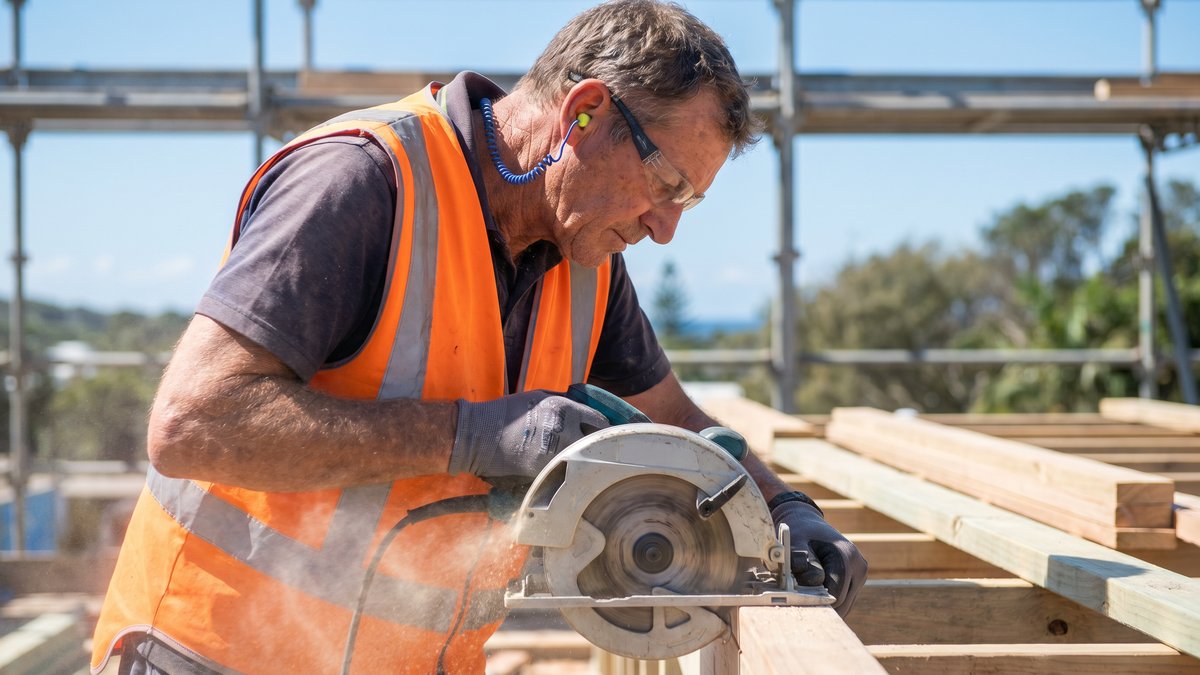
Chronic noise damage develops gradually from repeated exposure to moderately loud sounds over months or years. Construction workers, musicians, factory workers, and hospitality staff in loud venues are among those who accumulate this kind of damage progressively, often without realising it until hearing difficulties become obvious.
How sound damages hearing
Sound intensity is measured in decibels (dB) on a logarithmic scale — each 10 dB increase represents a tenfold increase in sound intensity.
Safe Work Australia recommends that workers not be exposed to noise above 85 dB over an 8-hour shift without hearing protection. For every 3 dB above 85 dB, safe exposure time is halved. At 94 dB, the safe exposure period drops to one hour. At 100 dB, to fifteen minutes.
To put that in everyday context: a normal conversation sits around 60 dB. A power lawn mower around 85 dB. A chainsaw around 100 dB. A rock concert around 110 dB. Fireworks at close range can reach 140 dB — well above the threshold for immediate damage.
A temporary threshold shift (TTS) — where your hearing feels muffled after a loud event, and you might have ringing in your ears — is your body's warning system. Hearing typically recovers within 16 to 48 hours. But repeated temporary shifts erode the margin, and repeated recovery becomes incomplete recovery. Over time, permanent loss accumulates.
Common sources of noise damage
In the workplace, high-risk industries on the Sunshine Coast and throughout Queensland include construction, agriculture, manufacturing, mining, aviation ground crew, emergency services, and the hospitality industry. Many Sunshine Coast workers in tourism and food and beverage are exposed to sustained noise from kitchen equipment, live music, and crowded venue environments.
In recreational settings, the Sunshine Coast lifestyle brings its own noise exposures. Boating and jet ski use — particularly older two-stroke engines — can produce noise levels exceeding 90 dB. Music festivals and outdoor events at popular venues can easily reach damaging levels. Power tools used for home renovation or landscaping, recreational shooting, and personal audio devices on earbuds or headphones at high volumes are all common sources.
Personal audio devices deserve particular attention. The 60/60 guideline — listening at no more than 60% of maximum volume for no more than 60 minutes at a time — is a useful reference point. Many modern smartphones include hearing health features that monitor listening levels and provide alerts when exposure is accumulating.
Recognising the signs
NIHL tends to develop quietly, which is part of what makes it insidious. Common early signs include difficulty understanding speech in noisy environments; muffled or dull sound quality; needing to turn up the television or radio more than others prefer; and trouble distinguishing consonant sounds like "s," "f," and "th," making speech sound slurred.
Tinnitus — ringing, buzzing, hissing, or roaring sounds in one or both ears — frequently accompanies NIHL. Temporary tinnitus after a loud event is a clear warning: the noise you just experienced was loud enough to be damaging.
If you regularly work or spend time in noisy environments and notice any of these signs, a professional hearing assessment is the right next step.
Children and noise exposure
Children's developing auditory systems may be susceptible to noise damage. Parents should monitor children's exposure to loud sounds — especially through personal audio devices and at noisy events such as fireworks displays or motorsport activities. Establishing hearing protection habits early matters. Fit children with appropriate ear protection at loud events, and review the volume settings on their devices regularly.
Prevention strategies
The most effective treatment for noise-induced hearing loss is not having it in the first place. Prevention rests on three principles.
Reduce exposure time. Safe exposure time decreases rapidly as noise levels increase. If you can't avoid a noisy environment, take regular breaks in quieter areas to allow your ears to recover.
Increase distance. Sound intensity reduces with distance. Moving a few metres further from a noise source — speakers at a concert, machinery on a worksite — makes a measurable difference.
Use hearing protection. When you can't reduce time or distance, proper hearing protection is essential.
Hearing protection options
Foam earplugs are inexpensive, widely available, and provide 15 to 30 dB of noise reduction when correctly inserted. They must be rolled, compressed, and inserted deeply into the ear canal to work properly. Replace them regularly.
Pre-moulded earplugs are reusable silicone or rubber plugs that are easier to insert than foam and suitable for general noise reduction.
Custom-moulded earplugs are made from an impression of your ear by a hearing care professional. They fit precisely, are comfortable for extended wear, and provide consistent, reliable protection. Worth the investment for frequent use — musicians, tradie workers, regular concert-goers.
Earmuffs cover the entire ear and provide 20 to 35 dB of noise reduction. They're practical for intermittent use and can be combined with foam earplugs in extremely loud environments for maximum protection.
Musicians' earplugs are a specialised option that reduce volume evenly across frequencies — meaning the sound quality is maintained while protecting hearing. Available in various attenuation levels (typically 9 dB, 15 dB, or 25 dB). These are ideal for anyone who needs to hear clearly while protecting their ears: musicians, audio engineers, and regular concert-goers alike.
Workplace hearing conservation
Employers have legal obligations under workplace health and safety legislation to protect workers from noise hazards. Under Work Health and Safety (WHS) regulations, employers must identify noise hazards through noise assessments, implement engineering controls to reduce noise at the source, provide appropriate hearing protection at no cost to workers, offer baseline and periodic audiometric testing, and train workers about noise risks and protective measures.
The hierarchy of controls applies here: elimination of the noise source is the most effective approach, followed by substitution (quieter equipment), engineering controls (barriers, acoustic enclosures, vibration dampening), administrative controls (job rotation, scheduling), and finally personal protective equipment as the last line of defence.
Workers have the right to a safe workplace, hearing protection, and regular hearing assessments. Workers also have responsibilities: using provided protection correctly, participating in hearing testing programs, and reporting hearing concerns to supervisors.
If your employer hasn't implemented hearing conservation measures in a clearly noisy environment, you have the right to raise concerns through your workplace safety representative or Safe Work Australia's channels.
When to seek a hearing assessment
If you're concerned about noise exposure or have noticed changes in your hearing, a comprehensive assessment by a qualified hearing care professional or hearing aid audiometrist is the appropriate first step.
The assessment will typically include a case history discussion covering your noise exposure, symptoms, and concerns; otoscopy to examine the ear canal and eardrum; pure tone audiometry across all frequencies; speech testing; and tympanometry to assess middle ear function.
The audiogram may show a characteristic "noise notch" — a dip in hearing sensitivity around 4,000 Hz — which is a common pattern in noise-induced hearing loss.
For people with significant noise-induced hearing loss affecting daily communication, hearing aids may be recommended. Modern hearing aids can amplify the frequencies where loss is greatest, reduce background noise, and connect wirelessly to phones and other devices. Australian Government programs — including the Hearing Services Program for eligible pensioners and veterans, and NDIS for eligible participants — may provide financial support for hearing devices, subject to eligibility criteria.
Tinnitus management strategies — sound therapy, counselling, cognitive behavioural therapy in more significant cases, and hearing aids (which often reduce tinnitus perception by improving hearing) — are also available.
Take the next step
If anything in this guide reflects your own situation, a comprehensive hearing assessment is the most reliable next step. At Hearingcare on the Sunshine Coast, Linda Whittaker — a Qualified Audiometrist with over 20 years of experience and ACAud accreditation — provides unhurried, individualised hearing care in a supportive environment.
We see clients from Caloundra, Maroochydore, Mooloolaba, Buderim, Noosa and across the wider Sunshine Coast region. Eligible clients may access fully subsidised hearing services (eligibility criteria apply) through the Australian Government's Hearing Services Program.
Individual results vary. Professional hearing assessment is required to determine the most appropriate management approach for your specific situation.

Frequently Asked Questions
No. Once hair cells in the cochlea are damaged or destroyed by excessive noise, they cannot regenerate. The hearing loss is permanent. This is why prevention is so critical — and why acting early to protect any remaining hearing is worthwhile.
Acute NIHL can occur from a single loud event. Chronic NIHL typically develops over months to years of repeated exposure. Many workers in high-noise industries begin showing measurable hearing loss after five to ten years of unprotected exposure, though individual susceptibility varies considerably.
Absolutely. Protecting your remaining hearing from further damage is important regardless of what's already been lost. Think of it similarly to using sunscreen after experiencing sun damage — you protect what remains. Further noise exposure can cause additional damage and worsen your situation.
Quality hearing protection is designed to bring dangerous noise levels down to safer levels, not to block all sound. You should still be able to hear warning signals, conversation, and machinery operation while wearing appropriate protection. Musicians' earplugs specifically maintain sound quality while reducing volume.
From infancy. Babies and young children should wear properly fitted protective ear muffs at fireworks displays, motorsport events, concerts, or any sustained loud event. As children grow, teaching them to use hearing protection independently — and making it a normal part of attending loud events — builds lasting habits.
This article is for educational purposes only. Individual results may vary. Professional hearing assessment is recommended for personalised advice.
Book Your Hearing Assessment