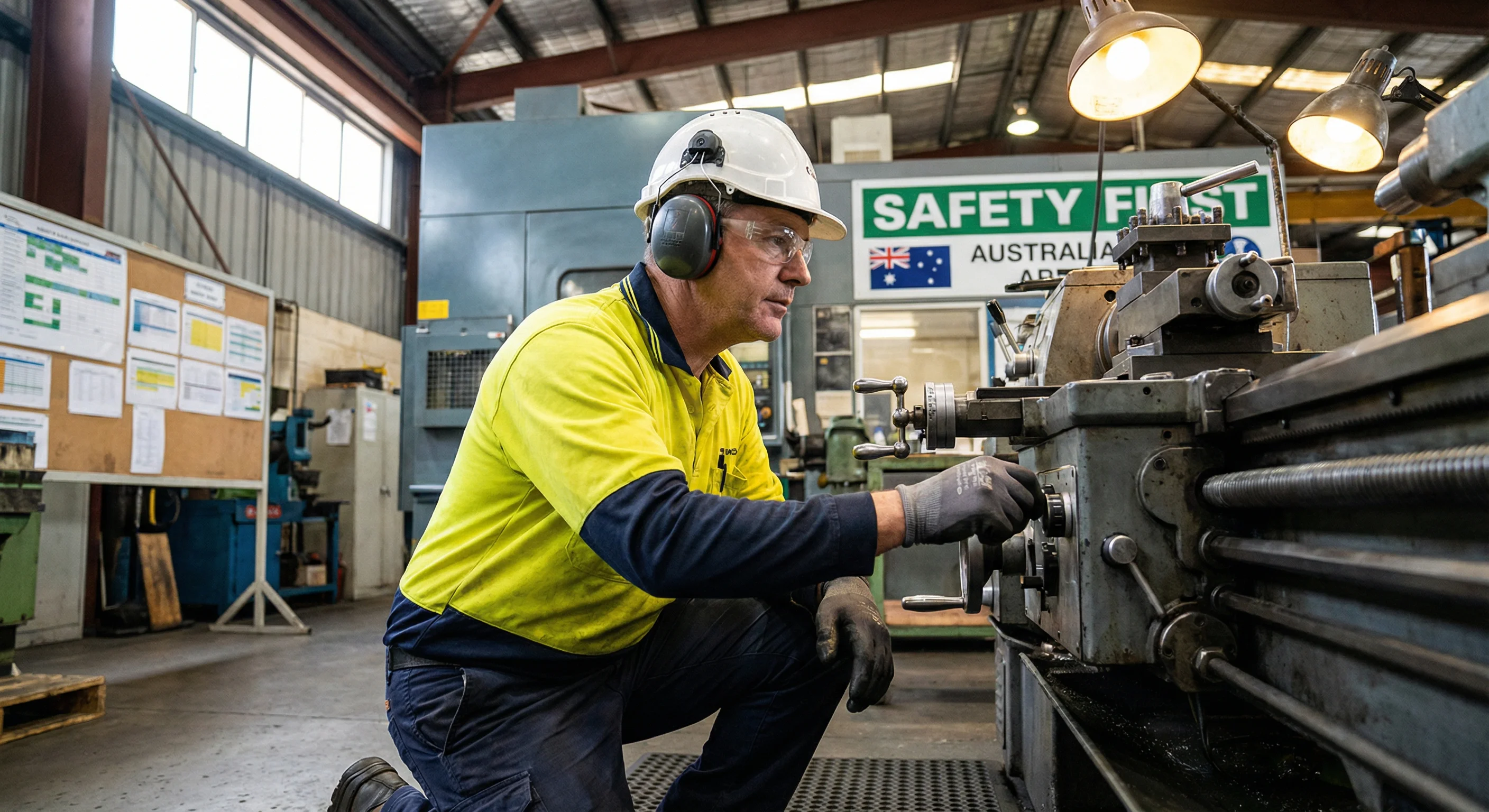
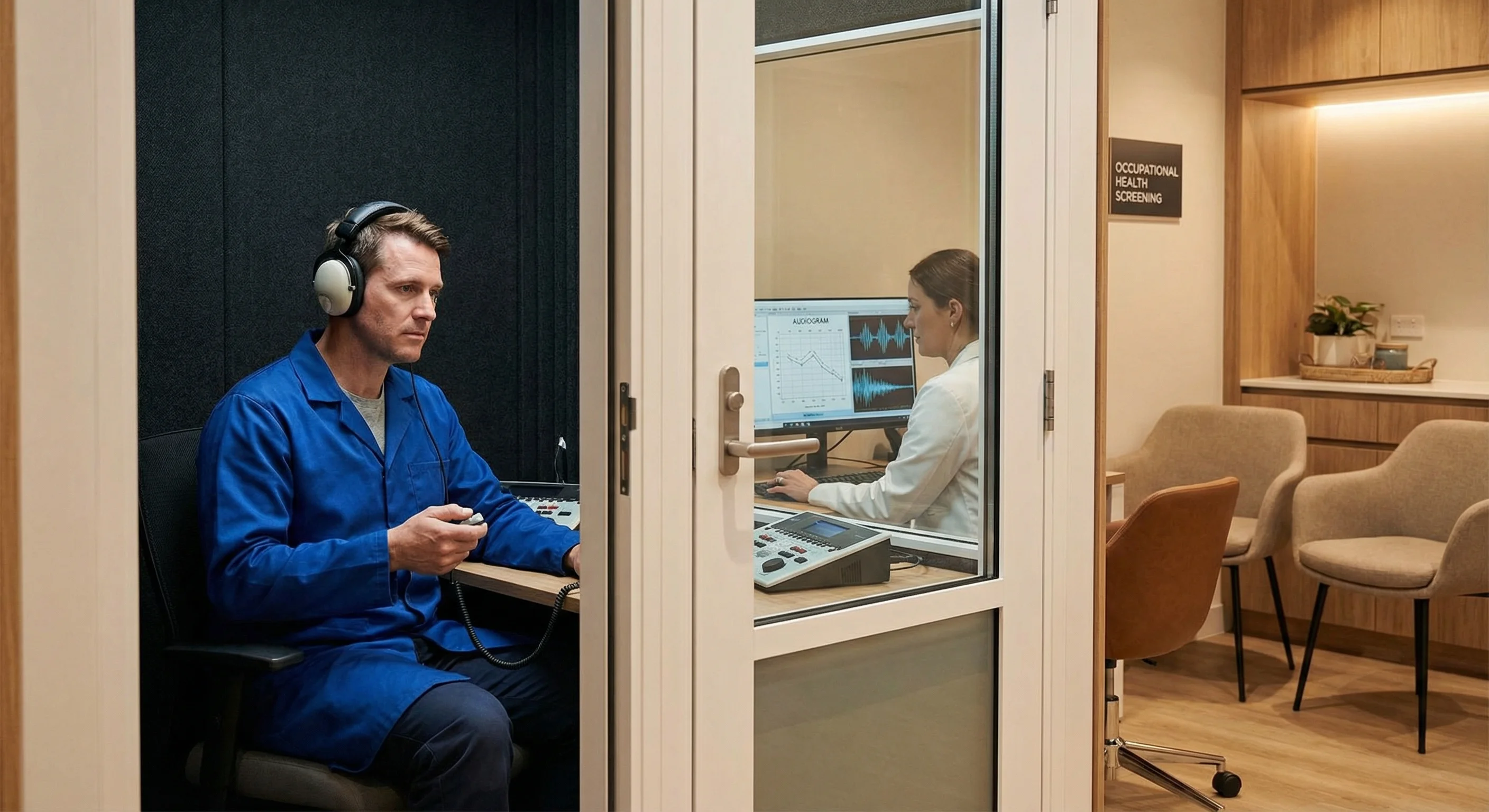
If your workplace involves exposure to hazardous noise levels, Australian Work Health and Safety (WHS) legislation requires regular hearing monitoring to protect your employees from occupational noise-induced hearing loss. Hearingcare Caloundra provides professional workplace hearing screening services that meet all regulatory requirements whilst making the process straightforward for both employers and employees.
Who Needs Workplace Hearing Screening?
We provide workplace hearing screening for employers across Caloundra and the Sunshine Coast, Queensland — in-clinic at Bulcock Street or on-site at your workplace. Audiometric testing is carried out to support your WHS obligations under Safe Work requirements, with clear reporting and hearing conservation guidance for noise-exposed workers.
Manufacturing & Industrial
Factories with loud machinery, metal fabrication, woodworking facilities, and processing plants.
Construction & Building
Workers using power tools, demolition equipment, concrete cutting, and heavy machinery.
Transport & Mining
Truck drivers, mining operations, heavy vehicle operators, and airport ground crew.
Agriculture & Forestry
Operators of tractors, harvesters, chainsaws, and processing equipment.
Entertainment & Hospitality
Live music venues, nightclubs, event staff, and musicians.
Any Workplace
Where noise levels regularly exceed 85dB(A) for extended periods.
If you're unsure whether your workplace requires hearing screening, we can conduct noise level assessments to determine your obligations under Queensland's WHS legislation.
Our Workplace Hearing Screening Service — On-Site & In-Clinic
We've designed our workplace hearing screening service to be convenient, compliant, and comprehensive:
New employees in noise-exposed roles receive baseline audiometry within three months of commencing work. Follow-up testing is conducted at regular intervals (typically annually) to monitor for any changes that might indicate noise-induced hearing damage.
Each test involves pure-tone audiometry across the full frequency range, with particular attention to frequencies most affected by noise exposure (3000Hz, 4000Hz, and 6000Hz where noise-induced damage typically first appears). The test takes approximately 20-30 minutes per person.
You'll receive individual audiograms for each employee tested, summary reports highlighting any concerns or changes from previous tests, recommendations for any employees requiring further assessment or intervention, and documentation suitable for your WHS records and regulatory compliance.
Each employee receives an explanation of their results, education about hearing protection if relevant, and referral for further assessment or hearing aid fitting if indicated. We ensure employees understand their hearing status without creating unnecessary alarm.
Individual employee results are confidential. We provide employers with the information necessary for WHS compliance whilst respecting employees' medical privacy in accordance with Australian privacy legislation.
Understanding Noise-Induced Hearing Loss
Occupational noise-induced hearing loss (NIHL) is one of the most common preventable workplace injuries in Australia, yet many people don't recognise the damage until it's too late. The insidious nature of NIHL is that it develops gradually, often over years, without causing pain or obvious symptoms in the early stages.
Stage
What Happens
Early Damage
Tiny hair cells in the inner ear begin to be damaged by excessive noise exposure. No symptoms are noticeable.
Temporary Threshold Shift
After noise exposure, hearing is temporarily reduced. This recovers with rest, but indicates you're at risk for permanent damage.
Permanent Threshold Shift
Continued exposure causes irreversible damage. Audiometry shows hearing loss, particularly at high frequencies (3-6 kHz), even though you might not notice difficulties in everyday life yet.
Noticeable Communication Difficulty
The hearing loss extends to speech frequencies. You begin having trouble understanding conversations, particularly in noisy environments. At this point, significant permanent damage has already occurred.
The crucial point is that by the time you notice hearing problems in daily life, substantial damage has already occurred. Regular audiometric screening detects early changes before they become functionally significant, allowing for intervention through better hearing protection, workplace modifications, or changes to noise exposure patterns.
Your WHS Compliance Obligations
Under Queensland's Work Health and Safety Act 2011 and the Work Health and Safety Regulation 2011, employers have specific obligations regarding noise exposure and hearing conservation:
Noise Assessment
Measure or estimate noise levels to which workers are exposed.
Noise Control
Eliminate or minimise exposure to noise so far as is reasonably practicable.
Hearing Protection
Provide appropriate hearing protection where noise cannot be adequately controlled.
Health Monitoring
Conduct audiometric testing for workers exposed to noise above the exposure standard (85dB(A) for 8 hours).
Record Keeping
Maintain records of audiometric testing and make them available to workers and regulators as required.
Information & Training
Educate workers about the risks of noise exposure and the importance of hearing protection.
Our workplace hearing screening service helps you meet the health monitoring requirement efficiently whilst demonstrating due diligence in protecting your employees' hearing health.
What to Expect From Testing
The testing process is straightforward and non-invasive:
Pre-Test Requirements
Employees should avoid significant noise exposure for at least 16 hours before testing when possible (i.e., test at the beginning of a shift or after a rest day). This provides the most accurate baseline reading. We'll check the ears for excessive wax that might affect results.
The Test Itself
The employee wears headphones in a quiet environment and responds (usually by pressing a button) whenever they hear a tone, no matter how faint. We test multiple frequencies in each ear. The entire process takes 20-30 minutes.
Results and Recommendations
We'll explain the results in plain language, compare with previous tests if available, and make recommendations about hearing protection, work practices, or further assessment if needed. Both the employee and employer receive appropriate documentation.
Ongoing Monitoring
We maintain records of all tests, allowing us to track changes over time and identify concerning trends early. Our database system makes scheduling annual retests straightforward.
Why Choose Hearingcare Caloundra for Workplace Screening
Local and Convenient
Based right here in Caloundra, we understand Sunshine Coast businesses and can respond quickly to your screening needs.
Qualified hearing care professional
Testing conducted by a qualified hearing care professional with extensive experience in occupational hearing conservation.
Comprehensive Documentation
Detailed reports that meet all WHS compliance requirements, with clear recommendations for action when needed.
Employee-Focused Approach
We take time to explain results to employees and answer their questions, reducing anxiety and encouraging compliance.
Flexible Scheduling
We'll work around your business operations, including early morning or late afternoon appointments if needed.
Complete Service
If testing reveals hearing loss requiring intervention, we can provide hearing protection advice and hearing aid services without referring elsewhere.
Protecting Your Team's Hearing Health
Workplace hearing screening is more than a compliance exercise—it's an investment in your employees' long-term health and quality of life. Noise-induced hearing loss doesn't just affect work performance; it impacts family relationships, social engagement, and overall wellbeing. Once damaged, the delicate hair cells in the inner ear don't regenerate—prevention and early detection are the only defences.
By implementing a regular workplace hearing screening programme with Hearingcare Caloundra, you're demonstrating that you value your employees' health, meeting your legal obligations under Queensland WHS legislation, and potentially preventing costly workers' compensation claims related to occupational hearing loss. For your employees, these regular checks provide peace of mind and early warning if workplace noise is affecting their hearing, allowing for intervention before significant damage occurs.
Ready to Implement Workplace Hearing Screening?
Contact us to discuss your workplace's specific needs, receive a quote for screening services, or arrange an initial consultation to assess your noise exposure and compliance requirements.
We're here to help Sunshine Coast businesses protect their most valuable asset—their people.
WORKPLACE HEARING SCREENING FAQ
Frequently Asked Questions
Common questions about workplace hearing screening and WHS compliance in Queensland.
New employees in noise-exposed roles should receive baseline audiometry within three months of commencing work. After the baseline test, annual screening is recommended for workers with ongoing noise exposure above 85dB(A). If a worker's audiogram shows concerning changes, more frequent testing may be warranted—perhaps every six months—until the situation stabilises. For Sunshine Coast businesses in industries like manufacturing, construction, or entertainment, we recommend establishing a regular annual schedule to ensure consistent monitoring and easy compliance tracking.
If audiometric testing reveals hearing loss, we'll provide detailed recommendations based on the severity and pattern of the loss. For mild cases that appear work-related, this might involve reassessing the employee's hearing protection (ensuring they're using the right type correctly), reviewing workplace noise levels and exposure duration, and conducting follow-up testing in 6 months. For more significant losses, we may recommend referral to an ear, nose, and throat specialist to rule out medical causes, provision of hearing aids if the loss is affecting communication, and potentially reviewing the employee's role or implementing additional noise control measures. Throughout this process, we work with both the employer and employee to ensure appropriate care whilst maintaining confidentiality.
Under Queensland WHS regulations, you must keep records of audiometric testing for 30 years from the date of the test, or if the worker was under 18 when tested, until they turn 48. These records must include the audiogram results, date of testing, name of the person conducting the test, and details of any action taken as a result of the testing. We maintain a secure database of all tests conducted, providing you with copies for your records. If your business changes hands or closes, these records must be transferred to the new owner or provided to Workplace Health and Safety Queensland. The extended record-keeping period reflects the fact that noise-induced hearing loss can develop gradually over many years, and workers may not make compensation claims until after retirement.
For the most accurate results, employees should avoid significant noise exposure for at least 16 hours before testing. This is why we often recommend testing at the beginning of a shift or after days off. If an employee works in a noisy environment right up until the test, their hearing thresholds may be temporarily elevated (a phenomenon called "temporary threshold shift"), which can make the results appear worse than their true baseline hearing. Employees should also avoid using earbuds or headphones at high volumes in the hours before testing. If someone has had recent noise exposure (attended a concert the night before, used loud power tools over the weekend), it's worth rescheduling for a few days later to get accurate results. We'll also check for excessive earwax that might affect the test and can arrange ear cleaning if needed.
Workplace audiometric screening is specifically designed to detect changes in hearing sensitivity across the frequency range most affected by noise exposure. It's excellent for identifying noise-induced hearing loss, age-related hearing changes, and sudden hearing loss. However, it's primarily a screening tool rather than a comprehensive diagnostic assessment. It won't detect middle ear problems without hearing loss (like certain cases of otosclerosis in early stages), auditory processing disorders where hearing sensitivity is normal but sound processing is impaired, or conditions affecting the auditory nerve or brain. If screening reveals unexpected patterns or if an employee reports hearing difficulties despite normal screening results, we'll recommend referral to a hearing care professional or ENT specialist for comprehensive diagnostic testing.
When hearing monitoring is required under WHS regulations (because noise exposure exceeds 85dB(A)), it's considered a lawful and reasonable direction. Employees have an obligation to comply with reasonable health and safety measures. If an employee refuses, we recommend first understanding their concerns—some people worry the test will reveal hearing loss they don't want to acknowledge, others may have had negative experiences with health assessments, or they might simply not understand why it's necessary. Often, explaining the process, emphasising that it's painless and quick, and reassuring them about privacy can address concerns. If refusal continues, you should document the refusal, explain that it's a WHS requirement, and consider whether disciplinary procedures are appropriate under your workplace policies. From a practical standpoint, requiring hearing screening as a condition of working in noise-exposed areas is both legally supportable and protects both the employee and employer.