


How do you know if you have hearing loss? The early signs
In This Article
Hearing loss rarely announces itself. It creeps in so gradually that your brain adapts around it — turning the TV up a notch at a time, working harder in conversations, avoiding noisy cafés without quite deciding to. The most reliable early signs aren't silence: they're effort, misheard words, and the observations of the people who live with you. A hearing test is the only way to know for certain, and it takes about an hour. Your results go on an audiogram — a simple graph of your hearing, pitch by pitch — and a hearing assessment also rules wax in or out on the spot.
What are the early signs of hearing loss — from TV volume to tinnitus?
The classic early signs: asking people to repeat themselves, especially women's and children's voices; TV or radio volume creeping up; difficulty following conversation in background noise; feeling that people mumble; tiredness after social occasions — listening effort is real fatigue; and turning one ear toward speakers. Two more people rarely connect: ringing in the ears (tinnitus often accompanies early hearing loss) and a blocked-ear feeling that never clears. According to Healthdirect Australia, hearing loss affects around one in six Australians, and most wait years longer than they should before having it checked.
Why can I hear conversation but not understand words in background noise?
Because age-related and noise-related hearing loss usually take the high frequencies first — and high frequencies carry consonants. Vowels, which sit lower, still come through strongly, so speech stays loud but loses its edges: "sit" blurs into "fit", "show" into "so". That's why the experience is "people mumble", not "the world went quiet". It's also why turning the TV up doesn't fix it — volume amplifies the vowels you already hear without restoring the consonants you're missing.
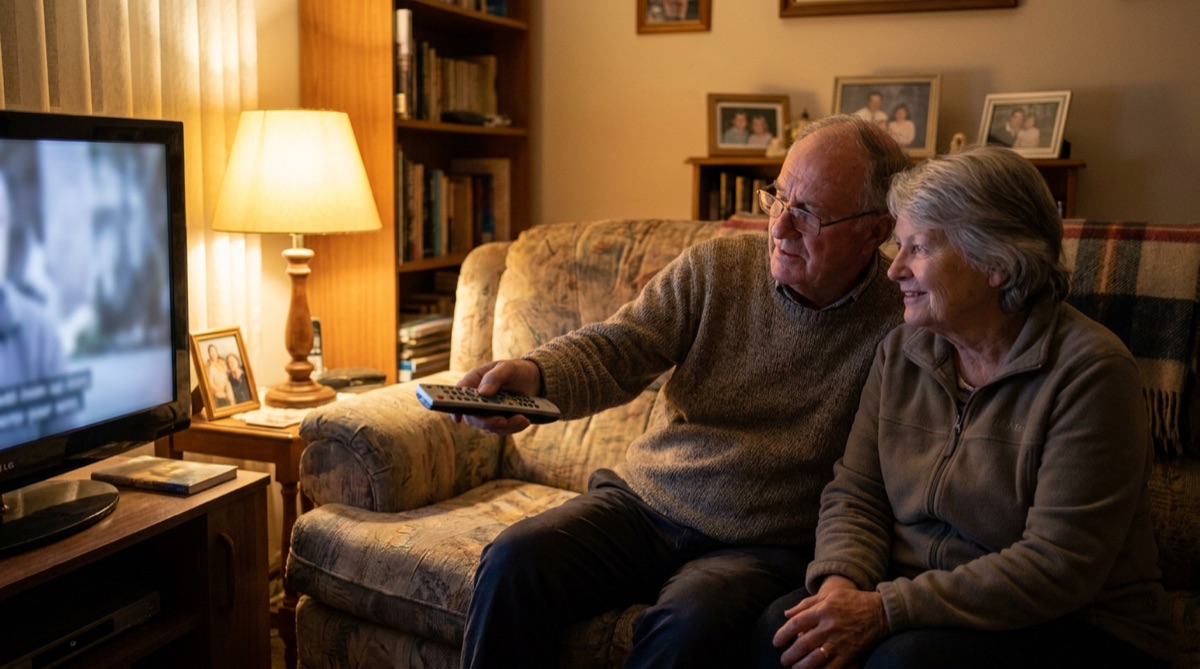
Is turning the TV volume up a sign of hearing loss?
It's one of the most common first signs — usually noticed by someone else in the household. The pattern matters more than the number on the volume bar: if the level that suits you is consistently uncomfortable for others, or subtitles have quietly become essential, your hearing deserves a check. The same applies to phone calls: switching to speakerphone or a preferred ear is the same adaptation in a different place.
Is it ear wax or hearing loss — and how does a hearing test tell?
Sometimes it's both, and they feel the same from the inside — muffled, blocked, distant. Wax is quick to rule out: otoscopy at the start of any hearing assessment shows the canal directly. If wax is the culprit, we now offer professional ear wax removal at our Caloundra clinic and re-test afterwards. If the canal is clear, the audiogram shows exactly what your hearing is doing, pitch by pitch, and your results are explained in plain English on the day. Either way you leave knowing, rather than wondering.
If several of these signs sound familiar, the practical next step is a comprehensive hearing assessment. Our Qualified Audiometrist tests adults at our Bulcock Street clinic in Caloundra — serving Golden Beach and the Sunshine Coast, Queensland — with unhurried appointments and no referral needed at our Bulcock Street clinic.
And if the test comes back normal? That is a genuinely useful result too: you get a baseline audiogram to compare against in future, peace of mind about the listening effort you have noticed, and an honest conversation about what else might explain it — sometimes the answer is wax, sometimes room acoustics, sometimes nothing at all.
The information on this page is general in nature, and hearing outcomes, results and experiences vary from person to person. It is not a substitute for professional advice about your individual hearing health. For advice specific to you, book an appointment with our Qualified Audiometrist.
Last reviewed July 2026 by Linda Whittaker, Qualified Audiometrist.
Take the next step
If anything in this guide reflects your own situation, a comprehensive hearing assessment is the most reliable next step. At Hearing Care on the Sunshine Coast, Linda Whittaker — a Qualified Audiometrist with more than 20 years of clinical experience and ACAud membership — provides unhurried, individualised hearing care in a supportive environment.
We see clients from Caloundra, Maroochydore, Mooloolaba, Buderim, Noosa and across the wider Sunshine Coast region. Eligible clients may access fully subsidised hearing services (eligibility criteria apply) through the Australian Government's Hearing Services Program.
Individual results vary. Professional hearing assessment is required to determine the most appropriate management approach for your specific situation.

This article is for educational purposes only. Individual results may vary. Professional hearing assessment is recommended for personalised advice.
Book Your Hearing Assessment