


Do hearing aids help tinnitus? Maskers and sound enrichment
In This Article
- Why can hearing aids reduce tinnitus awareness?
- What is a tinnitus masker or combination device?
- Will hearing aids help if my hearing is normal?
- How do you get sound therapy and sound enrichment settings right?
- What results can you expect, and how quickly?
- What should you do first if you have tinnitus?
For many people whose tinnitus comes with hearing loss — which is most persistent tinnitus — yes, hearing aids may reduce how much the tinnitus intrudes. They do not cure tinnitus. What they change is the contrast: by restoring the everyday sound your hearing loss was filtering out, hearing aids give the brain real sound to attend to instead of the internal ringing, and many people notice their tinnitus less as a result.
Why can hearing aids reduce tinnitus awareness?
Two mechanisms. First, contrast: tinnitus is loudest against silence, and untreated hearing loss manufactures silence — hearing aids refill your sound environment, so the ringing has competition. Second, effort: straining to hear is stressful, and stress amplifies tinnitus awareness; easier hearing means a calmer auditory system. This is why the standard clinical advice for tinnitus-with-hearing-loss is to address the hearing loss first and reassess the tinnitus afterwards.
What is a tinnitus masker or combination device?
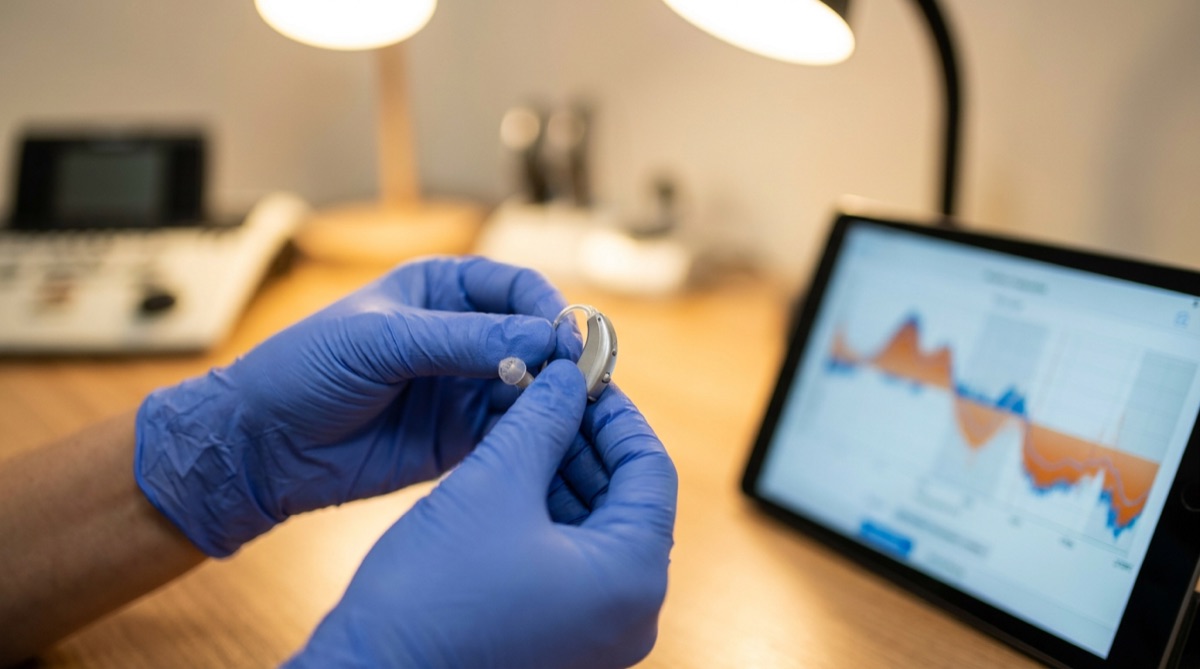
Many modern hearing aids include optional sound-therapy features — gentle broadband sound, ocean-style sounds or soft noise streams — that can be blended behind your normal amplification. These combination devices support the sound-enrichment approach used in structured tinnitus management. Whether a masker feature helps varies from person to person, and settings need professional tailoring: sound therapy that is too loud can work against the goal of the brain learning to de-prioritise the tinnitus.
Will hearing aids help if my hearing is normal?
If your hearing is genuinely normal across all frequencies, standard hearing aids are not the usual first approach — sound enrichment can still help, but it can come from bedside sound generators, apps or environmental sound rather than amplification. A fan at night, soft music, or a dedicated bedside sound machine all serve the same principle: keep the auditory scene gently occupied so silence never hands the tinnitus the stage. The right mix is personal, which is why it belongs in a management plan rather than trial and error alone. This is exactly why the assessment matters: "normal" on a quick screen sometimes hides a high-frequency loss that a full audiogram reveals, and that finding changes the management plan entirely.
How do you get sound therapy and sound enrichment settings right?
Tailoring matters more than the technology. In a combination device, the sound enrichment stream is set just below or around the level of your tinnitus — enough to soften the contrast against silence, never so loud that it masks the world or dominates your hearing. That balance is set from your audiogram and adjusted at follow-ups as your awareness changes. Expect the settings that suit you in month one to be revisited at your reviews: as the brain habituates, most people need less support, not more.
What results can you expect, and how quickly?
Expectations honestly set: hearing aids may reduce tinnitus awareness — they do not switch it off, and responses vary widely between individuals. People who notice a benefit generally find the change happens over weeks, not days: conversations take less effort, the silence-and-ringing evenings soften, and attention drifts to the tinnitus less often. Reviews along the way matter, because settings that help in month one are refined as your awareness changes.
What should you do first if you have tinnitus?
Book a comprehensive hearing assessment with a tinnitus discussion. The audiogram establishes whether hearing loss is part of your picture; otoscopy rules out simple contributors like wax against the eardrum; and from there the management conversation is grounded in your actual results rather than guesswork. Bring a note of when your tinnitus is loudest, what it sounds like, and anything that already helps — those details shape the plan as much as the audiogram does. At Hearingcare in Caloundra, Queensland, our Qualified Audiometrist provides exactly this pathway for patients from Golden Beach and across the Sunshine Coast — and if your tinnitus pattern needs a GP or ENT first (one-sided, pulsatile, or with sudden hearing loss), we say so and refer you.
The information on this page is general in nature, and hearing outcomes, results and experiences vary from person to person. Hearing aids may reduce tinnitus awareness for some people; results are not guaranteed, and tinnitus usually cannot be cured. This page is not a substitute for professional advice. For advice specific to you, book an appointment with our Qualified Audiometrist.
Last reviewed July 2026 by Linda Whittaker, Qualified Audiometrist.
Take the next step
If anything in this guide reflects your own situation, a comprehensive hearing assessment is the most reliable next step. At Hearing Care on the Sunshine Coast, Linda Whittaker — a Qualified Audiometrist with more than 20 years of clinical experience and ACAud membership — provides unhurried, individualised hearing care in a supportive environment.
We see clients from Caloundra, Maroochydore, Mooloolaba, Buderim, Noosa and across the wider Sunshine Coast region. Eligible clients may access fully subsidised hearing services (eligibility criteria apply) through the Australian Government's Hearing Services Program.
Individual results vary. Professional hearing assessment is required to determine the most appropriate management approach for your specific situation.

This article is for educational purposes only. Individual results may vary. Professional hearing assessment is recommended for personalised advice.
Book Your Hearing Assessment