


How to choose the right hearing aid in Australia: A practical guide
In This Article
- Which hearing aid style should you choose? BTE, RIC, ITE and canal options
- What hearing aid technology level do you actually need?
- Which hearing aid features are worth having? Rechargeable, Bluetooth and apps
- Why do fitting, warranty and aftercare matter as much as the device?
- How do the Hearing Services Program and funding options change the decision?
- How should you decide? Assessment, audiogram, lifestyle, then price
Choosing a hearing aid comes down to four decisions: the style that suits your ears and dexterity, the technology level that matches your listening life, the features you'll actually use, and the clinic support behind the device. The brand matters less than people expect — every major manufacturer makes good devices — and the fitting matters more. This guide walks through each decision in order. For what's inside the devices, read how hearing aids work; for money questions, see hearing aid costs in Australia. This page is about choosing well.
Which hearing aid style should you choose? BTE, RIC, ITE and canal options
Style is a trade-off. Size, power, battery life and handling all pull in different directions:
| Style | Sits | Suits | Trade-offs |
|---|---|---|---|
| Behind-the-ear (BTE) | Behind the ear, tube to an ear mould | All degrees of loss; easiest to handle | Most visible of the styles |
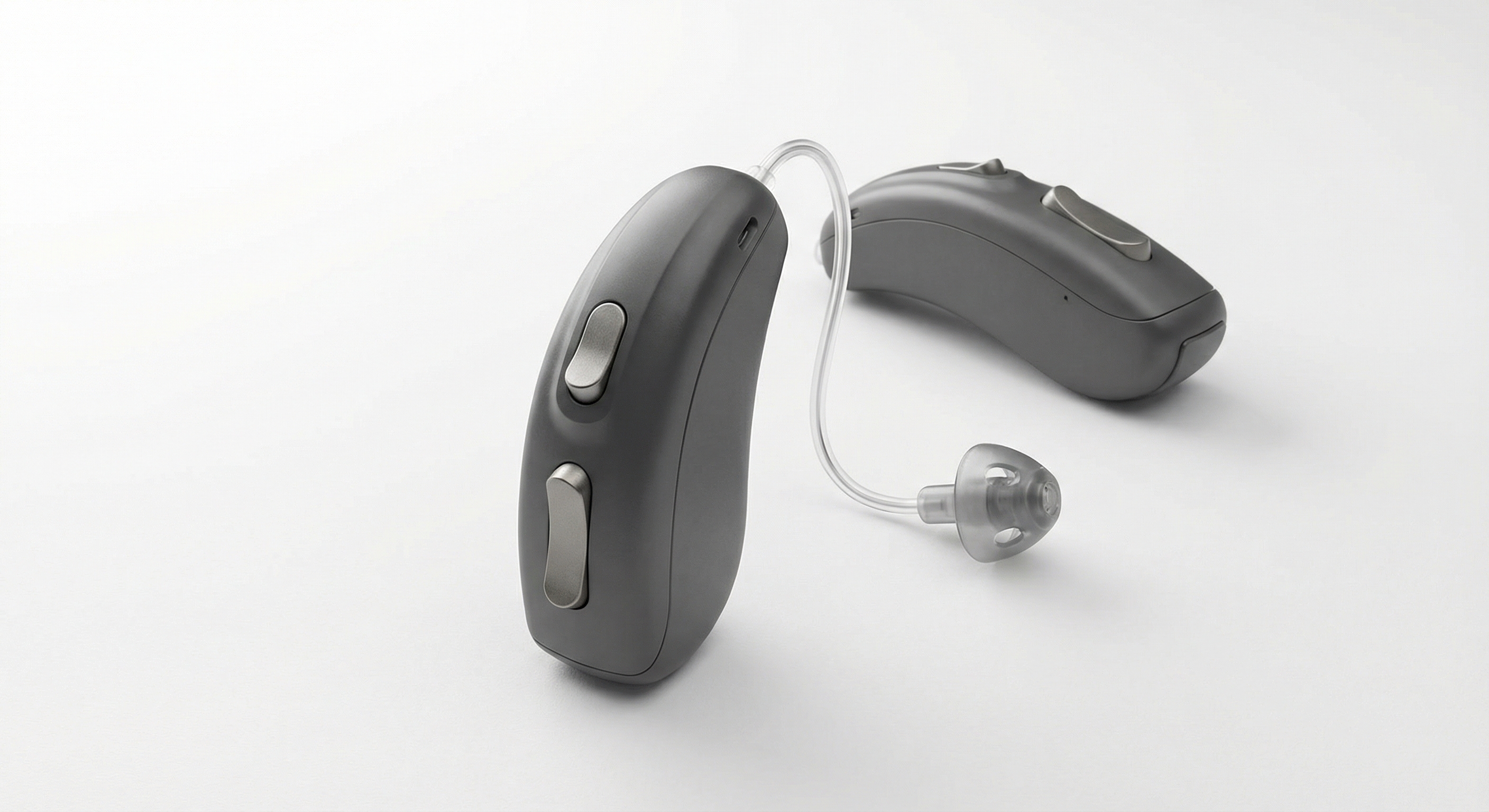
| Receiver-in-canal (RIC) | Behind the ear, thin wire to a speaker in the canal | Widely fitted for most adults today | Speaker sits in wax territory; needs care |
| In-the-ear (ITE) | Fills part of the outer ear | Dexterity-friendly custom option | Larger than canal styles |
| In-the-canal (ITC/CIC/IIC) | Partly or fully inside the canal | Discretion priorities, mild–moderate loss | Smaller batteries, fewer features, fiddlier |
Honest guidance: discretion is the factor people overweight on day one and forget by month two. Handling, comfort and hearing performance are what you live with. If your fingers don't love tiny objects, a RIC or BTE will serve you better than the invisible option — our guide to invisible hearing aids covers those limits honestly.
What hearing aid technology level do you actually need?
Within every style, manufacturers sell several technology levels — the electronics inside, not the shell. Higher levels mainly buy better handling of background noise and more automatic adjustment. Match the level to your listening life, not to the brochure:
- Quiet lifestyle — home, one-on-one conversation, TV: essential levels usually serve well.
- Regular social settings — cafes, family gatherings, community groups: mid-level noise handling earns its keep.
- Demanding environments — meetings, restaurants, work, music: advanced processing makes the biggest audible difference exactly here.
The wrong purchase in either direction costs you: paying for premium processing you never use, or under-buying and abandoning the aids because the noisy situations that drove you to seek help are still hard. This is why we quote after testing — the right level follows your audiogram and your week, not a price list.
Which hearing aid features are worth having? Rechargeable, Bluetooth and apps
Three features have become near-standard and earn their place for most people: Rechargeability (no fiddly batteries — see our batteries guide if you prefer replaceables), Bluetooth streaming for phone calls and TV (how connectivity works), and App control for discreet adjustments. Features worth weighing case-by-case: telecoils for hearing-loop venues, tinnitus support sounds if you have tinnitus alongside hearing loss, and accessories like TV streamers or remote microphones for specific situations. A feature you won't use is just cost and complexity.
Why do fitting, warranty and aftercare matter as much as the device?
Because a hearing aid is not a retail product. It's a fitted medical device plus a relationship. The same device, well or poorly fitted, produces completely different results. What good support looks like: programming matched to your audiogram and verified, follow-up adjustments in the first months while your brain re-learns sound, a clear warranty, and aftercare that continues past the sale. When comparing quotes, compare what's included — fitting, follow-ups, warranty years, aftercare — not just the sticker. Our page on what an independent clinic means explains how clinic ownership shapes the recommendation you get.
How do the Hearing Services Program and funding options change the decision?
Eligible pensioners and DVA card holders can access fully subsidised hearing aids through the Australian Government Hearing Services Program — eligibility criteria apply. These are quality current devices that handle everyday listening well, with optional top-ups if premium features genuinely suit your needs. Hearingcare is an accredited provider and we check eligibility before you buy anything. Private buyers should read our costs guide for realistic ranges, and some private health extras policies contribute — check your fund. Pensioner and HSP details here.
How should you decide? Assessment, audiogram, lifestyle, then price
In this order: get a comprehensive hearing assessment; let the results and your lifestyle shortlist the technology level; choose the style your hands and ears will live with; add only features you'll use; then compare what's included in the price. At Hearingcare in Caloundra, that whole conversation happens with Linda Whittaker, Qualified Audiometrist, with recommendations drawn across brands and explained in plain English — including when the honest advice is that you don't need hearing aids yet.
Book your assessment at our Bulcock Street clinic in Caloundra, Queensland — serving Golden Beach and the Sunshine Coast. No referral needed. Call (07) 5223 4444.
The information on this page is general in nature and is not a substitute for professional advice about your individual hearing health. Hearing outcomes vary from person to person. Eligibility criteria apply to government programs such as the Hearing Services Program. For pricing, see our costs guide — figures there are general estimates only; speak to Hearingcare for an exact quote.
Take the next step
If anything in this guide reflects your own situation, a comprehensive hearing assessment is the most reliable next step. At Hearing Care on the Sunshine Coast, Linda Whittaker — a Qualified Audiometrist with more than 20 years of clinical experience and ACAud membership — provides unhurried, individualised hearing care in a supportive environment.
We see clients from Caloundra, Maroochydore, Mooloolaba, Buderim, Noosa and across the wider Sunshine Coast region. Eligible clients may access fully subsidised hearing services (eligibility criteria apply) through the Australian Government's Hearing Services Program.
Individual results vary. Professional hearing assessment is required to determine the most appropriate management approach for your specific situation.

This article is for educational purposes only. Individual results may vary. Professional hearing assessment is recommended for personalised advice.
Book Your Hearing Assessment