


Hearing aid batteries explained: sizes, life span and care
In This Article
Standing in a chemist aisle staring at rows of tiny batteries labelled 10, 312, 13, and 675 is a genuinely confusing moment for anyone new to hearing aids. Which one is right? How long will it last? And what is this about rechargeable technology that does not use disposable batteries at all?
The good news is that once you understand the basic system, battery management becomes routine — something you handle without thinking, much like charging your phone at the end of the day.
Hearing aid battery sizes explained
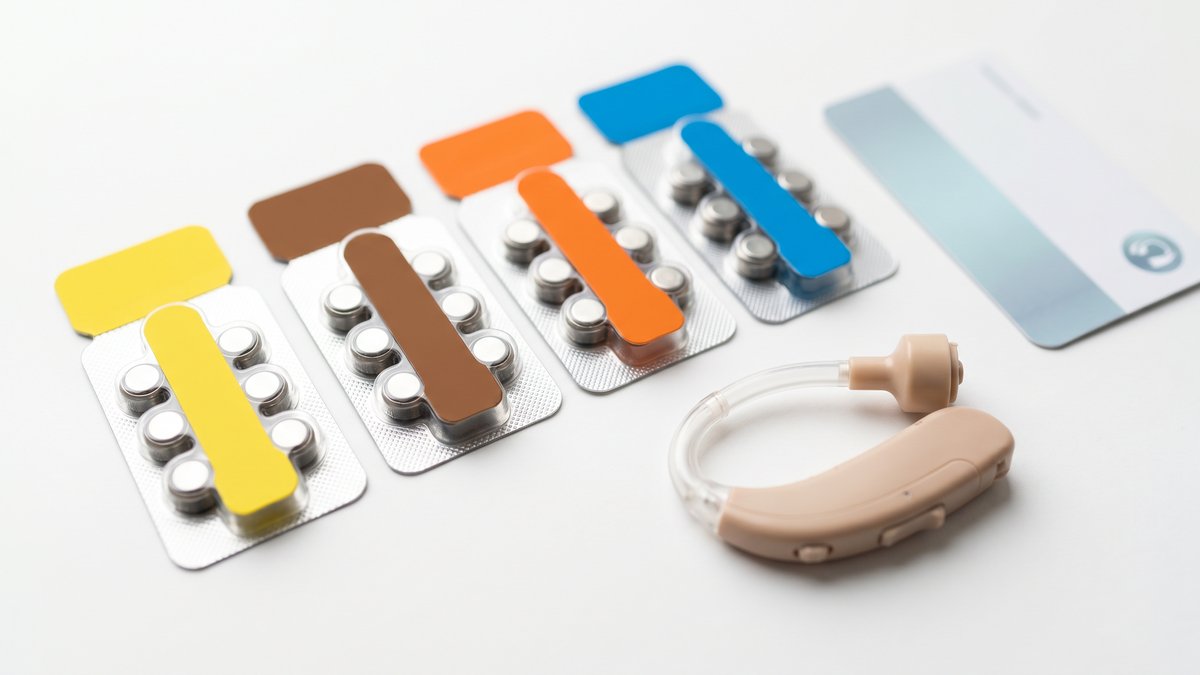
Hearing aid batteries follow a standardised global colour-coding system, which means the number on the packet and the colour of the protective tab are consistent regardless of where you purchase them. The size you need depends entirely on your specific hearing aid model.
Size 10 — yellow tab The smallest standard battery, used in completely-in-canal (CIC) and invisible-in-canal (IIC) devices, and some compact behind-the-ear models. Because these batteries are small, they hold less energy. According to manufacturer specifications, which vary by model and usage patterns, size 10 batteries typically provide three to five days of use.
Size 312 — brown tab A mid-size battery found in many receiver-in-canal (RIC) and in-the-ear (ITE) devices. It is one of the most widely used sizes in modern hearing aids. Manufacturer-stated battery life for size 312 typically falls in the range of five to seven days, though actual performance varies considerably based on usage patterns.
Size 13 — orange tab Similar in diameter to size 312 but thicker, size 13 batteries power many behind-the-ear models and hearing aids with more demanding features. Manufacturer specifications typically indicate six to fourteen days of use per battery.
Size 675 — blue tab The largest standard hearing aid battery, used in high-power behind-the-ear devices for more significant hearing losses. Manufacturer-stated life is typically nine to twenty days. Because these devices tend to require more amplification, battery life varies considerably based on volume requirements.
If you are unsure which size your device uses, check your hearing aid documentation or bring the device to your hearing care professional or hearing aid audiometrist. The original battery is often printed with its size number.
Disposable zinc-air vs rechargeable lithium-ion
Zinc-air batteries are the most common disposable option for hearing aids. They generate power through a chemical reaction between zinc and oxygen from the air — which is why they come with a protective sticker tab. Once you remove the tab, oxygen enters through small holes in the battery and activates the cell. Waiting approximately 60 seconds before inserting the battery into your device may improve performance, as this allows the activation process to complete before the device draws power.
Zinc-air batteries provide stable voltage output across most of their life, which suits hearing aids well. They cannot be recharged. Once depleted, they should be disposed of responsibly through a battery recycling point — many Aldi, Officeworks, and some council facilities participate in battery recycling programs.
Lithium-ion rechargeable hearing aids use batteries built into the device itself. Rather than swapping out small batteries, you place your hearing aids in a charging station — typically overnight — and they are ready for the next day. Most rechargeable systems provide a full day of use from a single overnight charge, according to manufacturer specifications. Many chargers also offer a quick-charge option for an emergency top-up.
Because the rechargeable battery is sealed inside the device, it is not user-replaceable. After several years — typically four to five, though this varies — rechargeable cell capacity may diminish to the point where professional battery replacement or device replacement is required. Your hearing care professional or hearing aid audiometrist can advise on this when the time comes.
What affects battery life
The figures quoted by manufacturers are general guides. In practice, battery life depends on several factors that vary from one person to the next.
More demanding hearing aid features draw more power. Bluetooth audio streaming — connecting your hearing aids to your phone to listen to calls, podcasts, or music — can significantly reduce battery life compared to a day spent primarily in conversation. Noise reduction processing, directional microphone activity, and tinnitus masking features all have energy costs as well.
Volume settings matter too. If your hearing aids are programmed to a higher amplification level, batteries will typically deplete faster than in a device set to lower levels.
Environmental conditions play a role. Queensland's humidity, including the Sunshine Coast's coastal climate, can affect battery chemistry. Temperature extremes — from a hot car to an air-conditioned office — can shorten battery life. Storing batteries in your car, on a windowsill, or in a bathroom is not recommended.
Battery quality and freshness also count. Older batteries or those stored improperly before purchase may underperform. Always check the expiry date when purchasing and use the oldest stock in your supply first.
How to care for your batteries
A few simple habits extend battery life and protect your devices.
Store batteries correctly. Room temperature (approximately 15 to 25 degrees Celsius) is ideal. Avoid refrigerating batteries — this is a common misconception that offers no benefit and can introduce moisture problems when cold batteries warm up again.
Keep batteries dry. Queensland's humidity means moisture is a genuine concern. A hearing aid dehumidifier or desiccant storage container overnight helps protect both the batteries and the device electronics.
Open the battery door when not wearing your devices. This turns the hearing aid off, extends battery life, and allows any accumulated moisture to evaporate. If you will not be using your hearing aids for several days, remove the batteries entirely to prevent any risk of corrosion in the battery compartment.
Keep spare batteries on hand. A depleted battery at an inconvenient moment is easily avoided. Keep spare packs in your wallet, car, bedside table, or anywhere you spend significant time. Most Sunshine Coast chemists and many supermarkets stock common sizes.
Store batteries safely away from children and pets. Button-type batteries, including hearing aid batteries, can cause serious internal injury if swallowed. If ingestion is suspected, contact the Poisons Information Centre on 13 11 26 or call 000 immediately.
Common battery issues
Battery draining faster than expected. Check whether power-intensive features such as Bluetooth streaming are being used more than usual. Higher volume settings or a device requiring service can also draw more power. If batteries consistently underperform against their typical range, bring your devices to your hearing care professional or hearing aid audiometrist for assessment.
Battery door not closing properly. This may indicate the wrong battery size, an incorrectly oriented battery (check the positive and negative markings), debris in the compartment, or damage to the door itself. Do not force the door shut. Contact your clinician for inspection.
Intermittent sound or low volume with fresh batteries. The battery contacts in the compartment may need cleaning. Very gently wiping the contacts with a dry cloth can sometimes help, but persistent problems warrant professional assessment.
Rechargeable device not holding charge. Rechargeable cells lose capacity gradually over time. If you notice significantly shorter battery life than when the device was new, your hearing care professional or hearing aid audiometrist can assess whether the battery or charging system requires attention.
Take the next step
If anything in this guide reflects your own situation, a comprehensive hearing assessment is the most reliable next step. At Hearingcare on the Sunshine Coast, Linda Whittaker — a Qualified Audiometrist with over 20 years of experience and ACAud accreditation — provides unhurried, individualised hearing care in a supportive environment.
We see clients from Caloundra, Maroochydore, Mooloolaba, Buderim, Noosa and across the wider Sunshine Coast region. Eligible clients may access fully subsidised hearing services (eligibility criteria apply) through the Australian Government's Hearing Services Program.
Individual results vary. Professional hearing assessment is required to determine the most appropriate management approach for your specific situation.

Frequently Asked Questions
No. Hearing aids designed for zinc-air batteries require that specific chemistry to function correctly. Standard rechargeable batteries operate at different voltages and will not work in these devices. If you are interested in rechargeable technology, this requires a hearing aid specifically designed with a built-in rechargeable battery.
No. This is a persistent misconception. Zinc-air batteries should be stored at room temperature. Refrigeration provides no benefit and can cause condensation problems when the batteries are returned to ambient temperature, potentially affecting performance.
Expired batteries may still function but typically deliver reduced performance and shorter life. For consistent results, use batteries before expiry. When purchasing, check the date and rotate stock so older packets are used first.
Established brands from reputable suppliers tend to offer more consistent performance than unbranded or very cheap alternatives. Your hearing care professional or hearing aid audiometrist can recommend reliable brands for your device type.
Battery recycling points are available at many Aldi stores, Officeworks locations, and some council household hazardous waste facilities. Some hearing clinics also collect used batteries for bulk recycling. Check with individual locations to confirm they accept button batteries before dropping them off. Privacy Notice: Any personal or health information you provide when booking an appointment or completing an online form is handled in accordance with the Australian Privacy Principles under the Privacy Act 1988 (Cth). Please see our Privacy Policy for details. Disclaimer: This article is general information only and does not constitute medical, audiological, or clinical advice. Individual hearing needs vary. Please consult a qualified hearing care professional for personalised advice.
This article is for educational purposes only. Individual results may vary. Professional hearing assessment is recommended for personalised advice.
Book Your Hearing Assessment