


Hearing aid maintenance: a practical care guide
In This Article
*This article is for educational purposes only and does not constitute medical advice. Hearing health is individual, and assessment results should always be interpreted by a qualified hearing health professional. If you are concerned about your hearing, please consult an accredited hearing healthcare provider for personalised advice.*
Hearing aids are precision medical devices worn for twelve or more hours a day in one of the body's more demanding environments — warm, moist, and consistently exposed to earwax. The difference between a device that fails after two years and one that serves you reliably for six or more often comes down to a few consistent daily habits.
Most common hearing aid problems are preventable. Daily cleaning removes the wax and moisture that gradually degrade microphone ports and receivers. Proper storage protects electronics from Queensland's coastal humidity. And knowing when to book a professional service appointment stops small issues from becoming expensive repairs.
This guide covers the core maintenance habits for Sunshine Coast hearing aid users, with particular attention to Queensland's subtropical climate.
Daily cleaning routine
The single most effective maintenance habit is wiping down your hearing aids every evening when you remove them. Earwax hardens quickly once it is no longer warm, making it significantly harder to remove the next morning. A five-minute evening routine prevents the majority of common hearing aid problems.
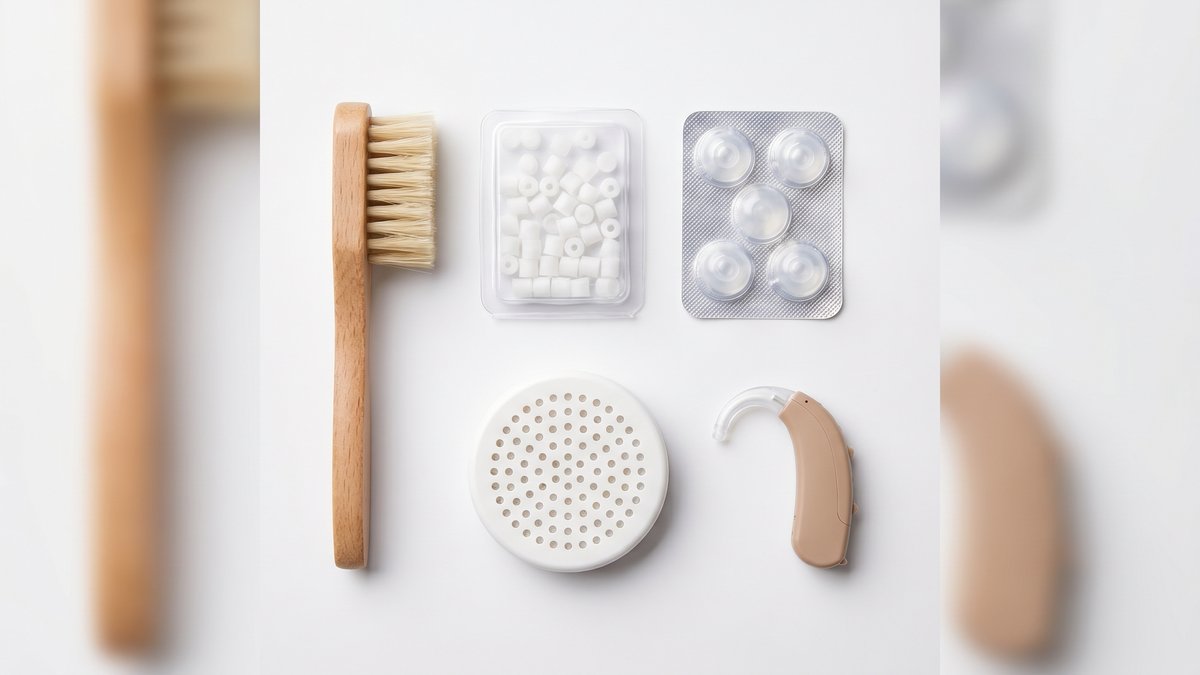
Wipe the shell and earmould. Use the soft cloth provided with your devices — or a clean, dry cloth — to remove earwax, skin oils, and any surface moisture. Pay particular attention to areas that sit within your ear canal.
Check and clean the wax guard. Most modern hearing aids include a wax guard: a small replaceable filter that protects the receiver from earwax ingress. When you see wax accumulation or notice reduced sound volume, replace it. Your hearing care professional will show you how and supply spare guards. Keeping a few on hand means you can replace them when needed rather than waiting for a scheduled appointment.
Brush the microphone ports. Use the small brush supplied with your devices to clear any visible debris from microphone openings and vents. Always brush outward — away from the openings — never inward, which risks pushing debris further inside.
Check the dome or earmould. For behind-the-ear (BTE) devices, inspect domes daily. They should feel soft and pliable — if stiff or cracked, replace them. Your hearing care professional will advise how frequently to replace them for your specific devices.
Leave the battery door open overnight. For hearing aids using disposable batteries, an open battery door allows residual moisture to evaporate and helps preserve battery contacts. For rechargeable devices, place them in their charging case.
Weekly and monthly care
Once a week, set aside ten to fifteen minutes for a more thorough clean.
Wash removable earmoulds. If you wear BTE hearing aids with custom earmoulds, these can be detached and washed in warm, soapy water. Use a small bulb blower to push water out of the sound bore, then leave the earmould to dry completely — overnight is ideal — before reattaching. Never reconnect a damp earmould to your hearing aids, as moisture will track into the electronics.
Inspect tubing on BTE devices. Tubing that has become stiff, discoloured, or cracked needs replacing. Your hearing care professional can do this at a routine appointment, or in some cases demonstrate how to do it at home.
Replace disposable domes. Domes are designed to be replaced regularly — typically every one to four weeks depending on the manufacturer's recommendation. They are inexpensive and have a significant effect on comfort and sound clarity.
Clean battery contacts. For disposable battery devices, inspect the battery contacts monthly. A dry cotton swab can remove light surface buildup. Visible corrosion warrants a professional inspection.
Battery care: standard and rechargeable
Standard (zinc-air) batteries: These are air-activated. After removing the pull tab, wait thirty seconds before inserting the battery — this allows the zinc inside to fully activate and gives you maximum performance. Store spare batteries at room temperature in their original packaging, away from coins or keys that can cause short circuits. Battery life varies by device size, usage hours, and streaming activity, according to manufacturer specifications, which vary by model. If batteries consistently drain much faster than usual, mention this to your hearing care professional — it can indicate an issue with the device rather than the battery.
Rechargeable (lithium-ion) batteries: Place hearing aids in their charging case every night, even if they are not fully depleted. Lithium-ion batteries do not suffer from memory effect, so regular full-cycle charging maintains optimal performance. Most rechargeable hearing aids provide a full day of use on a single overnight charge — according to manufacturer specifications, which vary by model and usage patterns. If your devices no longer hold charge through the day after several years of use, ask your hearing care professional about battery replacement options.
For both types: keep spare batteries or a charger cable accessible when travelling. A portable charging case is worth considering if you spend time away from power outlets.
When to see a Hearingcare professional
Professional servicing complements your home care routine. It addresses areas that home cleaning cannot reach and gives your hearing care professional visibility over your hearing as well as your devices.
Recommended schedule:
- Every three to six months for professional cleaning and inspection
- Every six to twelve months for a comprehensive hearing check and programming review
- Promptly if you notice sudden changes in sound quality, physical discomfort, or feedback that was not previously present
What professional servicing covers:
Your hearing care professional or hearing aid audiometrist will clean the devices using specialised tools, check components for wear, test sound output, replace wax guards and domes, inspect tubing and earmoulds on BTE devices, and review your hearing aid programming against your current hearing levels. If a software update is available for your devices, they can apply it at this visit.
Book immediately if:
Your hearing aids stop working suddenly. You experience pain or irritation when wearing them. Sound quality has noticeably and persistently deteriorated. The devices were submerged in water. The fit has changed and is causing whistling or discomfort.
Do not attempt to open or repair hearing aids yourself. Internal components are delicate, and unauthorised disassembly may void your warranty.
Sunshine Coast climate considerations
Queensland's coastal humidity is the most significant environmental factor for local hearing aid users. Moisture is the leading cause of hearing aid failure, and coastal humidity — even without rain — creates a persistently challenging environment for sensitive electronics.
Use a dehumidifier every night. A hearing aid dehumidifier removes moisture that accumulates during daily wear. Options include electronic dryers, desiccant containers, and UV sanitising units. Place your hearing aids in the dehumidifier when you remove them each evening. This habit alone prevents a significant proportion of moisture-related failures.
Replace desiccant beads when saturated. If you use a desiccant container, the beads change colour when saturated and need replacing. Check this monthly.
During summer: Queensland's humid summer months — when humidity can remain above 70% for extended periods — warrant extra vigilance. Consider using your dehumidifier twice daily if you notice performance changes, and wipe your devices down immediately after any activity involving perspiration.
If your hearing aids get wet:
- Remove them immediately and turn them off
- Remove the battery (for disposable battery devices) or place rechargeable devices in the charging case
- Dry the exterior with a soft cloth
- Open all compartments
- Place in a dehumidifier for eight to twelve hours before attempting to use them
- Contact your hearing care professional if the devices have been submerged or if performance remains impaired after thorough drying
Take the next step
If anything in this guide reflects your own situation, a comprehensive hearing assessment is the most reliable next step. At Hearingcare on the Sunshine Coast, Linda Whittaker — a Qualified Audiometrist with over 20 years of experience and ACAud accreditation — provides unhurried, individualised hearing care in a supportive environment.
We see clients from Caloundra, Maroochydore, Mooloolaba, Buderim, Noosa and across the wider Sunshine Coast region. Eligible clients may access fully subsidised hearing services (eligibility criteria apply) through the Australian Government's Hearing Services Program.
Individual results vary. Professional hearing assessment is required to determine the most appropriate management approach for your specific situation.

Frequently Asked Questions
Replace them when you notice wax buildup, reduced sound volume, or muffled quality — typically every two to eight weeks depending on your individual wax production. Keep a supply on hand so you can replace them promptly rather than tolerating degraded performance while waiting for an appointment.
Never use water on the hearing aids themselves. Removable earmoulds can be washed in warm soapy water, but must be completely dry before reattaching. For the devices, use only the dry cleaning tools supplied — soft cloth, brush, wax pick. If debris cannot be removed at home, your hearing care professional has specialised tools for safe cleaning.
Remove the battery or place rechargeable devices in the case immediately. Dry the exterior gently, open all compartments, and place in a dehumidifier for at least eight hours. Do not use heat sources — hairdryers, microwaves, or direct sunlight. Contact your hearing care professional if the devices were submerged or if problems persist after drying.
With consistent daily cleaning, regular professional servicing, and proper moisture management, hearing aids typically last five to seven years. Individual experience varies based on usage patterns, environmental conditions, and care habits. Advancing hearing technology also means some users choose to upgrade before devices reach the end of their functional life.
The core principles — daily cleaning, moisture management, professional servicing — apply to all styles. The specifics vary: BTE devices need tubing and earmould attention; ITE and CIC styles need careful wax guard management; rechargeable devices need consistent nightly charging. Your hearing care professional will tailor maintenance guidance to your specific device when you are fitted. *Always consult with a qualified hearing care professional or hearing aid audiometrist for personalised advice regarding your hearing health.*
This article is for educational purposes only. Individual results may vary. Professional hearing assessment is recommended for personalised advice.
Book Your Hearing Assessment