


How do hearing aids work? Inside the device, in plain english
In This Article
A hearing aid is a tiny personal sound system with three jobs: capture the sound around you, reshape it to match your specific hearing loss, and deliver the result into your ear. Modern digital hearing aids do this millions of times a second — amplifying only the pitches you miss, taming background noise, and adjusting automatically as you move from a quiet kitchen to a noisy café.
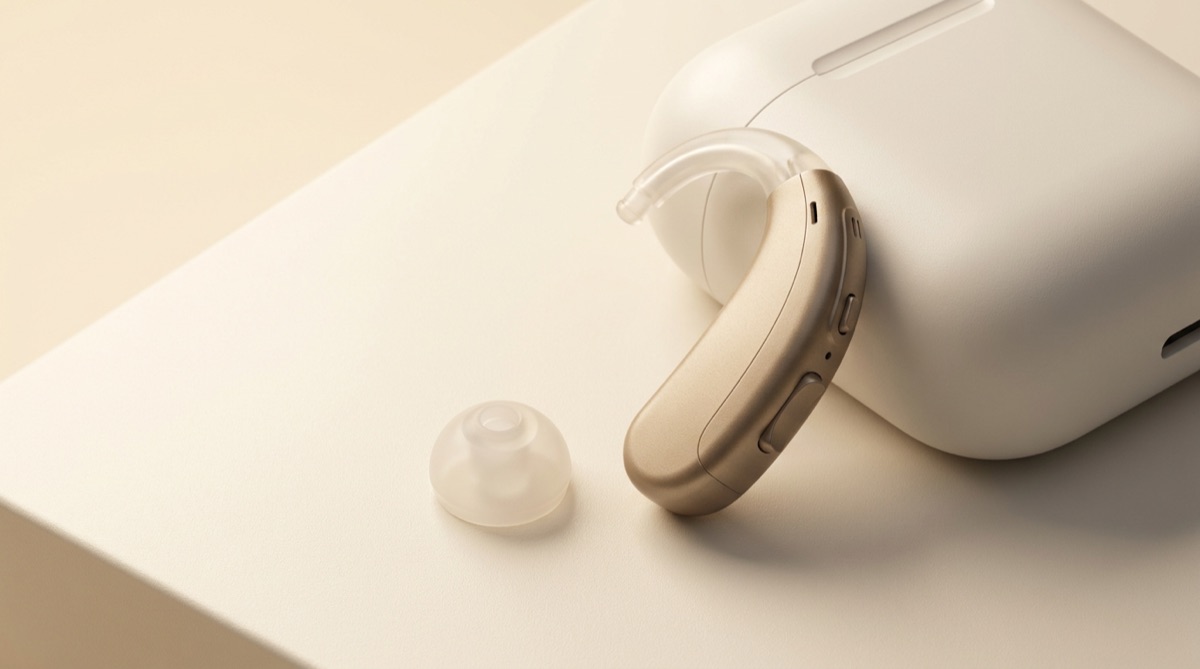
What is inside hearing aids? Microphones, processor, receiver and battery
Four core parts. Microphones — usually two per aid — pick up sound and help the device judge which direction it came from. A processor (a miniature computer) analyses the sound and applies your prescription: amplifying the frequencies your audiogram shows you miss, compressing loud sounds to stay comfortable, and filtering steady background noise. A receiver — a tiny speaker — delivers the processed sound into your ear canal. And a battery, increasingly rechargeable, powers it all. Bluetooth streaming, app control and the sound-therapy features used in tinnitus management are layered on top of this same chain.
Do hearing aids restore normal hearing, and what does a good fitting change?
No — and it is worth saying plainly, because every glossy brochure implies otherwise. Hearing aids amplify and clarify what your remaining hearing can use; they do not repair the inner ear. What a well-fitted hearing aid realistically delivers: conversation that takes less effort, TV at a volume the household shares, and less strain in background noise. The gap between a poor experience and a good one is usually not the device — it is the fitting: programming matched precisely to your audiogram and verified with real ear measurement. Real ear measurement places a tiny probe microphone in your ear canal while the aid is worn, confirming the prescribed amplification is actually arriving at your eardrum — not just promised on a screen. Fittings verified this way are associated with better outcomes than guesswork settings.
How long does the adaptation period take with new hearing aids?
Most people need two to six weeks of consistent wear. Your brain has been living with filtered sound — sometimes for years — and suddenly restored detail (your own footsteps, the fridge hum, paper rustling) can feel sharp at first. That is adaptation, not a faulty device. It is also why follow-up adjustments matter: a good fitting schedule starts slightly gentle and steps up as your brain re-calibrates. Wearing the aids all day, rather than "saving them for occasions," is the single biggest factor in adapting well.
How long do hearing aids last — batteries, servicing and upgrades?
Typically four to six years of daily wear, sometimes longer with good care. Batteries, domes, wax filters and tubing are consumables along the way, and regular servicing — cleaning, moisture treatment, re-tubing — extends life measurably. Technology also moves: many people upgrade not because the old aids failed, but because features like rechargeability, Bluetooth or better noise handling justify it. Our maintenance and repair service at Hearingcare in Caloundra keeps most brands running well between upgrades.
If you are weighing up hearing aids, start with the audiogram, not the brochure: a comprehensive hearing assessment at our Bulcock Street clinic — serving Golden Beach and the Sunshine Coast, Queensland — shows exactly what your hearing needs before any device conversation begins. Our Qualified Audiometrist gives independent advice across leading brands.
The information on this page is general in nature, and hearing outcomes, results and experiences vary from person to person. Hearing aids do not restore normal hearing, and results differ between individuals. This page is not a substitute for professional advice. For advice specific to you, book an appointment with our Qualified Audiometrist.
Last reviewed July 2026 by Linda Whittaker, Qualified Audiometrist.
Take the next step
If anything in this guide reflects your own situation, a comprehensive hearing assessment is the most reliable next step. At Hearing Care on the Sunshine Coast, Linda Whittaker — a Qualified Audiometrist with more than 20 years of clinical experience and ACAud membership — provides unhurried, individualised hearing care in a supportive environment.
We see clients from Caloundra, Maroochydore, Mooloolaba, Buderim, Noosa and across the wider Sunshine Coast region. Eligible clients may access fully subsidised hearing services (eligibility criteria apply) through the Australian Government's Hearing Services Program.
Individual results vary. Professional hearing assessment is required to determine the most appropriate management approach for your specific situation.

This article is for educational purposes only. Individual results may vary. Professional hearing assessment is recommended for personalised advice.
Book Your Hearing Assessment