


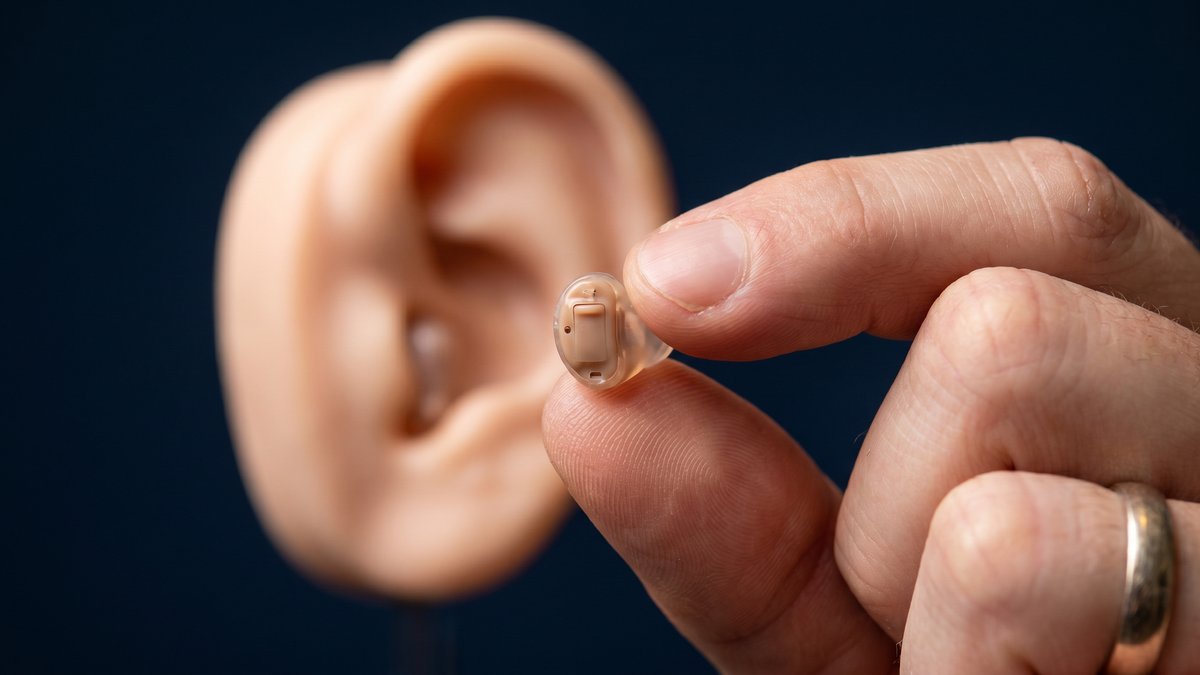
Invisible hearing aids: what IIC and CIC styles can and cannot do
In This Article
*This article is for educational purposes only and does not constitute medical advice. Hearing health is individual, and assessment results should always be interpreted by a qualified hearing health professional. If you are concerned about your hearing, please consult an accredited hearing healthcare provider for personalised advice.*
Concern about how hearing aids look is one of the most common reasons people delay getting help. It is worth naming that directly — and then being honest about what modern discreet hearing aids can and cannot do, so you can make an informed decision rather than one based on wishful thinking.
The term "invisible hearing aids" describes devices that sit so deep inside the ear canal they are very difficult to see. The most discreet style — Invisible-in-Canal (IIC) — positions the device past the second bend of the canal, making it nearly undetectable from most angles. But the word "invisible" carries risk of misunderstanding. True invisibility — undetectable from any angle in any lighting — is not what most wearers experience. Visibility depends on individual ear canal anatomy, the specific device, and the viewing angle.
What these devices genuinely offer is substantial discretion. For many Sunshine Coast residents navigating beach walks at Mooloolaba, meetings in Maroochydore, or dinners in Noosa, the difference between a visible and a nearly-invisible hearing aid matters. The question is whether discretion aligns with your specific hearing needs.
What "invisible" means in hearing aids
In the hearing industry, "invisible" applies to devices that sit entirely within the ear canal — not in the outer ear bowl, and not behind the ear.
Two styles claim this territory. The IIC (Invisible-in-Canal) sits deepest, typically past the second bend of the canal. The CIC (Completely-in-Canal) sits within the lower ear canal but is slightly less deeply positioned. Both are custom-moulded to your individual ear anatomy.
Neither style is invisible in an absolute sense. IIC devices come close — they are rarely noticeable in conversation — but certain viewing angles or lighting conditions may reveal them, depending on your ear anatomy. CIC devices sit slightly less deep and may be visible on close inspection.
This distinction matters for expectation-setting, not to discourage you. For most everyday social situations, both styles offer a degree of discretion that significantly reduces — and for many people effectively eliminates — self-consciousness about wearing hearing aids.
CIC vs IIC: key differences
Both CIC and IIC hearing aids are custom-fabricated from an impression of your ear canal. The manufacturing process involves a hearing care professional or hearing aid audiometrist taking a mould of your canal, which is then used to create a device shaped precisely to your anatomy.
The key differences are depth of insertion, battery, and features.
IIC devices sit deepest. They use size 10 batteries — the smallest available — which typically last three to five days depending on usage and device settings. Daily removal is via a small extraction thread rather than a handle. Because of their very small size, most IIC devices do not include Bluetooth streaming, directional microphones, or rechargeable batteries.
CIC devices sit slightly higher in the canal and typically share the same size 10 battery format and similar limitations on features. They may offer a marginally larger faceplate, which some people find easier to handle, though both styles demand good manual dexterity and reasonable close-up vision.
Both styles suit mild to moderate hearing loss. Neither is appropriate for severe or profound hearing loss — the physical size of the device limits how much amplification it can deliver before acoustic feedback becomes unmanageable.
Who they suit (and who they don't)
IIC and CIC hearing aids are not appropriate for everyone. Understanding the candidacy requirements before becoming attached to the idea of an invisible device saves time and potential disappointment.
Suitable candidates typically have:
Mild to moderate hearing loss — confirmed by a comprehensive hearing assessment. The power available in a size 10 battery and the acoustic constraints of a deep-canal fit set a ceiling on how much amplification these devices can provide.
Ear canal anatomy that accommodates deep insertion. Not all canals are suitable — very small, sharply curved, or irregular canals may not support an IIC device comfortably or at all. Your hearing care professional will examine your ears with an otoscope to assess anatomy.
Good manual dexterity and close-up vision. Inserting and removing a small device with an extraction thread, and changing a size 10 battery every three to five days, requires steady hands and adequate visual acuity. If you have arthritis, tremor, or significant vision changes, larger styles with more accessible controls may serve you better — without any compromise to the quality of your hearing outcome.
Ear health that is free from chronic conditions. Recurring ear infections, significant wax overproduction, or drainage can make IIC devices unsuitable. Excessive wax is common in these styles because the device sits within the zone where wax is produced, and this can affect both device performance and ear health.
Not suitable for:
Severe to profound hearing loss, where more powerful BTE or power BTE devices are typically required. Those who want Bluetooth streaming for phone calls, music, or television audio — most IIC and CIC devices do not support this. Those who prefer rechargeable batteries — the battery format and size constraints make this technically impractical in current designs. Those with significant dexterity or vision limitations.
There is no lesser hearing outcome from choosing a larger style. Receiver-in-canal (RIC) devices, for example, are available in colours that blend closely with hair or skin tone, have a very thin connecting wire, and in many cases are barely noticeable in everyday settings — while offering Bluetooth, rechargeable batteries, and compatibility with more degrees of hearing loss.
Extended-wear options: Phonak lyric
One device occupies a category of its own: the Phonak Lyric. This is an extended-wear hearing aid, placed deep in the ear canal by a trained hearing care professional, where it remains continuously for several months before being replaced.
Unlike daily-wear IIC devices, the Lyric does not need to be inserted or removed each day. It sits beyond the second bend of the canal and is not visible during normal social interaction. Because it is worn continuously — including during sleep and showering (subject to the specific guidance from the fitting professional) — it requires no daily handling.
The Lyric is not appropriate for everyone. It requires compatible ear canal anatomy, assessed at the fitting appointment. It is available on a subscription basis rather than an outright purchase. It is not a standard hearing aid and is only fitted by clinicians specifically trained in the Lyric procedure.
There is no single best brand of hearing aid, including for extended-wear styles. The right device depends on your hearing loss pattern, ear anatomy, lifestyle, and other factors a hearing care professional can assess. Phonak produces the Lyric; other manufacturers produce their own IIC and CIC options with different technology characteristics.
Limitations and trade-offs
Honest framing of the limitations is important, because a device that is not correctly matched to your needs — no matter how discreet — will not serve you well.
Battery life is short. Size 10 batteries last approximately three to five days in most IIC and CIC devices. If you find small batteries difficult to handle or do not want to manage frequent changes, this is a significant practical consideration.
Features are limited. The physical space inside an IIC or CIC device constrains what technology can be included. Most devices use a single omnidirectional microphone rather than a directional array, which means they are less effective at separating speech from background noise compared to larger devices with multiple microphones. Bluetooth, rechargeability, and sophisticated noise management are generally absent.
Wax exposure is higher. Sitting deep in the canal means constant exposure to cerumen (earwax). This can block the receiver and microphone ports, affecting sound quality, and may require more frequent professional cleaning than behind-the-ear styles.
Ear canal anatomy changes. Ear canals can change shape with age, weight change, or other factors. A device that fits perfectly today may require a new impression or shell in the future.
Progression of hearing loss. If your hearing loss progresses beyond the mild-to-moderate range, you may need to transition to a more powerful style. This is worth discussing with your hearing care professional when selecting a device.
These are not reasons to dismiss discreet styles — they are factors to weigh against the benefits, with guidance from a qualified professional.
Cost and funding
Custom hearing aids — including IIC and CIC styles — typically carry a cost premium over standard RIC or BTE models, reflecting the bespoke manufacturing process.
Funding options available to Sunshine Coast residents may include the Hearing Services Program (for eligible pensioners and holders of certain government concession cards), DVA coverage for eligible veterans, NDIS funding for eligible participants, and private health insurance extras cover. The applicability of each program to a specific device type and technology tier will depend on your individual eligibility.
Your hearing care professional or hearing aid audiometrist can discuss which funding pathways are relevant to your circumstances. Contact your clinic for current pricing — costs vary by manufacturer, technology level, and the service package included with the device.
Your next step
The starting point for any hearing device decision is a professional hearing assessment. During a consultation, a qualified hearing care professional or hearing aid audiometrist will test your hearing to establish your loss pattern and degree, examine your ear canals for suitability, discuss your lifestyle and priorities, and walk you through device options — including whether a discreet style is appropriate for you.
At Hearingcare on the Sunshine Coast, Linda Whittaker offers comprehensive hearing assessments for adults. Whether invisible IIC devices, a discreet RIC option, or another style best fits your needs, professional guidance ensures you make a decision based on accurate information.
Always consult with a qualified hearing care professional or hearing aid audiometrist for personalised advice regarding your hearing health.
Take the next step
If anything in this guide reflects your own situation, a comprehensive hearing assessment is the most reliable next step. At Hearingcare on the Sunshine Coast, Linda Whittaker — a Qualified Audiometrist with over 20 years of experience and ACAud accreditation — provides unhurried, individualised hearing care in a supportive environment.
We see clients from Caloundra, Maroochydore, Mooloolaba, Buderim, Noosa and across the wider Sunshine Coast region. Eligible clients may access fully subsidised hearing services (eligibility criteria apply) through the Australian Government's Hearing Services Program.
Individual results vary. Professional hearing assessment is required to determine the most appropriate management approach for your specific situation.

Frequently Asked Questions
IIC and CIC devices use the same fundamental digital technology as larger hearing aids. For people with mild to moderate hearing loss and suitable ear anatomy, they can be effective. Effectiveness depends on whether your hearing loss falls within the range these devices can address, and whether your ear canal is anatomically suitable. Individual results vary, and a hearing assessment with a qualified hearing care professional or hearing aid audiometrist is the only way to determine whether invisible-style devices will work for your specific situation.
No, not in an absolute sense. IIC devices are very difficult to see from most angles and in most social situations — close enough to invisible for many people's purposes. But visibility depends on your ear canal anatomy, the device, and viewing conditions. "Nearly invisible" or "highly discreet" is more accurate than "completely invisible."
No. Suitability depends on your hearing loss pattern, ear canal anatomy, dexterity, lifestyle, and budget. Multiple manufacturers produce quality IIC and CIC devices with different features and technology levels. The right device is the one that meets your individual needs — determined through a professional assessment.
Pricing varies by technology level, manufacturer, and the service package provided. Contact Hearingcare directly for current pricing. Government funding through the Hearing Services Program, DVA, or NDIS may apply depending on your eligibility.
Most IIC and CIC devices do not include Bluetooth streaming due to their very small size. If wireless connectivity for phone calls, music, or television audio is important to you, RIC devices — which can be remarkably discreet while offering full Bluetooth capability — are worth discussing with your hearing care professional.
With proper care, IIC and CIC devices typically last three to five years, though some wearers see shorter lifespans because the deep-canal environment (moisture, wax, temperature variation) is more demanding than the environment faced by behind-the-ear styles. Regular professional cleaning, a nightly dehumidifier, and prompt attention to any performance issues extend longevity.
Only a comprehensive hearing assessment and ear examination can determine this. IIC and CIC devices suit mild to moderate hearing loss. Severe to profound loss generally requires more powerful styles. Ear canal anatomy must also be assessed by a hearing care professional.
This article is for educational purposes only. Individual results may vary. Professional hearing assessment is recommended for personalised advice.
Book Your Hearing Assessment