


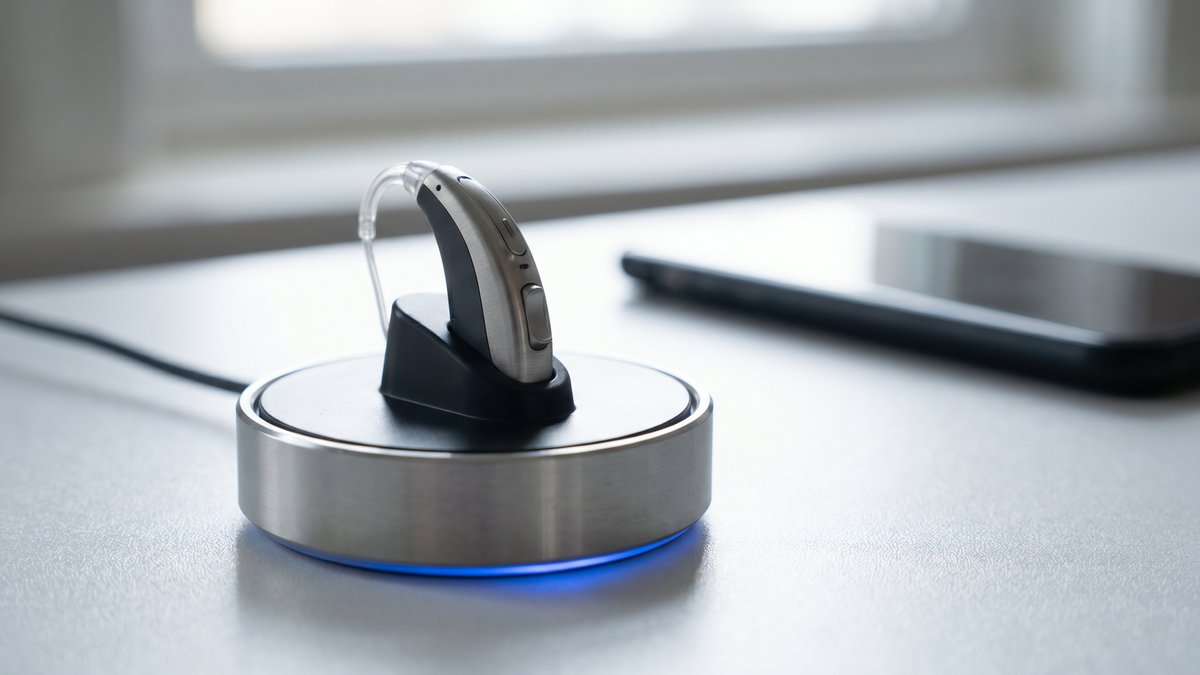
A closer look at ReSound hearing aids in Australia
In This Article
- What makes ReSound distinctive
- ReSound nexia and the current platform
- M&RIE: microphone and receiver in ear
- Connectivity: Made for iPhone, auracast, and Bluetooth LE audio
- Key features across the ReSound range
- How ReSound compares to other brands
- Funding programs in Australia
- Finding ReSound on the Sunshine Coast
*This article is for educational purposes only and does not constitute medical advice. Hearing health is individual, and assessment results should always be interpreted by a qualified hearing health professional. If you are concerned about your hearing, please consult an accredited hearing healthcare provider for personalised advice.*
What makes ReSound distinctive
ReSound hearing aids are designed and manufactured by GN Hearing, part of the GN Group — a Danish company with over 150 years of history in sound technology. ReSound has been a consistent presence in the Australian audiology market, with a product range that spans from entry-level to premium devices across multiple form factors.
The company's defining technology approach is what it calls Organic Hearing: a philosophy that aims to preserve the natural way sound is processed by the ear and brain, rather than heavily manipulating incoming audio before it reaches the listener. This is reflected in choices about microphone placement, directionality, and processing philosophy across their current range.
According to the company, ReSound was among the first manufacturers to offer Made for iPhone hearing aid technology, doing so in 2014. Connectivity has remained a core focus, and ReSound Nexia — the brand's current flagship platform — supports Bluetooth LE Audio and Auracast, both relatively recent developments in hearing aid wireless standards.
ReSound nexia and the current platform
ReSound nexia (2023 — current flagship)
Launched in 2023 and confirmed as ReSound's current premium platform in 2026, ReSound Nexia builds on the Omnia foundation with the addition of Bluetooth LE Audio and Auracast readiness. It is available in four technology tiers (9, 7, 5, and 3), with tier 9 offering the most sophisticated features and the greatest number of automatic adjustments.
Key Nexia features include:
- Bluetooth LE Audio — a newer, more efficient Bluetooth standard compatible with both iOS and Android devices
- Auracast readiness — a broadcast audio technology that, as venues adopt compatible infrastructure, will allow public audio systems (cinemas, lecture halls, transport hubs) to stream directly to hearing aids
- Ultra Focus — a manually activated feature that creates a narrow directional beam for very challenging noisy environments such as crowded restaurants
- Full app control through the ReSound Smart 3D app
- Rechargeable and battery-powered options
- Telecoil available in select BTE and RIE models
ReSound omnia (2022)
ReSound Omnia remains in the product line as a recent-generation platform with a strong feature set. It includes M&RIE receiver technology, Ultra Focus, and Made for iPhone connectivity, with Android support via the ASHA protocol. For buyers where the newer Bluetooth LE Audio in Nexia is not a priority, Omnia represents a capable recent-generation option that may be available at a different price point.
ReSound ONE (2020)
ReSound ONE was the platform that introduced M&RIE technology and remains in use among many current wearers. It is referenced here for context — new fittings in 2026 will typically centre on Nexia or Omnia.
M&RIE: microphone and receiver in ear
One of ReSound's most distinctive hardware innovations is M&RIE — an additional microphone positioned inside the ear canal alongside the receiver (speaker). Conventional hearing aids place all microphones on the device housing behind or on the ear. M&RIE adds a third microphone deep in the canal, using the natural sound-shaping properties of the outer ear and ear canal to capture directional information.
According to ReSound, the outer ear's pinna naturally funnels and shapes sound, providing subtle directional cues that help the brain locate where sounds are coming from. By adding a microphone at this location, M&RIE aims to preserve some of these natural acoustic cues within the amplified signal.
M&RIE is an optional receiver type available on Nexia and Omnia, not a standard fitting for all users. Its suitability depends on ear canal anatomy and hearing loss configuration. Your hearing care professional will assess whether this receiver style is appropriate for your ears and hearing profile.
Connectivity: Made for iPhone, auracast, and Bluetooth LE audio
Made for iPhone
ReSound Omnia and ONE use the Made for iPhone (MFi) protocol for direct streaming from Apple devices — phone calls, music, podcasts, and video audio stream directly to both hearing aids without an intermediary streamer. For Android, these platforms use the ASHA protocol on compatible devices running Android 10 or later.
Bluetooth LE audio and auracast
ReSound Nexia moves to Bluetooth LE Audio — a newer standard that offers improved battery efficiency during streaming and compatibility with a broader range of devices regardless of operating system. Auracast is built on LE Audio and represents an emerging technology for public audio streaming. As venues install Auracast-compatible transmitters, Nexia users will be able to receive audio streams from compatible public systems directly in their hearing aids. Adoption of Auracast infrastructure in Australia is still in early stages.
ReSound smart 3D app
The Smart 3D app (iOS and Android) provides:
- Volume adjustment and program switching
- Treble and bass adjustments
- Ultra Focus activation for supported models
- Tinnitus relief sound therapy configuration
- Lost hearing aid location (last known Bluetooth position)
- Battery status monitoring
- Remote Assist — enabling your hearing care professional to make programming adjustments during a video call, without requiring an in-person visit
Key features across the ReSound range
Ultra focus
Available in Nexia and Omnia, Ultra Focus creates a narrow directional beam focused directly in front of the wearer when activated through the app. It is designed for situations where background noise is severe enough that standard directionality is insufficient — a busy café, a noisy family gathering, or a crowded event. It is a manual feature, not automatic, which means you control when it applies.
Tinnitus management
ReSound hearing aids can be configured with sound therapy options for tinnitus — customisable sounds such as white noise, ocean waves, and nature sounds, adjusted through the Smart 3D app. Many people find that properly fitted hearing aids that restore access to ambient sound reduce their awareness of tinnitus even without dedicated tinnitus programs, as increased environmental sound provides a natural masking effect. Individual responses vary, and tinnitus management should be discussed as part of a broader assessment with your hearing care professional.
Telecoil
Selected Nexia BTE and RIE models include a telecoil, which picks up electromagnetic signals from hearing loop systems installed in venues such as theatres, churches, and some public buildings. If you regularly attend venues with hearing loops, discussing telecoil availability when selecting your ReSound model is worthwhile.
How ReSound compares to other brands
When comparing manufacturers, it is important to approach the exercise as a guide for trial rather than a definitive ranking.
No single hearing aid brand is universally better — suitability depends on your individual hearing profile and the recommendation of a qualified hearing care professional or hearing aid audiometrist.
ReSound vs Phonak. Phonak tends to emphasise more aggressive speech processing and its Roger wireless microphone system for severe noise and distance situations. ReSound's Organic Hearing philosophy uses a lighter processing touch, prioritising the preservation of natural sound cues. If natural-sounding amplification and spatial awareness matter more than maximum noise suppression, ReSound's approach may suit you better.
ReSound vs Oticon. Both are Danish companies with philosophies centred on the brain's role in processing sound. Oticon's BrainHearing approach provides broad access to environmental sound with minimal directionality filtering. ReSound's approach blends natural sound with more traditional directional options including Ultra Focus for extreme situations. The right fit depends on your personal sound preferences and which approach your hearing care professional recommends based on your audiogram.
ReSound vs Signia. Signia differentiates primarily through Own Voice Processing (OVP), which addresses the natural quality of the wearer's own amplified voice. ReSound's point of difference is M&RIE and the Organic Hearing philosophy. Neither approach is inherently better — your hearing care professional's assessment of your specific hearing profile should guide the final recommendation.
ReSound vs Starkey. Starkey emphasises health tracking and American manufacturing. ReSound focuses on connectivity innovation and natural sound through its Danish engineering approach. Again, your hearing care professional's assessment of your specific hearing profile should guide the final recommendation.
Your hearing care professional can facilitate trials when appropriate, allowing you to evaluate sound quality differences firsthand.
Funding programs in Australia
Several Australian government programs may reduce the out-of-pocket cost of ReSound hearing aids.
Hearing Services Program (HSP). ReSound hearing aids are available through the Australian Government HSP for eligible individuals. Eligibility typically includes age pensioners, DVA clients, and certain other concession card holders. The HSP schedule includes selected ReSound models across technology tiers, though premium features may require an additional private payment. Your contracted HSP provider can clarify which models fall within your voucher entitlement.
National Disability Insurance Scheme (NDIS). NDIS participants with hearing loss in their plan may access ReSound hearing aids as assistive technology if deemed a reasonable and necessary support. Assessment and plan approval are required. Note that NDIS participants who are also HSP-eligible may access hearing services through HSP.
Department of Veterans' Affairs (DVA). DVA Gold Card holders typically receive comprehensive hearing services through contracted providers. White Card holders may access services if hearing loss is accepted as service-related. ReSound devices are available through DVA-contracted networks.
Private Health Insurance. Extras policies vary widely in their hearing aid benefits. Check your specific policy for annual limits, waiting periods (commonly six to twelve months), and whether coverage applies per device or per pair.
Hearingcare works with clients accessing government hearing programs including HSP, DVA, and NDIS. Contact us to discuss which programs may be relevant to your situation.
Specific prices are not listed here in accordance with Australian healthcare advertising requirements. Your hearing care professional can provide a transparent quote that includes the services bundled with the device cost.
Finding ReSound on the Sunshine Coast
At Hearingcare on the Sunshine Coast, Qualified Audiometrist Linda Whittaker provides comprehensive hearing assessments and professional fitting of ReSound hearing aids. A consultation starts with a full evaluation of your hearing profile, followed by a discussion of whether Nexia, Omnia, or another ReSound option best suits your needs.
Contact Hearingcare to book your hearing assessment. There is no obligation to proceed with any particular device, and Linda can discuss how ReSound compares to other options available at the clinic.
Take the next step
If anything in this guide reflects your own situation, a comprehensive hearing assessment is the most reliable next step. At Hearingcare on the Sunshine Coast, Linda Whittaker — a Qualified Audiometrist with over 20 years of experience and ACAud accreditation — provides unhurried, individualised hearing care in a supportive environment.
We see clients from Caloundra, Maroochydore, Mooloolaba, Buderim, Noosa and across the wider Sunshine Coast region. Eligible clients may access fully subsidised hearing services (eligibility criteria apply) through the Australian Government's Hearing Services Program.
Individual results vary. Professional hearing assessment is required to determine the most appropriate management approach for your specific situation.

Frequently Asked Questions
ReSound Nexia (2023) is the newer platform and differs from Omnia (2022) primarily in Bluetooth technology. Nexia uses Bluetooth LE Audio — a newer, more efficient standard that also supports Auracast public audio streaming. Omnia uses Made for iPhone protocol with Apple devices and ASHA with compatible Android devices. Sound processing and features such as Ultra Focus and M&RIE availability are very similar between the two platforms. Your hearing care professional can advise whether the newer Bluetooth standard in Nexia offers practical benefits for your circumstances.
M&RIE (Microphone & Receiver-In-Ear) adds a microphone inside the ear canal to capture sound using the outer ear's natural acoustic properties. According to ReSound, this can improve directional sound perception and sound naturalness for suitable candidates. It is not appropriate for all users — ear canal anatomy and hearing loss configuration determine suitability. Your hearing care professional will assess whether M&RIE is viable for your ears.
Under typical conditions with moderate streaming, ReSound rechargeable hearing aids generally provide 24 to 30 hours of use per charge. Heavy streaming (several hours daily of music, calls, or media) may reduce this to 16 to 20 hours. A full charge takes approximately three hours. Rechargeable battery capacity gradually reduces over time, typically after four to five years of daily cycling.
Yes. Nexia uses Bluetooth LE Audio, compatible with both iOS and Android. Omnia and ONE use Made for iPhone for Apple devices and ASHA protocol for Android devices running version 10 or later. In practical terms, both platforms support streaming and app control on either operating system, though the specific Bluetooth protocol differs.
Yes. ReSound offers power receiver options for RIE models and power BTE models specifically designed for severe to profound hearing loss. Audiogram results determine which receiver type and model are technically appropriate. Your hearing care professional will assess this during your fitting consultation.
Start with basic checks: battery level or charge status, visual inspection for wax blockage in the receiver opening, and Bluetooth connectivity if experiencing streaming issues. Check that volume has not been adjusted unintentionally via the app. If basic troubleshooting does not resolve the issue, contact your hearing care professional. Repairs and professional cleaning are covered under manufacturer warranty for manufacturing defects during the warranty period. Do not attempt self-repair or use water or cleaning solutions not specifically designed for hearing aids. Privacy Notice: Any personal or health information you provide when booking an appointment or completing an online form is handled in accordance with the Australian Privacy Principles under the Privacy Act 1988 (Cth). Please see our Privacy Policy for details. Disclaimer: This article is general information only and does not constitute medical, audiological, or clinical advice. Individual hearing needs vary. Please book a consultation with a qualified hearing care professional or hearing aid audiometrist for personalised advice.
This article is for educational purposes only. Individual results may vary. Professional hearing assessment is recommended for personalised advice.
Book Your Hearing Assessment