


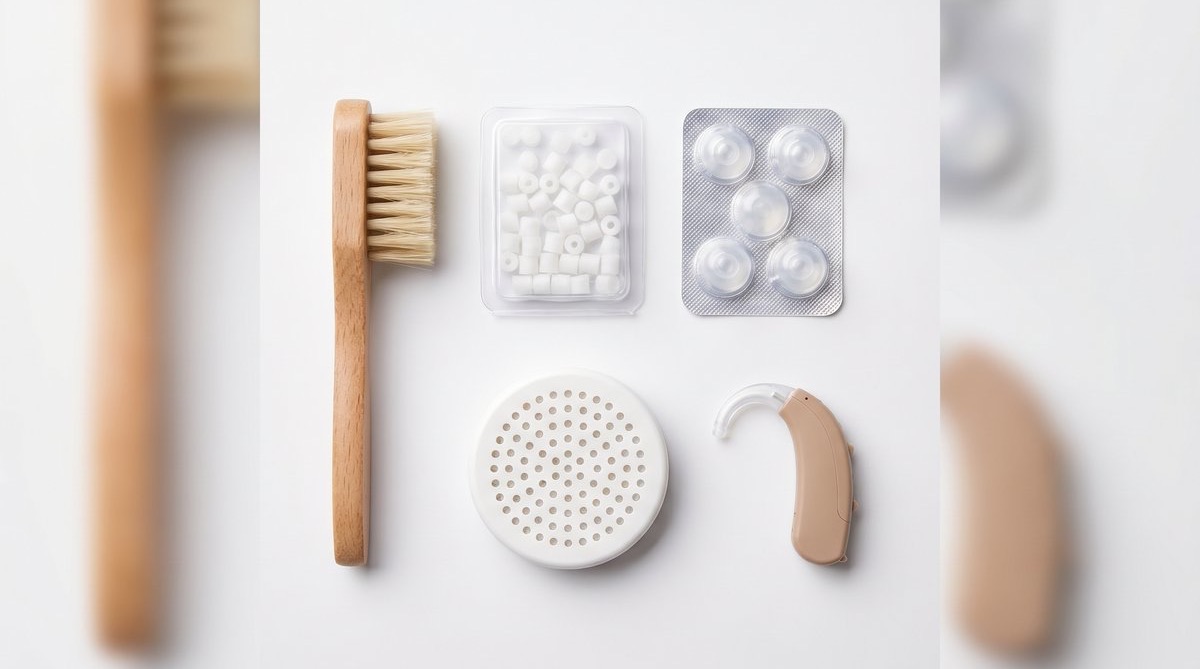
Ear wax and hearing aids: Why wearers get More blockages
In This Article
- Why do hearing aids make ear wax build up faster?
- Is it the hearing aid or ear wax in the canal?
- What is a wax guard or wax filter, and why does it matter?
- Does ear wax damage hearing aids? Receiver and moisture risk
- What should hearing aid wearers do about ear wax?
- When is it not an ear wax problem at all?
Hearing aid wearers deal with ear wax more often than everyone else, and the reason is mechanical rather than medical: the ear canal clears itself by migrating wax outward, and anything sitting in the canal slows that process down. Wax is also one of the most common reasons a hearing aid suddenly sounds flat, weak or dead — more often than an actual device fault. Knowing the difference between a blocked device and a blocked ear saves both money and frustration. This guide explains why it happens, how to tell which is which, and what to do about it.
Why do hearing aids make ear wax build up faster?
Three things happen at once. First, the dome or mould physically blocks the outward migration that normally carries wax to the entrance of the canal. Second, the device occupies space, so wax that would have sat harmlessly now presses against something. Third, a warmer, more enclosed canal can change the consistency of the wax itself. None of this means hearing aids are bad for your ears — it simply means wax needs checking more often than it would otherwise, usually every six to twelve months rather than never.
Is it the hearing aid or ear wax in the canal?
This is the question worth being able to answer, because it determines whether you need a repair or an appointment. The pattern is usually informative:
| What you notice | More likely wax in the device | More likely wax in the ear |
|---|---|---|
| Sound is weak or dead | One aid only, changed suddenly | Both ears affected over time |
| Whistling or feedback | Aid whistles when inserted | Whistling with a full, blocked feeling |
| Own voice sounds boomy | Less typical | Common |
| Clears when aid removed | Hearing normal without the aid | Still muffled without the aid |
If your hearing is still muffled with the hearing aid out, the ear is the more likely culprit. If everything is fine without the device, suspect the device.
What is a wax guard or wax filter, and why does it matter?
A wax guard — sometimes called a wax filter or wax trap — is a small replaceable barrier that stops wax reaching the receiver, the part that actually produces sound. It is designed to be sacrificial: it blocks up so the expensive component does not. A clogged wax guard is the most common cause of a hearing aid that has "stopped working", and replacing it is routine. Our hearing aid maintenance guide covers day-to-day device care, and our maintenance and repair service covers what we handle in clinic.
Does ear wax damage hearing aids? Receiver and moisture risk
It shortens their working life if it is never addressed. Wax reaching the receiver or microphone ports is a leading cause of repairs, and moisture combined with wax is worse than either alone. The practical protection is unglamorous: wipe the device down at the end of each day before storing it, keep the wax guard current, and have both the ears and the devices checked periodically. Devices that are looked after tend to need fewer repairs — though how long any hearing aid lasts varies with use and environment.
What should hearing aid wearers do about ear wax?
Have the ears and the devices checked together. Separating the two is where time gets wasted: a device sent away for repair when the ear was blocked, or an ear appointment booked when the wax guard needed changing. At Hearingcare on Bulcock Street in Caloundra, Queensland, Linda Whittaker, Qualified Audiometrist, looks at both in one visit, which usually resolves the question on the spot. Ear wax removal is performed after examination, and if your ears are clear we will say so and look at the device instead.
When is it not an ear wax problem at all?
Sometimes the change is your hearing rather than your ears or your devices. Hearing can shift gradually, and the first sign is often that hearing aids no longer seem to do enough — which feels like a device problem but is not. If wax is ruled out and the devices check out, a comprehensive hearing assessment will show whether your hearing has changed and whether the aids need reprogramming to match. See your GP promptly instead if you have ear pain, discharge, or sudden hearing loss in one ear.
Book a check at our Bulcock Street clinic, Caloundra — serving Golden Beach, Kings Beach, Pelican Waters and the wider Sunshine Coast. Call (07) 5223 4444. Ear wax removal is a private consultation fee, separate from the Australian Government Hearing Services Program. Eligible pensioners and DVA card holders may access hearing assessments and hearing aids through the Program; eligibility criteria apply, and Hearingcare is an accredited provider.
The information on this page is general in nature and is not a substitute for professional advice about your individual ear or hearing health. Outcomes vary from person to person. See your GP or an ENT specialist for ear pain, discharge, a suspected perforation or sudden hearing loss.
Take the next step
If anything in this guide reflects your own situation, a comprehensive hearing assessment is the most reliable next step. At Hearing Care on the Sunshine Coast, Linda Whittaker — a Qualified Audiometrist with more than 20 years of clinical experience and ACAud membership — provides unhurried, individualised hearing care in a supportive environment.
We see clients from Caloundra, Maroochydore, Mooloolaba, Buderim, Noosa and across the wider Sunshine Coast region. Eligible clients may access fully subsidised hearing services (eligibility criteria apply) through the Australian Government's Hearing Services Program.
Individual results vary. Professional hearing assessment is required to determine the most appropriate management approach for your specific situation.

This article is for educational purposes only. Individual results may vary. Professional hearing assessment is recommended for personalised advice.
Book Your Hearing Assessment