


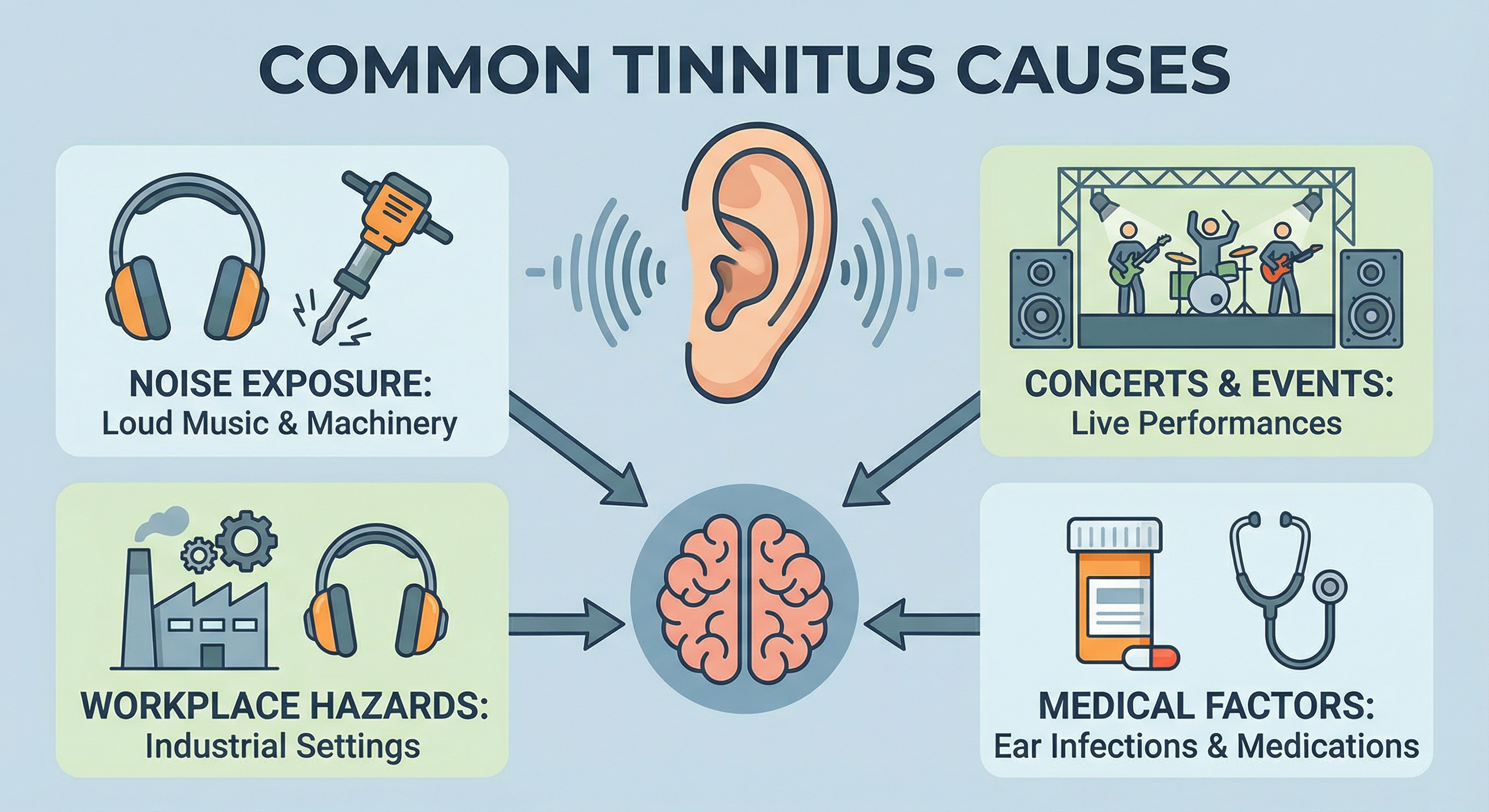
What Causes Tinnitus? Understanding the Triggers
Introduction
If you're experiencing ringing, buzzing, or humming sounds that no one else can hear, you're dealing with tinnitus. It's a surprisingly common experience—about 1 in 5 Australians notice these phantom sounds at some point in their lives. But what actually causes tinnitus? Why do some people develop it while others don't?
Understanding what causes tinnitus is the first step toward managing it effectively. While the sensation happens in your ears, the triggers can come from many different sources—from your work environment to your medicine cabinet, from your blood pressure to your stress levels.
Let's look at the most common causes of tinnitus, the risk factors that increase your chances of developing it, and when these sounds might indicate something that needs medical attention.
In This Article
How Tinnitus Develops: The Basics
To understand what causes tinnitus, it helps to know how it develops in the first place.
Tinnitus isn't actually a condition on its own—it's a symptom. Think of it like a cough: the cough itself isn't the problem, it's your body's way of responding to something else going on.
The Inner Ear Connection
Most tinnitus begins in the inner ear, specifically in the cochlea—a small, snail-shaped organ filled with thousands of tiny hair cells. These hair cells translate sound vibrations into electrical signals that your brain interprets as sound.
When these hair cells become damaged or stressed, they can start sending signals to your brain even when there's no actual sound present. Your brain interprets these signals as ringing, buzzing, or other phantom noises.
The Brain's Role
Recent research shows that tinnitus isn't just about damaged hair cells. Your brain's auditory processing centres also play a significant role. When normal sound input changes—perhaps due to hearing loss—your brain may try to "fill in the gaps" by increasing its own activity. This can create the perception of sound where none exists.
This explains why tinnitus management often focuses on retraining how your brain processes these signals, rather than just addressing the ear itself.
Noise-Related Causes: The Most Common Trigger
Noise exposure is far and away the most common cause of tinnitus in Australia.
Occupational Noise Exposure
If you've worked in construction, manufacturing, agriculture, or the mining industry, you've likely been exposed to sustained loud noise. Even with hearing protection, years of noise exposure can damage those delicate inner ear hair cells.
In Queensland, industries like mining and agriculture are particularly notorious for noise-related hearing problems. Many workers don't realise damage is occurring until tinnitus or hearing loss appears years later.
Recreational Noise
It's not just workplace noise that causes problems. Common recreational noise sources include:
- Live concerts and festivals – Sound levels often exceed 100 decibels, well above safe limits
- Sporting events – Stadium noise can reach damaging levels
- Personal audio devices – Listening to music or podcasts at high volumes through headphones
- Motorcycles and power tools – Regular exposure without ear protection
- Firearms – Even a single gunshot can cause immediate tinnitus
One-Time Exposure vs Cumulative Damage
Tinnitus from noise exposure can happen two ways:
1. Acoustic trauma – A single extremely loud event (explosion, gunshot, very loud concert) can cause immediate, sometimes permanent tinnitus
2. Cumulative exposure – Years of moderate-to-loud noise gradually damages hair cells, with tinnitus developing slowly over time
The second type is more common and often more insidious because people don't realise damage is accumulating until symptoms appear.
Medical Conditions Linked to Tinnitus
Many health conditions can trigger or worsen tinnitus. Here are the most common ones:
Age-Related Hearing Loss (Presbycusis)
As we age, the hair cells in our inner ears naturally deteriorate. This gradual hearing loss—called presbycusis—is one of the most common causes of tinnitus in older adults.
The tinnitus typically develops alongside the hearing loss, though you might notice the ringing before you're aware of any difficulty hearing. This is because your brain is reacting to the reduced sound input by increasing its own activity.
Ear Infections and Blockages
Anything that physically blocks or inflames your ear canal can trigger temporary tinnitus:
- Earwax buildup – Excessive or impacted earwax pressing against the eardrum
- Middle ear infections – Fluid buildup behind the eardrum
- Otosclerosis – Abnormal bone growth in the middle ear
- Foreign objects – Something lodged in the ear canal
The good news is that tinnitus from these causes often resolves once the underlying issue is treated.
Cardiovascular Conditions
Your circulatory system and your ears are more connected than you might think. Several cardiovascular issues can cause or contribute to tinnitus:
- High blood pressure (hypertension) – May cause pulsatile tinnitus that matches your heartbeat
- Atherosclerosis – Buildup in blood vessels can restrict blood flow to the ears
- Turbulent blood flow – Kinked or narrowed blood vessels near the ear
- Heart valve problems – Can create audible blood flow sounds
If your tinnitus pulses in time with your heartbeat, it's worth getting your cardiovascular health checked.
Meniere's Disease
This inner ear disorder causes episodes of vertigo, hearing loss, ear fullness, and tinnitus. The tinnitus from Meniere's disease may come and go with other symptoms or become constant over time.
Temporomandibular Joint (TMJ) Disorders
The joint connecting your jawbone to your skull sits very close to your ear structures. Problems with this joint—from teeth grinding, arthritis, or jaw injuries—can sometimes trigger tinnitus.
You might notice your tinnitus worsens when you chew, yawn, or move your jaw in certain ways if TMJ issues are involved.
Medications That May Cause Tinnitus
More than 200 medications list tinnitus as a possible side effect. These are called "ototoxic" medications because they can affect the ear.
Common Ototoxic Medications
The medications most commonly associated with tinnitus include:
- Aspirin – High doses (usually 12+ tablets daily) can cause temporary tinnitus
- NSAIDs – Including ibuprofen and naproxen, especially at high doses
- Certain antibiotics – Particularly aminoglycosides and some forms of erythromycin
- Loop diuretics – Often prescribed for high blood pressure or heart failure
- Chemotherapy drugs – Particularly cisplatin and carboplatin
- Antimalarial medications – Including quinine and chloroquine
- Some antidepressants – Though this varies by individual
Important Considerations
If you're taking any medication and develop tinnitus:
- Don't stop taking prescribed medications without consulting your doctor
- The benefits of the medication often outweigh the risk of tinnitus
- Tinnitus from medications is sometimes temporary and may resolve after stopping the medication
- Lower doses may reduce or eliminate the tinnitus while still providing medical benefit
Always discuss medication-related tinnitus with the prescribing doctor. They can assess whether alternative medications might be appropriate or if dosage adjustments could help.
Lifestyle Factors That Influence Tinnitus
Beyond medical conditions and medications, several lifestyle factors can contribute to tinnitus or make existing tinnitus worse.
Stress and Anxiety
Many people notice their tinnitus becomes more bothersome during stressful periods. While stress doesn't directly cause the physical damage that creates tinnitus, it can:
- Increase your awareness of tinnitus sounds
- Lower your tolerance for the sensation
- Create a cycle where tinnitus causes stress, which in turn makes tinnitus more noticeable
Managing stress through relaxation techniques, exercise, or counselling may help reduce the impact of tinnitus on your daily life.
Caffeine and Alcohol
The relationship between tinnitus and these substances is complex and varies by individual:
- Caffeine – Some people find caffeine worsens their tinnitus, while others notice no effect or even temporary improvement
- Alcohol – Can temporarily change blood flow to the ear and may worsen tinnitus
- Nicotine – Smoking restricts blood flow to the ear structures and may contribute to tinnitus
If you have tinnitus, you might try reducing or eliminating these substances to see if your symptoms improve. Results vary considerably between individuals.
Sleep Disruption
Tinnitus and poor sleep often create a vicious cycle. Tinnitus can make it difficult to fall asleep, and lack of sleep can make tinnitus more noticeable and bothersome. Establishing good sleep habits and using background sounds at night may help break this cycle.
Diet and Hydration
While no specific foods have been definitively proven to cause tinnitus, some people report that certain dietary factors affect their symptoms:
- High sodium intake may worsen tinnitus in some individuals
- Dehydration can potentially affect inner ear fluid balance
- Blood sugar fluctuations might influence tinnitus perception
Individual responses vary, so it's worth noting whether your tinnitus changes with dietary patterns.
When Tinnitus Indicates Something Serious
While most tinnitus isn't a sign of a serious health problem, certain characteristics warrant prompt medical evaluation:
Red Flags That Need Immediate Attention
See a healthcare professional promptly if you experience:
- Sudden tinnitus in one ear only – Especially if accompanied by hearing loss
- Pulsatile tinnitus – Rhythmic thumping or whooshing that matches your heartbeat
- Tinnitus with dizziness or vertigo – Could indicate inner ear or neurological issues
- Tinnitus with severe headaches – Particularly if this is a new combination of symptoms
- Tinnitus after a head injury – Even if the injury seemed minor
- Facial numbness or weakness alongside tinnitus – May indicate nerve involvement
These symptoms don't necessarily mean something serious is wrong, but they do warrant professional assessment to rule out conditions that need specific treatment.
Rare but Serious Causes
In uncommon cases, tinnitus can be associated with:
- Acoustic neuroma – A benign tumour on the nerve connecting the ear to the brain
- Glomus tumours – Tumours in the middle ear or jugular vein
- Multiple sclerosis – Can affect auditory pathways
- Aneurysms or vascular malformations – Abnormal blood vessels near the ear
Again, these are rare causes, but they highlight why new or unusual tinnitus should be professionally evaluated.
Getting Proper Assessment for Your Tinnitus
If you're experiencing persistent tinnitus, a comprehensive assessment can help identify potential causes and guide effective management.
What to Expect During Assessment
A thorough tinnitus evaluation typically includes:
- Medical history review – Including medications, noise exposure, and health conditions
- Physical examination – Checking ears, jaw, neck, and blood vessels
- Hearing test (audiometry) – Identifying any hearing loss that might be contributing
- Tinnitus matching – Determining the pitch and volume of your tinnitus sounds
- Tinnitus questionnaires – Assessing how tinnitus affects your daily life
Depending on your symptoms and history, your healthcare provider may recommend additional tests such as imaging studies or blood tests to investigate specific causes.
Who Should You See?
Different healthcare professionals can help with tinnitus:
- Hearing Care Professional – Specialists in hearing and tinnitus assessment and management
- Ear, Nose, and Throat (ENT) specialist – Medical doctors who can diagnose and treat ear conditions
- General practitioner – Can conduct initial assessment and provide referrals
- Other specialists – Depending on suspected causes (cardiologist, neurologist, etc.)
At Hearingcare, our qualified hearing care professionals conduct comprehensive tinnitus assessments and can help you understand what's causing your symptoms and what management options might help.
Treatment and Management Options
While there's no universal "cure" for tinnitus, many effective management strategies exist:
- Hearing aids – If hearing loss is present, amplifying external sounds can reduce tinnitus perception
- Sound therapy – Using background sounds to mask or reduce awareness of tinnitus
- Tinnitus Retraining Therapy (TRT) – Combines sound therapy with counselling to help your brain reclassify tinnitus as unimportant
- Cognitive Behavioural Therapy (CBT) – Addresses the emotional and psychological response to tinnitus
- Treating underlying conditions – Removing earwax, treating infections, managing blood pressure, etc.
The most effective approach often combines several strategies tailored to your specific situation and the underlying causes of your tinnitus.
Key Takeaways
- Noise exposure is the most common cause, whether from work, recreation, or one-time acoustic trauma
- Age-related hearing loss frequently occurs alongside tinnitus as hair cells in the inner ear deteriorate
- Medical conditions including ear infections, cardiovascular issues, and Meniere's disease can trigger tinnitus
- Medications – over 200 drugs list tinnitus as a potential side effect, particularly at high doses
- Lifestyle factors like stress, caffeine, alcohol, and poor sleep can influence tinnitus perception
- Most tinnitus isn't dangerous, but sudden onset, pulsatile tinnitus, or tinnitus with other symptoms warrants prompt evaluation
- Professional assessment can identify causes and guide effective management strategies
- Multiple treatment options exist, often most effective when combined and personalised
Take the Next Step
If you're experiencing persistent tinnitus, understanding the potential causes is an important first step—but professional assessment is essential for effective management.
At Hearingcare, our experienced hearing care professionals can conduct a comprehensive tinnitus evaluation to identify contributing factors and recommend personalised management strategies. Whether your tinnitus is related to hearing loss, noise exposure, or other causes, we're here to help you find relief.
Book a tinnitus assessment at your nearest Hearingcare clinic. Our team will take the time to understand your experience, identify potential causes, and discuss management options that fit your lifestyle and needs.
Your hearing health matters. Let's work together to help you manage your tinnitus effectively.
About Hearingcare
Hearingcare is Queensland's trusted provider of comprehensive hearing health services. Our qualified hearing care professionals offer professional tinnitus assessments, hearing tests, and personalised management strategies across multiple locations throughout Queensland. We're committed to providing caring, evidence-based hearing healthcare to help you hear better and live better.
References:
1. Australian Hearing Hub - Tinnitus Research and Statistics
2. Hearing Australia - Tinnitus Management Guidelines
3. Audiology Australia - Professional Standards for Tinnitus Assessment
4. The Royal Australian College of General Practitioners - Tinnitus Management Framework
5. National Acoustic Laboratories - Noise-Induced Hearing Loss and Tinnitus Research

Frequently Asked Questions
Not always, though tinnitus and hearing loss frequently occur together. Many people with tinnitus do have some degree of hearing loss—even if it's mild and not yet noticeable in daily life. However, tinnitus can also result from ear infections, certain medications, cardiovascular issues, or stress without significant hearing loss. A comprehensive hearing assessment can determine whether hearing loss is contributing to your tinnitus.
It depends on the medication and how long you've been taking it. Tinnitus from aspirin or other NSAIDs is usually temporary and resolves within hours or days after stopping the medication. However, some medications—particularly certain antibiotics and chemotherapy drugs—can cause permanent changes to the inner ear. Never stop prescribed medications without consulting your doctor, as the benefits often outweigh the tinnitus risk. Your doctor can discuss alternatives or dosage adjustments if medication-related tinnitus is problematic.
Yes, excessive or impacted earwax pressing against your eardrum can trigger tinnitus. This is one of the simpler causes to address—professional earwax removal often resolves the tinnitus completely. If you suspect earwax buildup, see a hearing care professional or doctor for safe removal. Don't attempt to dig out impacted wax yourself with cotton buds or other objects, as this can push wax deeper and potentially damage your ear canal or eardrum.
See a healthcare professional if you experience sudden tinnitus (especially in one ear only), pulsatile tinnitus that matches your heartbeat, tinnitus accompanied by dizziness or hearing loss, or tinnitus following a head injury. Even if your tinnitus doesn't have these concerning features, it's worth getting assessed if it's persistent, bothersome, or affecting your sleep or quality of life. A professional evaluation can identify potential causes and guide effective management strategies. ---
This article is for educational purposes only. Individual results may vary. Professional hearing assessment is recommended for personalised advice.
Book Your Hearing Assessment