


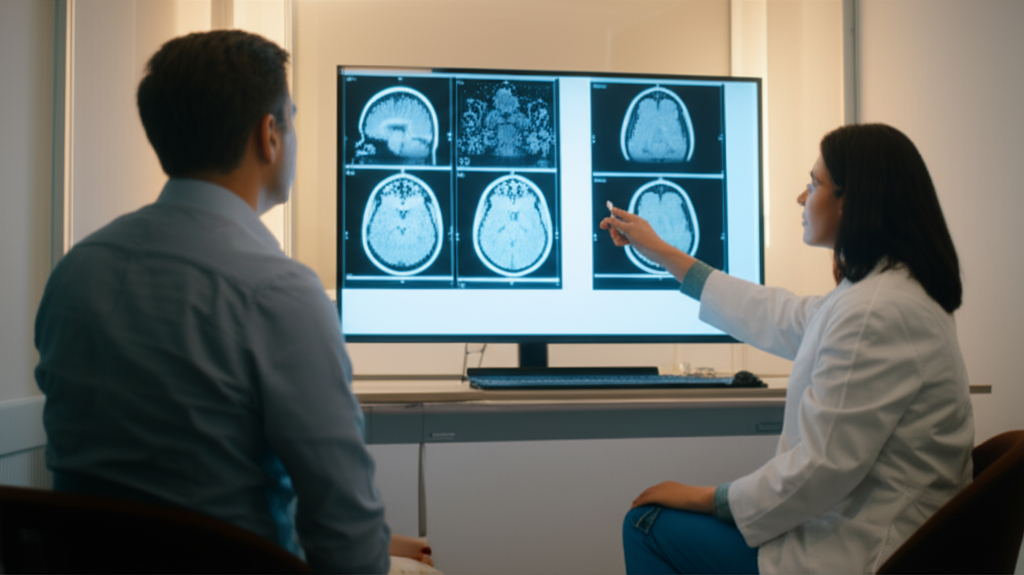
What Is an Acoustic Neuroma and How Is It Treated
Introduction
Discovering you have a growth on your auditory nerve can be confronting. An acoustic neuroma—also known as a vestibular schwannoma—is a benign (non-cancerous) tumour that develops on the nerve connecting your inner ear to your brain. Whilst this diagnosis naturally raises concerns, understanding what it means and your options can help you feel more in control.
This comprehensive guide explains acoustic neuroma symptoms, how it's diagnosed, and the treatment pathways available. We'll explore how hearing care professionals and medical specialists work together to support people with this condition, and what you can expect if you or someone you care about receives this diagnosis.
In This Article
What Is an Acoustic Neuroma?
An acoustic neuroma is a benign tumour that grows slowly on the vestibular nerve—the nerve responsible for balance and hearing. Despite being called an "acoustic" neuroma, it actually develops on the vestibular portion of the eighth cranial nerve rather than the acoustic (hearing) portion.
Understanding the Basics
Key characteristics:
- Benign growth: Not cancerous and doesn't spread to other parts of the body
- Slow-growing: Typically grows 1-2mm per year, though growth rates vary
- Location: Develops in the internal auditory canal between the inner ear and brain
- Rare condition: Affects approximately 1 in 100,000 people annually in Australia
- Age factor: Most commonly diagnosed in adults aged 30-60 years
The tumour arises from Schwann cells—specialised cells that form the protective coating around nerves. As it grows, it can press against the hearing nerve, the balance nerve, and potentially nearby structures in the brain.
Types of Acoustic Neuroma
Most acoustic neuromas occur spontaneously with no clear cause. However, about 5% of cases are associated with a genetic condition called neurofibromatosis type 2 (NF2), which can cause tumours to develop on both sides.
Unilateral acoustic neuroma:
- Develops on one side only (95% of cases)
- Typically occurs sporadically
- Usually diagnosed in people over 30
Bilateral acoustic neuroma:
- Affects both sides (5% of cases)
- Associated with NF2 genetic condition
- Often diagnosed in younger individuals
- May have family history
Symptoms to Watch For
Acoustic neuroma symptoms develop gradually as the tumour grows. Because the growth is typically slow, many people don't notice symptoms immediately, and some small tumours are discovered incidentally during brain scans for other reasons.
Early Warning Signs
The most common early symptoms relate to hearing and balance, as the tumour affects the eighth cranial nerve:
Hearing changes:
- Gradual hearing loss in one ear (most common first symptom)
- Difficulty understanding speech, especially in noisy environments
- Hearing loss that may fluctuate initially
- Difference in hearing between the two ears
- Difficulty hearing high-pitched sounds
Tinnitus (ringing in the ears):
- Usually affects one ear only
- May be high-pitched ringing, buzzing, or hissing
- Can be constant or intermittent
- May be more noticeable in quiet environments
Balance problems:
- Feeling unsteady or off-balance
- Dizziness or vertigo (less common than hearing loss)
- Clumsiness or difficulty with coordination
- Sensation of the room spinning
Progressive Symptoms
As an acoustic neuroma grows larger, it may cause additional symptoms by pressing on surrounding structures:
Facial nerve symptoms:
- Facial numbness or tingling
- Facial weakness (in advanced cases)
- Changes in taste sensation
- Difficulty closing one eye completely
Pressure symptoms:
- Headaches (if tumour is large)
- Difficulty swallowing (rare)
- Pressure sensation in the ear
When to Seek Assessment
Contact your GP if you experience:
- Hearing loss in one ear, especially if gradual or persistent
- Persistent tinnitus in one ear
- New onset balance problems
- Unexplained facial numbness or weakness
Important: Whilst these symptoms can have many causes, one-sided hearing loss or tinnitus should always be professionally evaluated. Early assessment can help identify the cause and determine appropriate next steps.
How Acoustic Neuroma Is Diagnosed
Diagnosing an acoustic neuroma involves several steps, starting with your GP and progressing to specialist assessment and imaging.
Initial Assessment
Step 1: General practitioner consultation
Your GP will:
- Take your medical history
- Conduct a physical examination
- Assess your symptoms and their progression
- Perform basic hearing and balance tests
- Refer you to appropriate specialists
Step 2: Audiological assessment
A comprehensive hearing evaluation by a hearing care professional includes:
- Pure tone audiometry: Measures hearing thresholds across frequencies
- Speech discrimination testing: Assesses ability to understand words
- Tympanometry: Evaluates middle ear function
- Acoustic reflex testing: Measures automatic muscle responses to sound
- Otoacoustic emissions (OAE): Tests inner ear hair cell function
These tests help establish baseline hearing levels and identify patterns consistent with retrocochlear (beyond the cochlea) pathology, which may indicate an acoustic neuroma.
Specialist Evaluation
ENT (Ear, Nose and Throat) specialist assessment:
An ENT specialist will:
- Review your symptoms and hearing test results
- Examine your ears, nose and throat
- Conduct additional clinical tests
- Order appropriate imaging if acoustic neuroma is suspected
- Coordinate further specialist referrals if needed
Diagnostic Imaging
MRI (Magnetic Resonance Imaging):
MRI is the gold standard for diagnosing acoustic neuroma:
- Provides detailed images of soft tissues including nerves and tumours
- Can detect tumours as small as 2-3mm
- Uses contrast dye (gadolinium) for enhanced visualisation
- Non-invasive and painless procedure
- Typically takes 30-60 minutes
CT scan (Computed Tomography):
Occasionally used when MRI is not suitable:
- Provides detailed bone structure images
- Useful for surgical planning
- May be used if MRI is contraindicated
- Less sensitive than MRI for small tumours
Additional Testing
Auditory Brainstem Response (ABR):
This specialised hearing test:
- Measures electrical activity along the hearing pathway
- Can detect abnormalities in nerve signal transmission
- Helpful when MRI access is limited
- Performed by hearing care professionals or neurologists
Once acoustic neuroma is confirmed, your medical team will assess the tumour's size, location, and growth characteristics to determine the most appropriate management approach.
Treatment Options for Acoustic Neuroma
Treatment for acoustic neuroma depends on multiple factors including tumour size, growth rate, symptoms, your age, overall health, and personal preferences. The three main approaches are active monitoring, surgical removal, and radiation therapy.
Active Monitoring (Watch and Wait)
For small, slow-growing tumours with minimal symptoms, active monitoring may be recommended.
What it involves:
- Regular MRI scans (typically every 6-12 months initially)
- Ongoing hearing assessments
- Symptom monitoring
- No immediate intervention
Who it suits:
- Small tumours (typically under 1.5cm)
- Minimal or manageable symptoms
- Slow or no growth on serial scans
- Older individuals or those with health concerns that increase surgical risk
- Personal preference for conservative approach
Advantages:
- Avoids surgery and associated risks
- Suitable if tumour isn't causing significant problems
- Many small tumours grow very slowly or not at all
Considerations:
- Requires regular monitoring
- Symptoms may gradually worsen
- Tumour may eventually require treatment
- Ongoing uncertainty for some individuals
Surgical Removal
Surgery aims to completely remove the acoustic neuroma whilst preserving hearing and facial nerve function where possible.
Surgical approaches:
Different surgical techniques are used depending on tumour size and location:
1. Translabyrinthine approach
- Removes tumour through the mastoid bone
- Provides excellent access to larger tumours
- Hearing in affected ear is sacrificed
- Lower risk to facial nerve
2. Retrosigmoid approach
- Accesses tumour from behind
- May preserve hearing in some cases
- Used for medium to large tumours
- Good visualisation of facial nerve
3. Middle fossa approach
- Approaches from above
- Best chance of hearing preservation
- Suitable for small tumours in specific locations
- More technically demanding
Surgery considerations:
- Performed by neurosurgeon, sometimes with ENT surgeon
- Requires general anaesthesia
- Hospital stay typically 3-7 days
- Recovery period of several weeks to months
- Results vary based on tumour size, location and individual factors
Potential outcomes:
- Complete tumour removal (goal in most cases)
- Partial removal if complete removal poses risks
- Hearing preservation success depends on multiple factors
- Facial nerve preservation prioritised but not always possible
Radiation Therapy
Radiation therapy uses precisely targeted radiation to stop tumour growth without surgery.
Stereotactic radiosurgery (SRS):
Despite the name "radiosurgery," this is not surgery but highly focused radiation:
Gamma Knife:
- Delivers radiation from multiple angles
- Single treatment session
- Outpatient procedure
- Head frame fitted for precise targeting
Linear accelerator (LINAC) systems:
- Similar principle to Gamma Knife
- May use frameless targeting
- Sometimes delivered over multiple sessions (fractionated stereotactic radiotherapy)
Who it suits:
- Small to medium tumours (typically under 3cm)
- Those unable to undergo surgery
- Tumour in location making surgery high-risk
- Patient preference for non-surgical approach
- Elderly individuals
How it works:
- Radiation damages tumour DNA, stopping growth
- Tumour typically stops growing or shrinks slowly over months to years
- Preserves facial nerve function in most cases
- Hearing outcomes vary
Considerations:
- Tumour remains in place (not removed)
- May take months to years to see full effect
- Small risk of radiation side effects
- Long-term monitoring still required
- Rarely, tumour may eventually require surgery
Choosing the Right Approach
Your medical team will consider:
- Tumour size and growth rate
- Current symptoms and hearing level
- Your age and overall health
- Personal goals and preferences
- Risks and benefits of each option
Important: Treatment decisions for acoustic neuroma should be made in consultation with experienced neurosurgeons, ENT specialists, and radiation oncologists. Individual results vary, and there is no one-size-fits-all approach.
Living with Acoustic Neuroma
Whether you're undergoing active monitoring or have had treatment, living with acoustic neuroma involves ongoing support and adaptation.
Managing Hearing Changes
If hearing is affected:
- Comprehensive hearing assessment by hearing care professional
- Hearing aids may help if hearing loss is manageable
- CROS or BiCROS hearing systems for single-sided deafness
- Bone-anchored hearing aids (BAHA) in some cases
- Communication strategies and support
Balance Rehabilitation
Vestibular rehabilitation therapy:
Specialised physiotherapy can help with balance issues:
- Exercises to improve balance and coordination
- Strategies to reduce dizziness
- Adaptation techniques for daily activities
- Conducted by physiotherapists with vestibular training
Emotional Support
Psychological considerations:
An acoustic neuroma diagnosis can be emotionally challenging:
- Uncertainty about tumour growth and symptoms
- Decisions about treatment options
- Adjustment to hearing or balance changes
- Concerns about facial nerve function
- Impact on work and daily life
Support available:
- Counselling services
- Support groups (Acoustic Neuroma Association Australia)
- Connecting with others who've experienced similar diagnoses
- Family and carer support
Ongoing Monitoring
Follow-up care:
Regardless of treatment approach:
- Regular MRI scans to monitor tumour status
- Ongoing hearing assessments
- Clinical examinations
- Symptom review
- Adjustment of management plan as needed
Practical Considerations
Daily life adaptations:
Many people continue normal activities with acoustic neuroma:
- Most can continue working (adjustments may be needed)
- Safe participation in most daily activities
- Consideration for activities involving balance if affected
- Communication strategies for hearing challenges
- Driving usually unaffected unless balance is significantly impaired
The Role of Hearing Care Professionals in Acoustic Neuroma Care
Hearing Care Professionals play an important role throughout the acoustic neuroma journey, from initial detection to ongoing management.
Diagnostic Phase
Early detection:
- Comprehensive hearing assessments that may detect patterns suggesting retrocochlear pathology
- Identification of asymmetric hearing loss requiring further investigation
- Specialised testing (ABR, acoustic reflex) that can indicate nerve involvement
- Collaboration with ENT specialists for appropriate imaging referrals
Pre-Treatment Assessment
Baseline documentation:
- Detailed hearing measurements before treatment
- Speech understanding capabilities
- Balance system function
- Documentation for comparison with post-treatment results
Treatment Decision Support
Informing choices:
- Explaining hearing preservation likelihood with different treatment approaches
- Discussing hearing rehabilitation options if hearing loss occurs
- Providing realistic expectations about auditory outcomes
- Answering questions about hearing-related aspects of treatment
Post-Treatment Rehabilitation
Ongoing hearing care:
After treatment, hearing care professionals assist with:
Hearing loss management:
- Assessment of hearing changes
- Hearing aid fitting and adjustment if appropriate
- CROS/BiCROS systems for single-sided deafness
- BAHA assessment and programming if recommended
- Cochlear implant evaluation in specific cases
Communication strategies:
- Techniques for managing single-sided hearing
- Environmental modifications for better communication
- Counselling on hearing loss adaptation
- Family education about communication support
Monitoring and support:
- Regular hearing assessments to track changes
- Tinnitus management strategies if needed
- Coordination with medical team for ongoing care
- Support throughout the adaptation process
Australian Context
In Australia, hearing care professionals work within the healthcare system:
- Some diagnostic services may be covered through the public health system
- Private health insurance may cover some audiological care
- Public hospital audiology services available
- Private practice options for comprehensive ongoing care
Key Takeaways
- Essential points to remember about acoustic neuroma:
- Benign but requires management: Acoustic neuroma is a non-cancerous tumour on the hearing and balance nerve that requires professional monitoring or treatment
- Symptoms develop gradually: One-sided hearing loss, tinnitus, and balance problems are common symptoms that should prompt professional evaluation
- Diagnosis requires imaging: MRI is the gold standard for confirming acoustic neuroma and assessing its characteristics
- Multiple treatment options exist: Active monitoring, surgery, and radiation therapy each suit different situations, with individual considerations
- Multidisciplinary care is important: ENT specialists, neurosurgeons, radiation oncologists, and hearing care professionals work together to provide comprehensive care
- Hearing rehabilitation is available: If hearing is affected, hearing care professionals can provide various solutions including hearing aids, CROS systems, or bone-anchored devices
- Individual experiences vary: Tumour behaviour, treatment outcomes, and symptom progression differ between individuals
- Ongoing monitoring is essential: Regular follow-up ensures appropriate management whether you're being monitored or have had treatment
- Support is available: Support groups, healthcare professionals, and resources exist to help you navigate acoustic neuroma
- Specialist guidance is essential: Always work with qualified medical specialists for diagnosis, treatment decisions, and ongoing care
References and Further Information
Australian resources:
- Acoustic Neuroma Association of Australia (ANAA)
- Better Health Channel (Victoria State Government)
- Health Direct Australia
- Royal Australian College of Surgeons
- Neurosurgical Society of Australasia
Medical organisations:
- Australian Society of Otolaryngology Head and Neck Surgery (ASOHNS)
- Audiology Australia
- Australian and New Zealand Association of Neurologists
International resources:
Important: Use these resources for general information only. For personalised advice regarding diagnosis, treatment, or management of acoustic neuroma, consult qualified medical professionals including ENT specialists, neurosurgeons, and hearing care professionals.

Frequently Asked Questions
Not necessarily, though hearing changes are common. Some small tumours cause minimal hearing loss, whilst others may affect hearing more significantly. Treatment outcomes vary—some individuals maintain useful hearing, particularly with smaller tumours treated with radiation therapy. Your hearing care professional and medical team can provide information specific to your situation, though individual results cannot be guaranteed.
Growth rates vary considerably between individuals. On average, acoustic neuromas grow 1-2mm per year, but some grow faster, some slower, and some don't grow at all. Regular MRI monitoring helps track your specific tumour's growth pattern. This information helps guide treatment decisions and timing.
Recurrence is possible but relatively uncommon. After complete surgical removal, recurrence rates are generally low (around 2-5% over 10 years). After radiation therapy, most tumours stop growing or shrink, but a small percentage may eventually require additional treatment. Long-term monitoring is important regardless of treatment type. Your medical team will recommend an appropriate follow-up schedule.
For most people, acoustic neuroma occurs spontaneously with no preventable cause. The exception is bilateral acoustic neuromas associated with neurofibromatosis type 2 (NF2), which is genetic. If you have a family history of NF2, genetic counselling may be appropriate. Otherwise, there are no known lifestyle factors or preventive measures for acoustic neuroma. ---
This article is for educational purposes only. Individual results may vary. Professional hearing assessment is recommended for personalised advice.
Book Your Hearing Assessment