


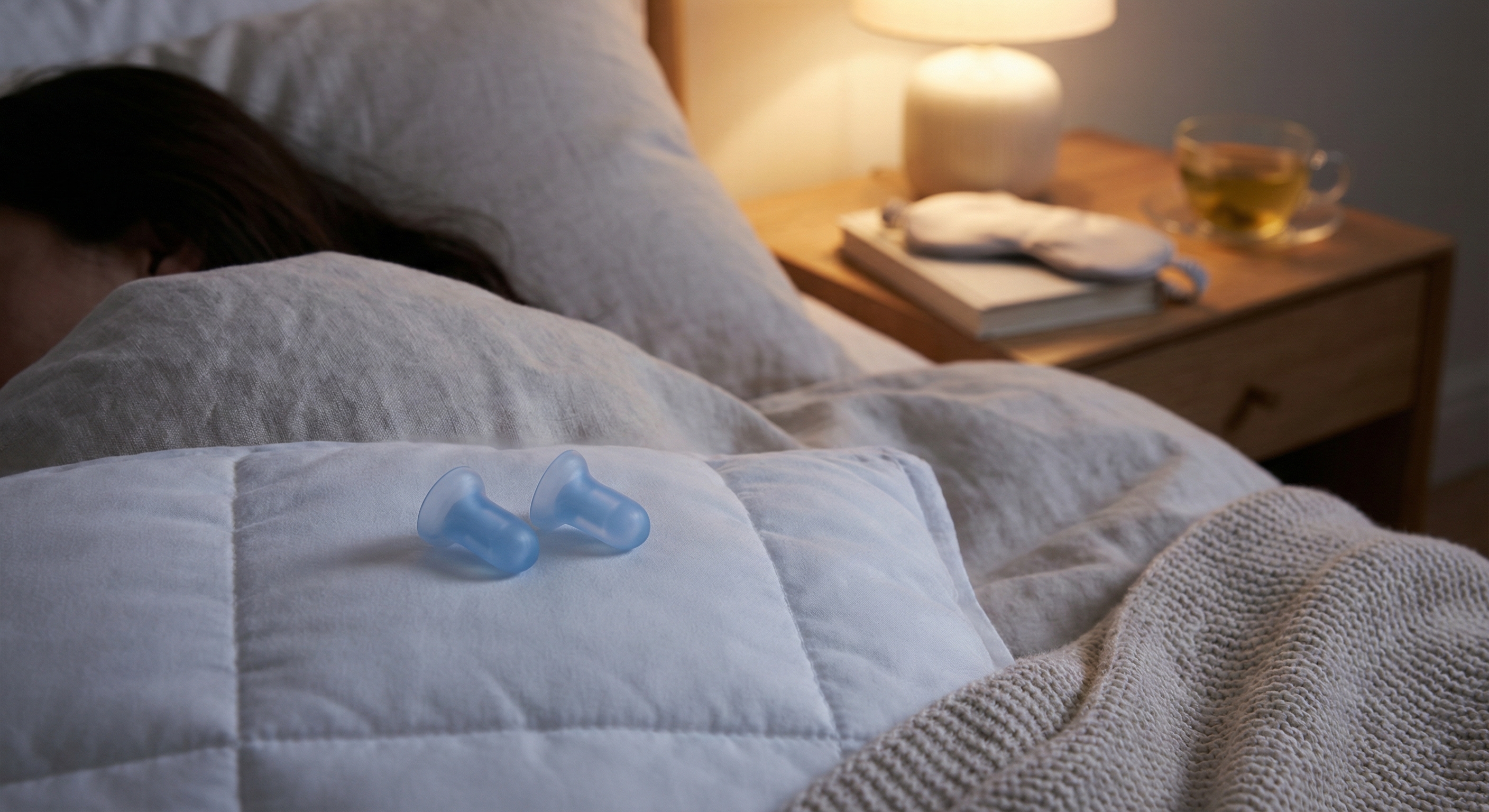
What Are the Best Ear Plugs for Sleeping
Why Ear Plugs Work for Better Sleep
Sleep requires your brain to shift into different states throughout the night. Unexpected noise—even if it doesn't fully wake you—can disrupt these cycles, leaving you feeling tired despite being in bed for eight hours.
Research published in the Journal of Clinical Sleep Medicine found that using ear plugs in noisy environments improved sleep quality and reduced the number of times people woke during the night. Many people report falling asleep faster and waking feeling more refreshed.
The science is straightforward: reduce the noise, protect your sleep cycles, wake up better rested.
In This Article
- Why Ear Plugs Work for Better Sleep
- Types of Ear Plugs for Sleep
- Foam vs Silicone vs Custom: Which Should You Choose?
- Understanding NRR Ratings
- How to Insert Ear Plugs Properly (It Matters More Than You Think)
- Safety Considerations: What You Need to Know
- Best Ear Plugs by Sleep Situation
- Custom Ear Plugs from a Hearing Care Professional: Worth the Investment?
- Find the Right Ear Plugs for Your Sleep on the Sunshine Coast
Types of Ear Plugs for Sleep
Not all ear plugs are created equal. What works brilliantly for one person might feel uncomfortable to another. Here are the main types available:
Foam Ear Plugs
The most common and affordable option. Made from soft, expandable foam (usually polyurethane or PVC), these compress before insertion and then expand to fill your ear canal.
Pros:
- Inexpensive (often under $1 per pair)
- Available everywhere (chemists, supermarkets, service stations)
- High noise reduction ratings
- Disposable—stay hygienic
Cons:
- Can feel bulky or uncomfortable for side sleepers
- May push out during the night as they expand
- Single-use or limited reusability
- Some people find the foam texture irritating
Silicone Ear Plugs
Available in two styles: mouldable putty that sits over your ear canal opening, or pre-formed flanged plugs that insert into the canal.
Pros:
- Reusable (can last weeks or months with proper care)
- Softer feel than foam
- Mouldable silicone conforms to your unique ear shape
- Generally comfortable for side sleepers
- Washable
Cons:
- More expensive upfront ($10-$30 per pair)
- Lower noise reduction than foam in some cases
- Can collect dirt and require regular cleaning
- May not seal as tightly for very noisy environments
Wax Ear Plugs
Natural or synthetic wax mixed with cotton fibres. You warm them in your hands and mould them to cover your ear canal opening.
Pros:
- Natural feel
- Comfortable for sensitive ears
- Won't push deep into the ear canal
- Good for side sleeping
Cons:
- Less effective noise blocking than foam
- Can leave residue
- Messy if they get too warm
- Limited reusability
Custom Moulded Ear Plugs
Made by a hearing care professional from impressions of your ears. These are precision-fitted to your unique ear canal shape.
Pros:
- Perfect fit—maximum comfort
- Excellent noise reduction
- Long-lasting (often 3-5 years)
- Can be made with specific filters for different noise levels
- Professional fitting ensures safety
Cons:
- Higher cost ($150-$400+)
- Requires appointment with hearing care professional
- Takes 1-2 weeks to manufacture
- May need replacement if ear shape changes
Foam vs Silicone vs Custom: Which Should You Choose?
The right choice depends on your situation, budget, and what you value most.
| Factor | Foam | Silicone | Custom Moulded |
|--------|------|----------|----------------|
| Cost | $5-$15 (pack of 10-50 pairs) | $10-$30 per pair | $150-$400+ per pair |
| Lifespan | Single use or 1-2 weeks | 1-6 months | 3-5 years |
| Comfort | Good, but can feel bulky | Rated very comfortable by users | Highest comfort rating in this comparison |
| Noise Reduction | High (NRR 30-33 dB) | Moderate to high (NRR 22-30 dB) | High (NRR 25-32 dB) |
| Best For | Budget-conscious, occasional use | Regular use, side sleepers | Nightly use, long-term investment |
Maya's Take: If you're just testing whether ear plugs help your sleep, start with foam or silicone. If you find they make a real difference and you'll use them nightly, custom-moulded plugs are worth the investment for comfort and longevity.
Understanding NRR Ratings
The Noise Reduction Rating (NRR) tells you how much noise an ear plug can block, measured in decibels (dB).
Here's how to interpret it:
- NRR 20-25 dB: Light to moderate noise reduction—good for low-level background noise
- NRR 26-30 dB: Moderate to high reduction—suitable for snoring, street noise
- NRR 31-33 dB: Maximum reduction available in consumer ear plugs—ideal for very noisy environments
Important: The NRR is measured in ideal laboratory conditions. Real-world noise reduction is typically about 50% of the stated NRR. So a plug rated NRR 32 might give you around 16 dB of actual reduction.
That's still significant—normal conversation is about 60 dB, and reducing that to 44 dB (the level of a quiet library) makes an enormous difference to sleep quality.
How to Insert Ear Plugs Properly (It Matters More Than You Think)
Many people don't get good results from ear plugs simply because they're not inserting them correctly. Here's the right technique for foam plugs—the most commonly misused type:
Step 1: Roll the plug
Compress the foam ear plug between your fingers until it's as thin as possible—about the diameter of a pencil.
Step 2: Reach over your head
Use your opposite hand to reach over your head and gently pull your ear up and back. This straightens your ear canal and makes insertion easier.
Step 3: Insert quickly
While holding your ear pulled back, insert the compressed foam plug into your ear canal. Push it in until about half the plug is still visible outside your ear.
Step 4: Hold in place
Keep your finger against the plug for 30-60 seconds while the foam expands. You should feel it expanding to fill your ear canal and creating a seal.
Step 5: Check the seal
You'll know it's working when outside sounds become noticeably quieter and your own voice sounds slightly different (more internal).
For silicone plugs: No rolling required. Simply insert gently with a slight twisting motion until you feel a seal. For mouldable silicone putty, warm it in your hands and press it over (not into) your ear canal opening.
Safety Considerations: What You Need to Know
Ear plugs are generally safe for sleep, but there are a few things to be aware of:
Don't Insert Too Deeply
Your ear canal is delicate. Never push ear plugs past the ear canal's outer third. If you're using foam plugs and they disappear completely into your ear, you've pushed too far.
Keep Them Clean
Reusable ear plugs need washing regularly with mild soap and water. Dirty ear plugs can introduce bacteria into your ear canal, potentially causing infections.
Replace foam ear plugs after each use or every few nights maximum—they collect earwax, dead skin cells, and bacteria quickly.
Watch for Earwax Build-Up
Regular ear plug use can push earwax deeper into your ear canal rather than letting it naturally migrate out. If you notice reduced hearing, fullness, or discomfort, see a hearing care professional for professional ear cleaning.
Never use cotton buds to remove wax yourself—you'll likely make it worse.
Remove Gently
Don't yank ear plugs out quickly, especially if they've created a strong seal. Pull slowly with a slight twisting motion to break the seal gradually. Rapid removal can damage your eardrum.
Stop if You Experience Discomfort
Ear plugs shouldn't hurt. If you experience pain, itching, discharge, or your hearing seems muffled even after removing the plugs, stop using them and consult a healthcare professional.
Best Ear Plugs by Sleep Situation
Different noise problems require different solutions. Here's what works best for common scenarios:
Snoring Partner
Challenge: Snoring typically ranges from 60-90 dB—about as loud as a vacuum cleaner.
Best choice: High NRR foam ear plugs (NRR 32+) or custom moulded plugs with strong attenuation. You need maximum blocking here.
Alternative approach: Some couples find success with the snorer wearing a nasal strip or using a white noise machine alongside moderate ear plugs. Addressing the snoring itself often works better than just blocking it.
Light Sleepers
Challenge: You wake at the slightest sound—a door closing, floorboards creaking, birds at dawn.
Best choice: Silicone ear plugs (mouldable or flanged) with NRR 25-28 dB. You want effective blocking without complete isolation, so you can still hear important sounds like alarms or children.
Shift Workers Sleeping During the Day
Challenge: The world is awake and noisy while you need to sleep.
Best choice: Custom moulded ear plugs or high-NRR foam. Combine with blackout curtains and consider a white noise machine for additional masking. You're fighting against sustained daytime noise, so you need the best protection available.
Travel and Hotels
Challenge: Unpredictable noise—street traffic, thin walls, hallway conversations, unfamiliar sounds.
Best choice: Disposable foam ear plugs (easy to carry, don't matter if you lose them) or compact silicone plugs. Bring more than you think you'll need.
Pro tip: Stay above the 5th floor in hotels—street noise diminishes significantly with height.
Side Sleepers
Challenge: Pressure from your pillow pushes ear plugs deeper or causes discomfort.
Best choice: Low-profile silicone flanged plugs or mouldable silicone that sits flush with your ear opening. Avoid large foam plugs that stick out significantly.
Some side sleepers find success with a pillow with an ear cut-out or a travel pillow with a hole in the centre.
Living Near Busy Roads or Airports
Challenge: Constant, unpredictable loud noise from traffic or aircraft.
Best choice: Custom moulded ear plugs for nightly use, or high-NRR foam if budget is a concern. Consider pairing with a white noise machine—masking noise works better than blocking alone for continuous disturbance.
Custom Ear Plugs from a Hearing Care Professional: Worth the Investment?
If you're using ear plugs every night and plan to continue long-term, custom moulded ear plugs become cost-effective surprisingly quickly.
Here's the maths: A pack of foam ear plugs costs about $10 for 20 pairs. If you use them nightly, that's $180 per year. Reusable silicone plugs lasting 3 months cost about $20, so roughly $80 per year.
custom ear plugs costing $250 last 3-5 years—that's $50-$83 per year. Over their lifespan, they're often cheaper than disposables, plus dramatically more comfortable.
What to Expect at Your Appointment
When you visit a hearing care professional for custom ear plugs on the Sunshine Coast, here's what typically happens:
1. Consultation (15 minutes)
Your hearing care professional discusses your needs—what you're blocking out, how you sleep, any ear sensitivities. They'll check your ears are healthy and free from excessive wax.
2. Ear impressions (15 minutes)
Soft silicone material is gently syringed into your ear canal. It's cool and slightly ticklish but not uncomfortable. You'll need to stay still with your mouth slightly open for 3-5 minutes per ear while it sets.
3. Manufacturing (1-2 weeks)
Your impressions are sent to a laboratory where your custom plugs are made to precise specifications.
4. Fitting appointment (15 minutes)
You return to collect your ear plugs. Your hearing care professional checks the fit, teaches you insertion and removal, and makes any adjustments needed.
Filter Options
Custom ear plugs can be made with interchangeable filters that allow specific frequencies through while blocking others. This is useful if you need to:
- Hear your alarm clock but block traffic noise
- Hear a baby crying but block a snoring partner
- Maintain some environmental awareness for safety
Your hearing care professional can recommend the right filter level for your situation.
Key Takeaways
- Ear plugs can significantly improve sleep quality by reducing disruptive noise and protecting your natural sleep cycles.
- Foam ear plugs offer maximum noise reduction (NRR 30-33 dB) and are the most affordable option, ideal for occasional use or testing whether ear plugs work for you.
- Silicone ear plugs provide excellent comfort for side sleepers and regular use, with good noise reduction (NRR 22-30 dB) and reusability.
- Custom moulded ear plugs are the premium choice for nightly use—maximum comfort, excellent noise reduction, and cost-effective over their 3-5 year lifespan.
- NRR ratings indicate noise reduction potential, but real-world performance is typically about 50% of the stated rating. An NRR 32 plug provides around 16 dB of actual reduction.
- Proper insertion technique is crucial—roll foam plugs thin, pull your ear up and back, insert quickly, and hold while they expand. Most people don't get good results because they skip these steps.
- Keep reusable ear plugs clean and replace foam plugs regularly to prevent ear infections. Never insert dirty ear plugs.
- Different situations require different solutions—high NRR for snoring partners, low-profile for side sleepers, disposable foam for travel, custom moulded for nightly use.
- Monitor for earwax build-up if using ear plugs regularly. See a hearing care professional for professional ear cleaning if you notice reduced hearing or fullness.
- Ear plugs are safe for nightly use when used correctly. Stop and consult a professional if you experience pain, irritation, or persistent discomfort.
Find the Right Ear Plugs for Your Sleep on the Sunshine Coast
Better sleep starts with the right protection from noise. Whether you're dealing with a snoring partner, noisy neighbours, or shift work, quality ear plugs can transform your nights.
At our Sunshine Coast audiology practice, we offer custom moulded ear plugs designed specifically for your ears. Our hearing care professionals take precise impressions, recommend the right filter options for your needs, and aim for a well-fitting result that's comfortable enough for all-night wear.
Ready for quieter nights and better sleep? Book a consultation to discuss custom ear plugs. We'll help you find the solution that works for your situation and budget.
Contact us to learn more about custom sleep ear plugs and professional ear care services across the Sunshine Coast.

Frequently Asked Questions
Most people can still hear alarm clocks through ear plugs, especially if the alarm is close by and reasonably loud. Ear plugs reduce noise volume but don't eliminate it completely. If you're concerned, test your alarm setup before relying on it, or consider using a vibrating alarm (many smartphones have this feature) or a sunrise alarm clock that uses light.
When used correctly, ear plugs won't damage your hearing. In fact, they protect against noise-related hearing damage. However, inserting them too deeply or forcefully can injure your ear canal or eardrum. Always insert gently, don't push past the outer third of your ear canal, and stop if you experience pain or discomfort.
You'll know ear plugs are working properly when outside noise becomes noticeably quieter, you feel a gentle seal (not painful pressure), and your own voice sounds slightly different—more "internal" or muffled. Foam plugs should expand to fill your ear canal comfortably within 30-60 seconds. If sounds aren't significantly reduced, try reinserting.
This is common, especially when you're first getting used to them. Side sleepers often experience this as the pillow pushes against the plug. Try different types—silicone plugs often stay in better than foam for side sleepers. Custom moulded ear plugs are specifically shaped to resist falling out. Proper insertion technique also helps—ensure foam plugs are fully expanded before you fall asleep. ---
This article is for educational purposes only. Individual results may vary. Professional hearing assessment is recommended for personalised advice.
Book Your Hearing Assessment