
Online Hearing Test

How to Choose the Right Hearing Aid in Australia

  • Home
  • Resources
  • How to Choose the Right Hearing Aid in Australia
How to Choose the Right Hearing Aid in Australia - Hearing Care Sunshine Coast

How to Choose the Right Hearing Aid in Australia

Educational Disclaimer: This article is for educational purposes only. Always consult with a qualified Hearing Care Professional for personalised advice about your hearing health. Individual circumstances vary, and professional assessment is essential to determine the most appropriate hearing solution for your needs.

Understanding Hearing Aids: How They Work

Hearing aids are sophisticated Class IIa medical devices regulated by the Therapeutic Goods Administration (TGA) in Australia. At their core, all hearing aids perform the same basic function: they capture sound, process it, amplify it, and deliver it to your ear canal.

The Four Key Components

Every hearing aid contains these essential elements:

1. Microphone – Picks up environmental sounds and converts them to electrical signals

2. Amplifier and Processor – Analyses incoming sounds, applies sophisticated algorithms, and adjusts amplification based on your unique hearing loss pattern

3. Receiver (Speaker) – Converts processed electrical signals back into sound waves

4. Battery or Power Source – Provides energy, either through disposable zinc-air batteries or rechargeable lithium-ion cells

Modern hearing aids use digital signal processing (DSP) technology, which means sounds are converted into millions of data points per second. This allows the device to distinguish between speech and background noise, reduce wind interference, suppress feedback whistling, and automatically adjust to different listening environments.

Digital vs Analogue Technology

While analogue hearing aids still exist, digital hearing aids have become the Australian standard since the early 2000s. Digital technology offers:

  • Precise programming tailored to your specific hearing loss pattern across different frequencies
  • Noise reduction algorithms that help distinguish speech from background sounds
  • Directional microphones that focus on sounds coming from in front of you
  • Feedback cancellation that eliminates whistling
  • Multiple listening programs for different environments
  • Wireless connectivity to smartphones, televisions, and other devices

In This Article

Types of Hearing Aids: Styles Explained

Hearing aids come in various styles, each designed for different degrees of hearing loss, ear canal shapes, dexterity levels, and cosmetic preferences.

1. Behind-the-Ear (BTE) Hearing Aids

Best for: Mild to profound hearing loss, children, active lifestyles

Behind-the-ear hearing aids sit in a small case behind your ear, with a clear tube connecting to an ear mould or dome that fits in your ear canal. BTE devices are the most robust and versatile style available in Australia.

Advantages:

  • Suitable for all degrees of hearing loss, from mild to profound
  • Larger batteries provide longer battery life (typically 5-14 days)
  • Easy to handle for those with arthritis or limited dexterity
  • More powerful amplification available
  • Easier to clean and maintain
  • Works well with telecoil technology for hearing loops

Considerations:

  • More visible than smaller styles
  • May interfere with glasses or masks
  • Can pick up wind noise (though modern models include wind reduction features)

2. Receiver-in-Canal (RIC) or Receiver-in-the-Ear (RITE)

Best for: Mild to severe hearing loss, first-time users, active lifestyles

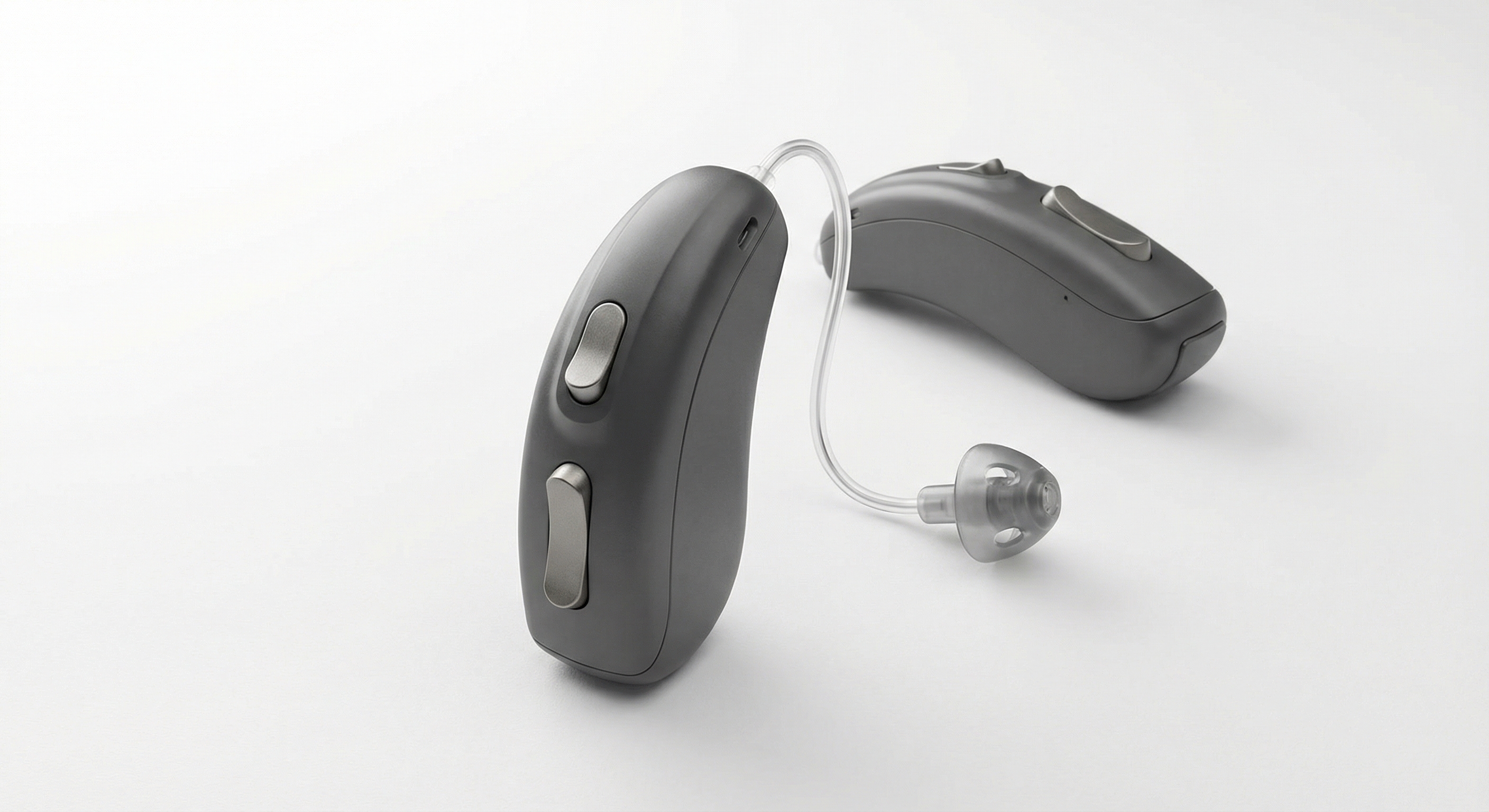
Receiver-in-canal hearing aids are currently the most popular style in Australia. The main difference from BTE devices is that the receiver (speaker) sits inside your ear canal rather than in the case behind your ear, connected by a thin wire.

Advantages:

  • Discreet appearance with thin wire barely visible
  • Natural sound quality due to receiver placement
  • Reduced occlusion effect (hollow sound of your own voice)
  • Comfortable open fit for mild to moderate high-frequency loss
  • Available with rechargeable batteries
  • Compatible with Bluetooth streaming

Considerations:

  • Receiver exposed to ear wax and moisture (regular cleaning essential)
  • Thin wire can be delicate
  • Not suitable for very severe or profound hearing loss

3. In-the-Ear (ITE) Hearing Aids

Best for: Mild to severe hearing loss, easier handling, custom fit

In-the-ear hearing aids are custom-made to fit your outer ear (concha). All components sit within a single shell that fills the bowl of your ear.

Advantages:

  • Custom-fitted for maximum comfort
  • Larger controls, easier to adjust
  • Longer battery life than smaller styles
  • Good for manual dexterity challenges
  • No issues with glasses or masks

Considerations:

  • Visible in the ear
  • May require more frequent cleaning due to ear wax exposure
  • Not suitable for very active lifestyles

4. In-the-Canal (ITC) Hearing Aids

Best for: Mild to moderate hearing loss, cosmetic concerns, smaller ears

In-the-canal hearing aids are custom-made to fit partly in your ear canal, making them less visible than ITE styles.

Advantages:

  • Less visible than ITE styles
  • Custom-fitted for comfort
  • Less wind noise than BTE styles
  • Good balance between discretion and functionality

Considerations:

  • Smaller batteries (shorter life, typically 3-7 days)
  • Can be challenging for those with dexterity issues
  • Limited power (not for severe loss)

5. Completely-in-Canal (CIC) Hearing Aids

Best for: Mild to moderate hearing loss, maximum discretion, adult users

Completely-in-canal hearing aids are custom-made to fit entirely within your ear canal, with only a small removal handle visible.

Advantages:

  • Very discreet—difficult for others to notice
  • Protected from wind noise
  • Natural sound quality
  • Good telephone use (less feedback)

Considerations:

  • Very small batteries (typically 3-5 days life)
  • Difficult to handle and insert
  • Limited features due to size constraints
  • Not suitable for severe hearing loss

6. Invisible-in-Canal (IIC) Hearing Aids

Best for: Mild to moderate hearing loss, ultimate discretion, specific ear anatomy

Invisible-in-canal hearing aids sit deep in your ear canal, beyond the second bend, making them truly invisible when worn.

Advantages:

  • Completely invisible from the outside
  • Maximum discretion
  • Excellent sound quality due to deep placement
  • Reduced wind noise

Considerations:

  • Requires suitable ear canal anatomy (not everyone can wear them)
  • Very small batteries (2-4 days typical life)
  • Extremely difficult to handle
  • Limited to mild-moderate hearing loss only
  • No manual controls or wireless features

Important note: These devices should be referred to as "discreet" rather than "invisible" to maintain compliance with Australian advertising standards.

Hearing Aid Features Explained

Modern hearing aids offer a remarkable array of features beyond basic amplification.

Wireless Connectivity and Bluetooth

Most contemporary hearing aids include wireless technology that connects to smartphones, tablets, televisions, and other devices.

Bluetooth streaming capabilities:

  • Direct audio streaming from iPhone and Android devices
  • Phone call audio delivered to both hearing aids
  • Music, podcasts, and audiobook streaming
  • Television audio streaming (may require separate accessory)

Smartphone apps provide:

  • Volume and program adjustments
  • Bass and treble fine-tuning
  • Tinnitus masking sounds
  • "Find my hearing aid" features using GPS
  • Remote care appointments with your audiologist

Rechargeable vs Disposable Batteries

Rechargeable hearing aids:

  • Lithium-ion batteries lasting 16-30 hours per charge
  • Charging cases providing 3-4 full charges
  • No need to purchase replacement batteries
  • Better for the environment
  • Easier for those with limited dexterity

Disposable battery hearing aids:

  • Zinc-air batteries lasting 3-14 days depending on size and usage
  • Lower upfront cost
  • Always have backup power available
  • Better for people without regular access to electricity

Directional Microphones

Directional microphone systems focus on sounds coming from specific directions—typically in front of you where conversation partners are located.

Benefits:

  • Improved speech understanding in noisy environments
  • Reduced background noise from behind and sides
  • Automatic adjustment based on listening situation

Noise Reduction and Speech Enhancement

Digital signal processing analyses incoming sounds and applies sophisticated algorithms to improve speech clarity.

Advanced processing includes:

  • Background noise suppression
  • Wind noise reduction
  • Sudden loud sound softening
  • Speech frequency emphasis
  • Impulse noise reduction

Tinnitus Masking

Many hearing aids include tinnitus therapy features for those who also experience tinnitus (ringing or buzzing in the ears).

Masking options:

  • White noise generators
  • Ocean wave sounds
  • Pink noise
  • Customizable frequency-specific masking

Telecoil (T-coil) Technology

Telecoils pick up magnetic signals from hearing loops installed in many Australian venues including theatres, cinemas, banks, and places of worship.

Benefits:

  • Crystal-clear sound in looped venues
  • Eliminates background noise completely
  • Better phone use with compatible landlines

Technology Levels: Basic to Premium

Hearing aid manufacturers typically offer three to five technology levels for each model.

Entry-Level / Basic Technology

Features typically included:

  • Basic noise reduction
  • Limited number of channels (4-8)
  • Manual program switching
  • Standard feedback cancellation

Best for:

  • Quiet home environments
  • Limited social activities
  • Straightforward listening situations
  • Budget-conscious buyers

Mid-Range / Advanced Technology

Features typically included:

  • Enhanced noise reduction algorithms
  • More processing channels (10-16)
  • Adaptive directional microphones
  • Wireless connectivity and streaming
  • Smartphone app control
  • Multiple automatic listening programs

Best for:

  • Moderately active lifestyles
  • Regular social activities
  • Some challenging listening environments
  • Good balance of features and value

Premium / Advanced Technology

Features typically included:

  • Maximum processing channels (16-24+)
  • Sophisticated noise reduction and speech enhancement
  • Artificial intelligence and machine learning
  • Advanced directional microphone systems
  • Full wireless connectivity suite
  • Remote care capabilities

Best for:

  • Very active social lives
  • Demanding work environments
  • Music appreciation
  • Frequent dining out or group conversations
  • Maximum automation and minimal manual adjustment

Top Hearing Aid Brands in Australia

The Australian hearing aid market is served by several major international manufacturers.

Note: This guide provides educational information about brands commonly available in Australia. Individual experiences may vary, and no brand is inherently "better" than another. The right hearing aid depends on your specific hearing loss pattern, lifestyle needs, budget, and personal preferences.

Major Manufacturers Available in Australia

Phonak (Switzerland)

  • Known for: Robust design, powerful connectivity, Roger wireless accessories
  • Strong reputation for paediatric devices and power hearing aids
  • Rechargeable options widely available

Oticon (Denmark)

  • Known for: "BrainHearing" philosophy focusing on how the brain processes sound
  • Open sound approach providing access to full sound environment
  • Strong tinnitus management features
  • Advanced artificial intelligence in premium models

ReSound (Denmark)

  • Known for: First to market with Made for iPhone technology
  • Extensive smartphone app functionality
  • Strong direct streaming capabilities

Signia (Germany, formerly Siemens)

  • Known for: Own Voice Processing (OVP) technology for natural own-voice sound
  • Styletto range with fashion-forward designs
  • Strong telecoil performance

Widex (Denmark)

  • Known for: Natural sound quality, particularly important for music lovers
  • PureSound technology for minimal processing delay
  • Strong reputation among musicians and audiophiles

Starkey (United States)

  • Known for: Healthable features including fall detection and activity tracking
  • Custom-made in-ear devices
  • American-made manufacturing

How to Choose the Right Hearing Aid

Step 1: Get a Comprehensive hearing assessment

Before considering hearing aids, you need an accurate diagnosis of your hearing loss.

A thorough assessment includes:

  • Pure tone audiometry (testing hearing thresholds at different frequencies)
  • Speech discrimination testing
  • Tympanometry (middle ear function)
  • Medical history review
  • Listening needs assessment

Step 2: Discuss Your Lifestyle and Listening Needs

Key questions to consider:

  • What listening situations cause you the most difficulty?
  • How often do you attend social gatherings, restaurants, or group events?
  • Do you work? What are your work listening demands?
  • Do you play music or have specific hobbies?
  • Do you use smartphones and feel comfortable with technology?
  • Do you have any dexterity issues, arthritis, or vision challenges?

Step 3: Consider Your Budget and Funding Options

Funding options include:

  • Hearing Services Program (HSP) – Government funding for eligible pensioners and veterans
  • NDIS – National Disability Insurance Scheme for eligible participants
  • Private health insurance – Extras cover typically provides $500-$1,500 every few years
  • Department of Veterans' Affairs (DVA) – Full or partial coverage for eligible veterans
  • Private purchase – Full self-funded purchase with flexible payment options

Step 4: Trial Multiple Options

Trial periods are generally available, allowing you to experience hearing aids in your real-world listening environments before committing to purchase.

During your trial:

  • Wear the devices in various situations (home, work, social, shopping)
  • Keep notes about what works well and what's challenging
  • Attend follow-up appointments for fine-tuning adjustments
  • Try different models or brands if the first option isn't suitable

Trial periods typically last 30-90 days.

The Fitting Process: What to Expect

Initial Fitting Appointment (60-90 minutes)

Physical fitting:

1. Your audiologist ensures the hearing aids sit comfortably in/on your ears

2. Custom ear moulds or domes are fitted (if applicable)

3. Physical comfort and security are verified

Programming and verification:

1. Hearing aids are programmed to your specific hearing test results

2. real ear measurement (REM) may be conducted—a gold-standard verification method

3. Initial sound processing features are activated

4. Volume levels are set based on prescription formulas

Orientation and training:

1. How to insert and remove your hearing aids

2. Battery changing or charging procedures

3. Basic cleaning and maintenance

4. Using controls and adjusting volume

5. Smartphone app installation (if applicable)

Follow-Up Appointments

Typical follow-up schedule:

  • Week 1-2: First adjustment appointment to address initial concerns
  • Week 4: Second adjustment based on real-world experience
  • Week 8-12: Final major adjustment
  • 6 months: Check-in appointment
  • Annual: Comprehensive review and clean

Real Ear Measurement: Why It Matters

Real ear measurement (REM) is a verification process that measures the actual sound levels delivered to your eardrum.

Benefits of REM:

  • Ensures accurate hearing aid output
  • Accounts for your unique ear canal acoustics
  • Improves speech understanding outcomes
  • Reduces need for extensive follow-up adjustments
  • Evidence-based best practice in audiology

Adjusting to Hearing Aids: The First Few Months

What to Expect in the First Days

Sounds may seem:

  • Louder than expected (especially your own voice)
  • Sharper or crisper
  • Different in quality
  • Initially overwhelming in complexity

Common early experiences:

  • Awareness of background sounds (refrigerator hum, air conditioning)
  • Own voice sounding unusual or "hollow"
  • Some listening fatigue
  • Increased awareness of environmental noise

These experiences are normal and typically improve within a few weeks as your brain adapts.

The Adjustment Timeline

Week 1-2: Getting Comfortable

  • Focus on wearing hearing aids consistently, even at home
  • Start in quieter environments
  • Gradually increase wearing time each day

Week 3-4: Expanding Environments

  • Venture into moderately noisy situations
  • Try one-on-one conversations in different settings
  • Begin using advanced features (streaming, programs)

Month 2-3: Building Confidence

  • Tackle more challenging listening environments
  • Attend social gatherings and restaurants
  • Experiment with different listening programs

Month 4-6: Full Integration

  • Hearing aids become part of your routine
  • Natural, effortless use in most situations
  • Confident in managing and maintaining devices

Tips for Successful Adjustment

1. Wear them consistently – All-day wearing helps your brain adjust faster

2. Start gradually – Begin with a few hours daily if full-day wearing is initially overwhelming

3. Practice in easier environments first – Master quiet conversations before tackling restaurants

4. Communicate openly – Tell family and friends you're wearing new hearing aids

5. Attend all follow-ups – Regular fine-tuning significantly improves outcomes

6. Be patient – Adjustment takes time; most people adapt within 2-3 months

7. Set realistic expectations – Hearing aids may help manage hearing changes, but they don't restore normal hearing

Funding Options in Australia

Hearing Services Program (HSP)

The HSP is the Australian Government's program providing hearing services to eligible citizens and permanent residents.

Eligibility includes:

  • Pensioners (Age Pension, Disability Support Pension, other Centrelink pensions)
  • Department of Veterans' Affairs (DVA) Gold Card holders
  • DVA White Card holders for accepted hearing conditions
  • Members of the Australian Defence Force
  • Dependent children of eligible adults

What the HSP covers:

  • Comprehensive hearing assessments
  • Hearing aids from the Australian Government Hearing Aid Schedule
  • Fitting and programming services
  • Follow-up appointments and adjustments
  • Batteries and repairs
  • Replacement devices every five years (if required and assessed as needed)

National Disability Insurance Scheme (NDIS)

The NDIS provides funding for eligible Australians with permanent and significant disability.

Hearing-related NDIS funding may cover:

  • Hearing aids and assistive listening devices
  • Audiology services and assessments
  • Device maintenance and repairs
  • Hearing therapy and rehabilitation
  • Communication support

Eligibility requirements:

  • Australian resident under 65 years of age
  • Permanent and significant disability that affects daily activities
  • Hearing loss assessed as meeting NDIS criteria
  • Approved NDIS plan

Department of Veterans' Affairs (DVA)

DVA provides comprehensive hearing services for eligible veterans and war widows/widowers.

DVA coverage includes:

  • Gold Card holders – Full coverage for hearing assessments and hearing aids
  • White Card holders – Coverage for service-related hearing conditions

What's covered:

  • Hearing tests and assessments
  • Hearing aids (wide range of options)
  • Accessories and assistive devices
  • Batteries and maintenance
  • Regular servicing and repairs
  • Replacement devices as needed

My Aged Care Home Care Packages

My Aged Care may also provide funding towards hearing aids through Home Care Packages (HCP). If you have a Home Care Package, you may be able to use your allocated funding to access hearing devices, as they are generally considered essential for communication and social well-being.

Home Care Packages are available at four levels, with higher-level packages providing more funding. Your package coordinator can help determine whether hearing aids and audiology services can be included in your individualised care plan.

Important: Eligibility conditions apply. Contact your Home Care Package provider or visit the My Aged Care website for current eligibility criteria and funding details. Your audiologist can assist with providing quotes and reports to support your funding application.

Private Health Insurance

Many Australians use private health insurance extras cover to help with hearing aid costs.

Typical coverage:

  • $500 to $1,500+ benefit every few years (commonly every 3-5 years)
  • Varies significantly between funds and policies
  • May require specific waiting periods (commonly 6-12 months)

Maintenance and Care: Protecting Your Investment

Daily Care Routine

Every evening:

1. Wipe down devices – Use a soft, dry cloth to remove any wax, moisture, or debris

2. Open battery door (if using disposable batteries) – Allows moisture to evaporate overnight

3. Store in case or drying container – Protects from dust, damage, and pets

4. Place in dehumidifier – Optional but recommended, especially in humid climates

Do NOT:

  • Use water, cleaning solutions, or alcohol (unless specifically designed for hearing aids)
  • Use cotton buds inside the receiver or microphone openings
  • Expose devices to heat (hairdryers, direct sunlight, car dashboards)

Weekly Care Tasks

Once weekly:

1. Clean wax guards/filters – Replace if clogged or visibly dirty

2. Check batteries – Test remaining charge or ensure rechargeable battery is charging properly

3. Inspect tubing (BTE styles) – Look for cracks, discolouration, or moisture buildup

4. Check for debris – Remove any accumulated wax or dust from microphone ports

Professional Servicing

Regular professional maintenance:

  • Every 6 months – Thorough cleaning and performance check
  • Annually – Comprehensive technical service and hearing aid verification

Key Takeaways

  • Style matters – BTE, RIC, ITE, ITC, CIC, and IIC styles suit different hearing loss levels, lifestyles, and preferences
  • Features vary widely – From basic amplification to artificial intelligence, Bluetooth streaming, and rechargeable batteries
  • Technology levels exist – Entry, mid-range, and premium options offer increasing sophistication and automation
  • Multiple brands availablePhonak, Oticon, ReSound, Signia, Widex, Starkey, and others provide quality options
  • Professional fitting is crucial – Proper programming, real ear measurement, and follow-up care significantly impact success
  • Adjustment takes time – Most people adapt within 2-3 months with consistent wearing and regular follow-ups
  • Funding options exist – HSP, NDIS, DVA, and private health insurance may reduce costs significantly
  • Maintenance is essential – Daily cleaning and professional servicing extend device life and performance
  • Realistic expectations – Hearing aids may help manage hearing changes, but individual experiences vary
  • Two ears are better – Binaural fitting provides better speech understanding, localization, and overall satisfaction

Take the Next Step

If you're experiencing hearing challenges, the most important action is getting a comprehensive hearing assessment from a qualified professional.

At Hearing Care Australia (Sunshine Coast), Linda Whittaker and her experienced team provide:

  • Thorough diagnostic hearing assessments
  • Personalized hearing aid recommendations across all major brands
  • Expert fitting using real ear measurement
  • Comprehensive follow-up care and support
  • Assistance with HSP, NDIS, DVA, and private health insurance funding
  • Ongoing maintenance and professional servicing

Book your complimentary hearing screening today. Early intervention may help maintain better hearing outcomes over time.

shapes

Frequently Asked Questions

Most hearing aids have a functional lifespan of 4-7 years with proper care and maintenance. Under the Hearing Services Program, eligible participants can access replacement devices approximately every five years if required and assessed as needed.

Hearing aids are designed to help manage hearing changes, not restore hearing to what it was before hearing loss occurred. They amplify and process sounds to make them more accessible, but they cannot reverse the physical changes in your inner ear or auditory nerve that cause hearing loss. Most hearing aid users report significant satisfaction and improved quality of life when they have realistic expectations.

While hearing aids are available for purchase online and overseas, professional fitting by qualified audiologists or hearing aid audiometrists is strongly recommended. The relationship with your hearing care professional and quality of fitting/programming are crucial factors in hearing aid success.

Most audiologists recommend wearing hearing aids during all waking hours for optimal benefit and faster adjustment. Full-time wearing helps your brain adapt to amplified sounds more quickly.

Audiologists are university-qualified professionals with comprehensive training in hearing assessment, diagnosis, and rehabilitation. Hearing aid audiometrists are qualified specifically in hearing testing and hearing aid fitting for adults. Both can provide excellent hearing aid services when appropriately qualified and experienced.

If hearing tests show hearing loss in both ears (bilateral hearing loss), most audiologists recommend two hearing aids (binaural fitting) for improved speech understanding, better sound localization, and more natural hearing.

Many people with hearing loss also experience tinnitus. Hearing aids may help manage tinnitus by amplifying environmental sounds that can partially mask tinnitus and by restoring input from frequencies affected by hearing loss. Many hearing aids also include built-in tinnitus therapy programs. ---

This article is for educational purposes only. Individual results may vary. Professional hearing assessment is recommended for personalised advice.

Book Your Hearing Assessment