


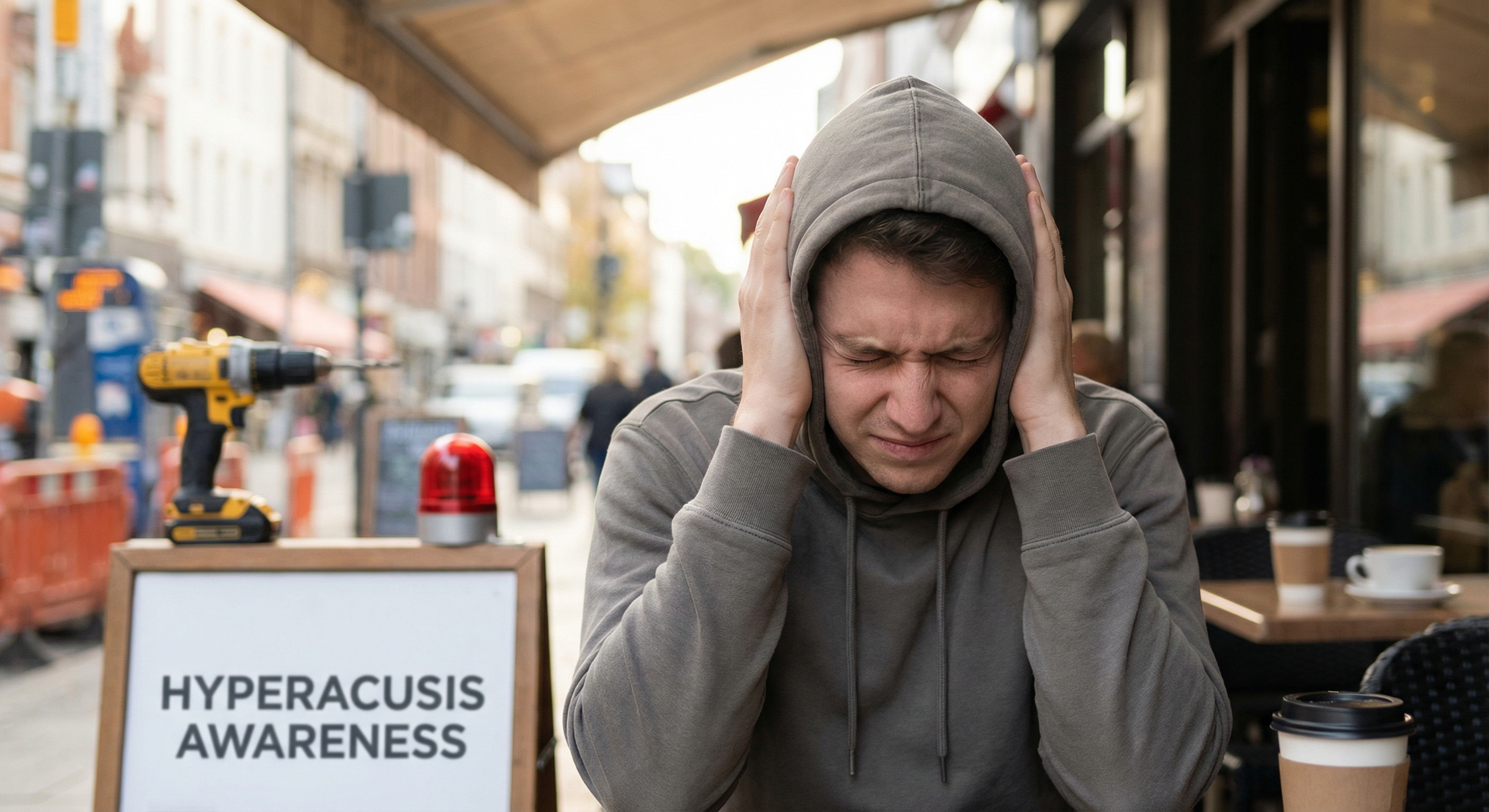
Why Do Everyday Sounds Feel So Loud
Introduction
Imagine the sound of a coffee grinder making you wince in pain. Picture having to leave a restaurant because the clatter of dishes feels unbearable. For people living with hyperacusis, these aren't hypothetical scenarios—they're daily challenges that can significantly impact quality of life.
Hyperacusis is a hearing condition characterised by decreased tolerance to everyday sounds. What others perceive as normal volume levels can feel uncomfortably loud, distressing, or even physically painful to someone with hyperacusis. Research suggests approximately 8-9% of the general population may experience some form of sound sensitivity, though severe cases are less common.
This condition differs from simply having sensitive hearing. People with hyperacusis have normal hearing thresholds—they can detect quiet sounds just fine—but their tolerance for moderate to loud sounds is significantly reduced. The experience often leads to social isolation, anxiety, and substantial lifestyle adjustments as individuals try to protect themselves from uncomfortable sound exposure.
Understanding hyperacusis is the first step toward managing it effectively. While the condition can be challenging, evidence-based treatment approaches may help many people gradually improve their sound tolerance and reclaim activities they've been avoiding.
In This Article
What Is Hyperacusis?
Hyperacusis is a hearing disorder where ordinary environmental sounds are perceived as intolerably loud, uncomfortable, or even painful. The term comes from the Greek words "hyper" (over) and "akousis" (hearing), literally meaning "over-hearing."
How It Differs from Normal Hearing
People with typical hearing have a wide dynamic range—the span between the quietest sound they can detect and the loudest sound they can tolerate comfortably. This range is usually about 100-120 decibels (dB).
In hyperacusis, this dynamic range is significantly compressed. While the quietest detectable sounds may remain unchanged, the threshold for loudness discomfort is dramatically lowered. Sounds that register around 60-70 dB (conversational speech volume) might trigger discomfort in someone with moderate to severe hyperacusis.
Types of Hyperacusis
Researchers have identified several categories of hyperacusis based on the dominant symptom:
Loudness Hyperacusis: The most common type, where sounds are perceived as excessively loud without causing pain. Background noise in cafés, traffic sounds, or children playing might feel overwhelming.
Pain Hyperacusis (Noxacusis): Sounds trigger actual physical pain in the ear, often described as stabbing, burning, or aching sensations that may persist after the sound stops.
Annoyance Hyperacusis: Certain sounds provoke strong negative emotional reactions—irritation, anger, or distress—beyond what their volume would typically warrant.
Fear Hyperacusis (Phonophobia): Characterised by anxiety or fear responses to sounds, often leading to avoidance behaviours even when sounds aren't objectively harmful.
Many individuals experience a combination of these types, and symptoms may vary in intensity from day to day.
Prevalence and Demographics
Australian and international research indicates hyperacusis affects approximately 8-9% of the general population to some degree. Severe cases that significantly impact daily function are less common, estimated at 1-2% of the population.
The condition can develop at any age, though it's increasingly recognised in children and young adults as well as older populations. Gender distribution appears relatively equal, though some studies suggest slightly higher reporting among women.
Hyperacusis frequently co-occurs with other auditory conditions. Studies show strong associations with tinnitus (phantom ringing sounds), with 40-86% of people with hyperacusis also experiencing tinnitus. There are also documented connections with temporomandibular joint (TMJ) disorders, migraine, and certain neurological conditions.
Symptoms and Daily Impact
The experience of hyperacusis varies considerably between individuals, but certain patterns are commonly reported.
Primary Symptoms
Loudness Distortion: Everyday sounds—running water, turning pages, typing on keyboards, closing doors—feel disproportionately loud. Many describe it as if someone has "turned up the volume knob" on the world.
Physical Discomfort or Pain: Some experience ear fullness, pressure, burning, or stabbing pain in response to sound. This may occur immediately or develop over minutes to hours of exposure.
Reduced Sound Tolerance: The level at which sounds become uncomfortable (loudness discomfort level or LDL) drops significantly below typical thresholds. Values below 90 dB often indicate hyperacusis.
Delayed Reactions: Symptoms may not appear immediately during sound exposure. Some people report worsening discomfort or pain hours after leaving a noisy environment, a phenomenon sometimes called "setbacks."
Frequency Sensitivity: Certain pitch ranges may be particularly problematic. High-frequency sounds (dishes clanking, keys jingling, children's voices) are common triggers, though individual patterns vary.
Impact on Daily Life
The effects of hyperacusis extend far beyond auditory discomfort:
Social Withdrawal: Restaurants, cinemas, shopping centres, family gatherings, and other social settings become challenging or impossible to navigate. Many people gradually reduce social activities to avoid uncomfortable sound exposure.
Occupational Challenges: Open-plan offices, machinery, telephone conversations, or meetings can be problematic. Some individuals require workplace modifications, reduced hours, or career changes.
Relationship Strain: Family members may struggle to understand the invisible nature of the condition. Partners and children might feel frustrated by activity restrictions or the need to modify home environments.
Mental Health Impact: The constant vigilance required to avoid triggering sounds, combined with social isolation and activity restrictions, can contribute to anxiety and depression. Many people report feeling misunderstood or dismissed by healthcare providers unfamiliar with the condition.
Protective Behaviours: Many people with hyperacusis begin using hearing protection (earplugs, earmuffs) frequently or continuously. While sometimes necessary, overprotection may inadvertently worsen sensitivity over time—a concept we'll explore in the treatment section.
Sleep Disruption: Even moderate household sounds—refrigerator hum, heating systems, street noise—can disturb sleep or make falling asleep difficult.
Sunshine Coast Context
Living with hyperacusis on the Sunshine Coast presents both challenges and opportunities. The region's outdoor lifestyle, with frequent exposure to surf, wind, and social gatherings, can make sound management important. However, the Sunshine Coast also offers quieter residential environments compared to dense urban areas, with generally lower ambient noise levels that may benefit those managing sound sensitivity.
Causes of Sound Sensitivity
The mechanisms underlying hyperacusis remain incompletely understood, but research has identified several potential contributing factors.
Auditory System Changes
Cochlear Dysfunction: Some theories suggest hyperacusis may involve changes in the inner ear (cochlea), potentially affecting the outer hair cells that amplify sound or altering the balance between excitatory and inhibitory signals sent to the brain.
Auditory Nerve Changes: Damage to the auditory nerve, whether from noise exposure, viral infections, or other causes, may alter signal transmission patterns.
Central Auditory Processing: Emerging research emphasises changes in how the brain processes auditory information. The central auditory system may amplify signals inappropriately or lose the ability to filter or suppress certain sounds effectively. This "central gain" theory suggests the brain increases its internal volume control in response to reduced auditory input.
Known Risk Factors and Triggers
Noise Exposure: Sudden acoustic trauma (explosions, gunfire, amplified music) or cumulative noise exposure may trigger hyperacusis. Interestingly, hearing loss isn't always present—many people with hyperacusis have normal audiograms.
Head and Neck Injuries: Traumatic brain injuries, concussions, and whiplash injuries have been associated with the development of sound sensitivity.
Ototoxic Medications: Certain medications known to affect hearing (some antibiotics, chemotherapy drugs, high-dose aspirin) have been linked to hyperacusis in some cases.
Viral Infections: Conditions affecting the inner ear or auditory nerve, such as vestibular neuritis or Bell's palsy, may be associated with subsequent sound sensitivity.
Stress and Anxiety: While not necessarily a direct cause, heightened stress responses and anxiety may worsen existing hyperacusis or contribute to its development. The relationship appears bidirectional—hyperacusis can cause anxiety, and anxiety can heighten sound sensitivity.
Williams Syndrome: This rare genetic condition includes hyperacusis among its characteristic features, suggesting potential genetic mechanisms in some cases.
Lyme Disease: Some individuals with Lyme disease report developing hyperacusis as part of their symptom complex.
Benzodiazepine Withdrawal: Discontinuation of benzodiazepine medications has been associated with temporary or persistent sound sensitivity in some cases.
The Role of Auditory Gain
Current research increasingly focuses on the concept of "central gain"—the brain's tendency to increase its sensitivity when expected auditory input is reduced. This mechanism, which normally helps us hear in quiet environments, may become maladaptive in hyperacusis.
When the auditory system experiences reduced input (from hearing loss, noise damage, or other causes), the brain may "turn up its internal amplification" to compensate. This increased gain can make all sounds feel louder and may contribute to the development of hyperacusis.
This theory helps explain why both hearing loss and hyperacusis can co-exist, and why overprotection from sound might worsen sensitivity—limiting auditory input may trigger further increases in central gain.
Hyperacusis vs Misophonia: Understanding the Difference
Hyperacusis is sometimes confused with misophonia, but these are distinct conditions with different underlying mechanisms.
Misophonia
Misophonia, literally "hatred of sound," involves strong emotional reactions (anger, disgust, anxiety, or panic) triggered by specific sounds—most commonly repetitive oral sounds like chewing, breathing, or swallowing. The issue isn't that these sounds are perceived as too loud, but that they provoke intense negative emotional and physiological responses.
Key differences:
| Feature | Hyperacusis | Misophonia |
|---------|-------------|------------|
| Trigger | Sound volume/intensity | Specific sound types (often human-generated) |
| Response | Physical discomfort or pain | Emotional distress (anger, disgust) |
| Sound perception | Sounds feel too loud | Volume perception is normal |
| Underlying mechanism | Auditory system dysfunction | Likely limbic/emotional system involvement |
| Treatment approach | Sound therapy, desensitisation | Cognitive behavioural therapy, coping strategies |
Some individuals experience both conditions simultaneously, which can complicate treatment planning.
Other Related Conditions
Phonophobia: Fear of loud sounds, often distinguished from hyperacusis by the psychological rather than physical nature of the response. However, boundaries between these conditions can be blurred in practice.
Recruitment: A different phenomenon occurring in people with hearing loss, where loudness grows abnormally rapidly as sound intensity increases. This is related to cochlear damage rather than the central gain mechanisms thought to underlie hyperacusis.
Diagnosis Process
Proper assessment by a qualified hearing care professional is essential for accurate diagnosis and appropriate management planning.
Initial Consultation
Your hearing care professional will begin with a detailed case history covering:
- When symptoms began and any potential triggers
- Description of problematic sounds and situations
- Previous noise exposure or acoustic trauma
- Medical history including ear infections, head injuries, medications
- Family history of hearing conditions
- Impact on daily activities and quality of life
- Current use of hearing protection
- Presence of tinnitus or other auditory symptoms
Audiological Testing
Pure-Tone Audiometry: Standard hearing test to establish hearing thresholds across different frequencies. Many people with hyperacusis have normal hearing, but this test helps rule out hearing loss as a contributing factor.
Speech Audiometry: Assesses speech understanding, which is typically normal in hyperacusis.
Tympanometry: Examines middle ear function to rule out conditions like otosclerosis or middle ear fluid that might contribute to symptoms.
Loudness Discomfort Levels (LDLs): This key test measures the volume at which sounds become uncomfortably loud. The hearing care professional presents tones at increasing volumes, and you indicate when the sound feels uncomfortable (not painful). Values below 90 dB typically suggest hyperacusis, with lower values indicating more severe sensitivity.
Uncomfortable Loudness Level (ULL): Similar to LDL testing but may use slightly different methodology. Both tests help quantify the degree of sound sensitivity.
Questionnaires: Validated tools like the Hyperacusis Questionnaire (HQ) or Inventory of Hyperacusis Symptoms help assess symptom severity and impact on daily life.
Medical Evaluation
Your hearing care professional may recommend medical examination by an ear, nose, and throat specialist (ENT) or neurologist to rule out underlying conditions such as:
- Superior canal dehiscence syndrome
- Ménière's disease
- Acoustic neuroma
- Temporomandibular joint disorders
- Other neurological conditions
Differential Diagnosis
Accurate diagnosis requires distinguishing hyperacusis from conditions with overlapping symptoms:
- Misophonia (emotional response to specific sounds)
- Phonophobia (fear-based response)
- Recruitment (related to cochlear hearing loss)
- Auditory processing disorders
- Anxiety disorders with sound sensitivity
Treatment Approaches
While there's no guaranteed cure for hyperacusis, evidence-based treatment approaches may help many people gradually improve their sound tolerance and reduce symptom impact.
Sound Therapy and Desensitisation
Gradual Sound Enrichment: The cornerstone of hyperacusis management involves carefully controlled, gradual exposure to low-level background sounds. The goal is to gently "retrain" the auditory system to tolerate normal sound levels without triggering discomfort.
This typically involves:
- Starting with very quiet background sounds (nature sounds, gentle music, or white/pink noise)
- Keeping volume just below the level that triggers discomfort
- Gradually increasing exposure time over weeks and months
- Slowly increasing volume in small increments as tolerance improves
Sound Generators: Some hearing care professionals recommend wearable sound generators (small devices resembling hearing aids) that produce low-level, soothing sounds throughout the day. These provide consistent auditory input that may help reduce central gain over time.
Structured Programmes: Comprehensive programmes like tinnitus retraining therapy (TRT) or Progressive tinnitus management include sound therapy components that may benefit people with hyperacusis, particularly when tinnitus co-occurs.
Counselling and Education
Therapeutic Counselling: Understanding hyperacusis mechanisms, treatment rationale, and realistic expectations is crucial. Cognitive behavioural therapy (CBT) techniques may help manage anxiety, change thought patterns about sound, and develop coping strategies.
Guidance on Hearing Protection: Finding the right balance with hearing protection is essential. While protection may be necessary in genuinely loud environments, overprotection can worsen sensitivity by further reducing auditory input. A hearing care professional can help develop individualised guidelines.
Addressing Underlying Conditions
Medical Treatment: If underlying medical conditions contribute to hyperacusis (TMJ disorders, migraine, etc.), appropriate medical management may help.
Medication Review: Ototoxic medications may need adjustment in consultation with prescribing physicians.
Stress Management: Since stress can worsen symptoms, techniques like mindfulness, relaxation exercises, or psychological support may provide indirect benefits.
Treatment Timeline and Expectations
Improvement is typically gradual, occurring over months rather than weeks. Most programmes suggest 12-24 months for meaningful progress, though individual responses vary considerably.
Success is measured not by completely eliminating sound sensitivity, but by:
- Expanding the range of tolerable activities
- Reducing reliance on hearing protection
- Improving quality of life and social participation
- Decreasing anxiety around sound exposure
Some people achieve substantial improvement, while others learn to manage symptoms effectively even if complete resolution doesn't occur. Individual results vary based on severity, underlying causes, and treatment adherence.
What Won't Help (And May Harm)
Continued Overprotection: While tempting, excessive use of hearing protection in everyday (non-hazardous) environments may reinforce sensitivity rather than improving it.
Complete Sound Avoidance: Total silence or extreme sound deprivation can worsen hyperacusis by increasing central gain.
Unproven Treatments: Various supplements, devices, or alternative therapies lack evidence for hyperacusis specifically. Always discuss treatment options with qualified healthcare professionals.
Coping Strategies for Daily Life
While undergoing treatment, practical strategies can help manage symptoms and maintain quality of life.
Environmental Modifications
Home Adjustments:
- Use rugs, curtains, and soft furnishings to absorb sound
- Replace hard flooring with carpet in high-traffic areas
- Install weather stripping to reduce external noise
- Consider acoustic panels for particularly problematic rooms
- Use soft-close mechanisms on doors and cabinets
Technology Solutions:
- Adjust notification volumes on devices
- Use noise-cancelling headphones for specific situations (without excessive volume)
- Consider apps that provide gentle background sounds
Social Strategies
Communication: Explain your condition to family, friends, and colleagues. Most people are willing to accommodate needs once they understand the situation.
Activity Modification: Choose quieter restaurants (avoid peak times), select cinema sessions with lower attendance, or host gatherings at home where you can control the environment.
Strategic Use of Protection: Develop a personalised plan for when hearing protection is genuinely needed versus when gradual exposure is more beneficial.
Occupational Accommodations
Many workplaces can provide reasonable accommodations:
- Quiet workspaces or private offices
- Noise-dampening modifications
- Flexible hours to avoid peak noise times
- Remote work options when feasible
- Breaks in quiet areas
Psychological Coping
Stress Management: Regular practice of relaxation techniques, mindfulness, or meditation may help reduce overall stress reactivity.
Support Networks: Connecting with others who understand the condition—whether through in-person support groups or online communities—can reduce feelings of isolation.
Professional Support: Psychological counselling, particularly CBT, may help manage anxiety and develop effective coping strategies.
Travel Considerations
Air Travel: Aeroplane cabin noise can be challenging. Strategic seating (toward the front, away from engines), noise-reducing headphones, and communicating needs to flight staff may help.
Road Travel: Modern vehicles are relatively quiet, but some individuals benefit from additional sound-dampening modifications.
Key Takeaways
- Hyperacusis is a hearing disorder where ordinary sounds feel uncomfortably or painfully loud due to reduced sound tolerance, not increased hearing sensitivity
- Approximately 8-9% of people experience some degree of sound sensitivity, with severe cases affecting 1-2% of the population
- The condition often co-occurs with tinnitus and may develop after noise exposure, head injuries, certain medications, or viral infections
- Diagnosis requires comprehensive audiological assessment including loudness discomfort level testing to quantify sensitivity
- Evidence-based treatment focuses on gradual sound therapy to carefully rebuild tolerance over 12-24 months, rather than complete sound avoidance
- Finding the right balance with hearing protection is crucial—overprotection may worsen sensitivity while appropriate use in genuinely loud environments remains important
- Hyperacusis differs from misophonia, which involves emotional reactions to specific sounds rather than volume-based discomfort
- Psychological support and counselling can help manage anxiety, develop coping strategies, and improve quality of life during treatment
- Many people experience meaningful improvement in sound tolerance and daily function through appropriate management, though individual results vary
- Professional assessment is essential—consult a qualified hearing care professional for personalised evaluation and treatment planning
Get Professional Support for Sound Sensitivity
If everyday sounds feel uncomfortably or painfully loud, you don't have to navigate this challenging condition alone. Professional assessment can help identify the nature and severity of your sound sensitivity and develop an appropriate management plan.
Our experienced hearing care professionals provide comprehensive evaluations including loudness discomfort testing and evidence-based treatment approaches for hyperacusis. We understand the significant impact sound sensitivity can have on daily life and work collaboratively with you to develop individualised management strategies.
Book a comprehensive hearing assessment to discuss your sound sensitivity concerns. We're here to help you work toward improved sound tolerance and quality of life.
Individual experiences with hyperacusis vary. Treatment approaches should be personalised based on thorough professional assessment.

Frequently Asked Questions
Currently, there's no guaranteed cure for hyperacusis. However, many people experience significant improvement in their sound tolerance and quality of life through evidence-based management approaches like sound therapy and counselling. The focus is on gradually expanding sound tolerance and developing effective coping strategies rather than complete elimination of all symptoms. Individual experiences vary widely, with some achieving substantial improvement while others learn to manage symptoms effectively even if complete resolution doesn't occur.
Finding the right balance is crucial. You should absolutely protect your hearing in genuinely hazardous noise environments (above 85 dB sustained exposure)—this applies to everyone, not just those with hyperacusis. However, avoiding all moderately loud sounds or overusing hearing protection in everyday situations may actually worsen sensitivity by depriving your auditory system of normal input. A hearing care professional can help develop personalised guidelines for when protection is appropriate and when gradual exposure is beneficial.
Hyperacusis is distinct from simply being sensitive to sound. People with hyperacusis typically have normal hearing thresholds—they can detect quiet sounds normally—but their tolerance for moderate and loud sounds is significantly reduced. The condition involves genuine physical discomfort or pain in response to sounds that others tolerate comfortably. This differs from being easily distracted by sounds or preferring quiet environments, which doesn't constitute a medical condition.
Start with a comprehensive hearing assessment from a qualified hearing care professional who has experience with hyperacusis. At Hearingcare on the Sunshine Coast, we can conduct thorough assessments and provide appropriate management strategies. Your GP can also provide referrals to appropriate specialists if needed. ---
This article is for educational purposes only. Individual results may vary. Professional hearing assessment is recommended for personalised advice.
Book Your Hearing Assessment